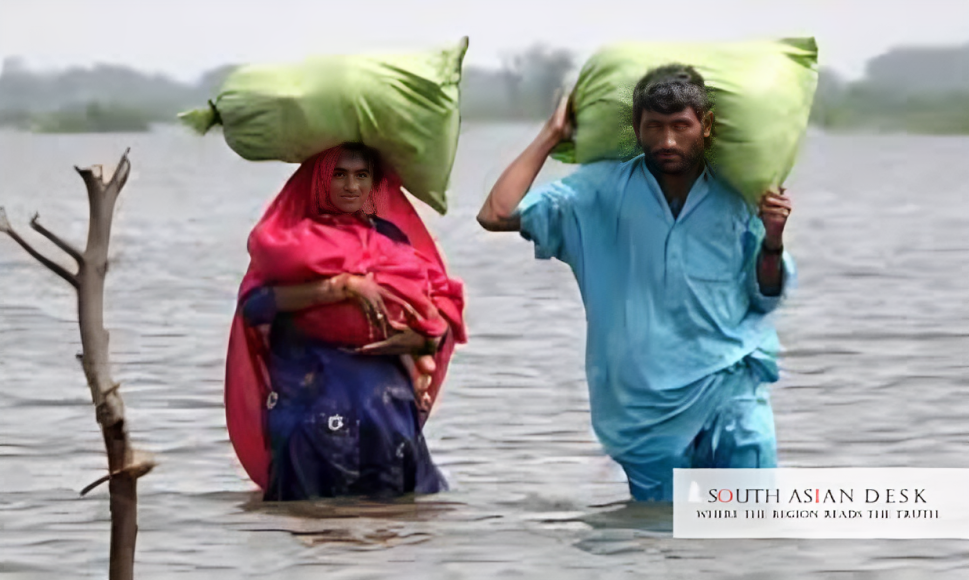
43 Pakistani farmers devastated by the 2022 floods are filing a landmark claim in a German court against RWE and Heidelberg Materials, seeking compensation for climate-induced damages under the polluter pays principle. Forty-three farmers from Sindh province in Pakistan have launched a Pakistan climate lawsuit against two major German corporations, RWE and Heidelberg Materials, in a bid for climate justice Pakistan. The group announced the filing at a press conference in Karachi on Thursday, December 18, 2025, targeting the companies as top CO2 emitters responsible for exacerbating the 2022 floods that destroyed their livelihoods.
The farmers, including Hamza Khan Kalhoro, Abdul Hafeez Khoso and Abdul Khaliq Leghari from Larkana, Jacobabad and Dadu, stated that the unprecedented floods wiped out crops, livestock and homes, leaving thousands in economic ruin. Pakistan, which contributes less than one per cent to global greenhouse gas emissions, bore disproportionate impacts from the disaster.
This Pakistan climate lawsuit underscores a growing push for accountability in South Asia, where nations like Pakistan face severe climate vulnerabilities despite minimal contributions to global warming. It could set a precedent for other flood-prone countries in the region, such as Bangladesh and India, to pursue similar claims against high-emitting entities abroad, amplifying calls for international climate justice Pakistan.
Pakistani Farmers German Court Claim Details
The Pakistani farmers German court action is grounded in German civil law, specifically section 823 of the German Civil Code, which holds perpetrators liable for damages caused by their actions. The claimants argue that RWE and Heidelberg Materials, as carbon majors, breached their duty of care by continuing high emissions despite knowing the risks.
RWE accounts for at least 0.68 per cent of global industrial greenhouse gas emissions since 1965, while Heidelberg Materials contributes 0.12 per cent. Together, these companies are among over 100 entities responsible for nearly 70 per cent of historical industrial emissions worldwide.
The farmers seek partial compensation for lost rice and wheat harvests over two seasons, with total damages estimated at around EUR 1 million. They have sent a formal notice to the companies, demanding acknowledgment of liability. If unmet, the full lawsuit will proceed in a German civil court.
At the Karachi press conference, Abdul Hafeez Khoso said: “This is about justice. How is it fair or just that we pay the price for a climate crisis that we did not cause, while big corporations in the Global North are still able to make huge profits? Those who are responsible for the damage must pay for the damage.”
Supporting organisations, including the European Centre for Constitutional and Human Rights (ECCHR) and medico international, emphasised the case’s role in bridging climate science and human rights. Miriam Saage-Maab from ECCHR stated over the phone: “The case aimed to amplify the voices of flood-affected communities in international legal forums.”
Karin Zennig from medico international added: “Climate litigation had become an important tool to bridge the gap between climate science, human rights and justice.” She noted that ten years after the Paris Agreement, political failures have led to disasters like Pakistan’s floods, demanding accountability for climate justice Pakistan.
Nasir Mansoor from the National Trade Union Federation described climate change as a livelihood and labour rights issue, with repeated shocks undermining rural employment. Dr Shaikh Tanveer Ahmed from HANDS Welfare Foundation said: “Our farmers are paying the price for emissions they did not cause.”
The claim builds on the precedent set by the Saúl Luciano Lliuya v RWE case, where a German court ruled in May 2025 that major emitters could be liable for transboundary climate damages. Similar actions include 67 Filipinos suing Shell in the UK for typhoon losses and a Belgian farmer case against TotalEnergies.
Pakistan Floods Compensation Demands
The push for Pakistan floods compensation stems from the catastrophic 2022 monsoon floods, which submerged one-third of the country and affected 33 million people. Official assessments report at least 1700 deaths, with eight million displaced and critical infrastructure destroyed.
According to the Pakistan government’s Post-Disaster Needs Assessment, led by the Ministry of Planning, Development and Special Initiatives, total damages exceeded USD 14.9 billion, with economic losses reaching USD 15.2 billion. The floods wiped out over 1.7 million livestock and damaged 2.3 million homes, per the National Disaster Management Authority.
In Sindh, the hardest-hit region, districts remained underwater for over a year, devastating smallholder farmers who rely on subsistence agriculture. The claimants, supported by 10,000 villagers, highlight how changing weather patterns have compounded their struggles against large landowners.
Clara Gonzales from ECCHR stated: “RWE and Heidelberg have known for decades that their polluting practices would bring harm to people, yet they have refused to act. The climate crisis is no longer a theoretical threat, it is a present reality.”
This Pakistan climate lawsuit seeks to enforce the polluter pays principle, ensuring high emitters cover proportional costs of harms they caused. It aligns with global efforts for Pakistan floods compensation, urging recognition of losses and damages as a justice issue.
Background
The 2022 Pakistan floods were triggered by extreme monsoon rains, intensified by human-induced climate change. A World Weather Attribution study found that climate change increased rainfall intensity by up to 50 per cent in some areas. Pakistan ranked first in the 2022 Global Climate Risk Index for extreme weather impacts.
Government data from the Finance Ministry’s impact assessment confirms the scale: nearly 33 million affected, with agricultural losses alone estimated at USD 3.7 billion. Reconstruction efforts continue, but many communities remain in poverty without adequate support.
The defendants have faced prior scrutiny. RWE, a major energy producer, and Heidelberg Materials, a cement giant, have lobbied against stricter climate regulations while profiting from fossil fuels.
What’s Next
The companies have four weeks from the notice to respond. If they deny liability, the farmers plan to file the full Pakistan climate lawsuit by year’s end. Legal experts anticipate hearings in 2026, potentially influencing international climate litigation.
This case could pressure global emitters to fund loss and damage mechanisms, like those discussed at COP conferences, benefiting South Asian nations. The Pakistan climate lawsuit represents a critical step towards holding polluters accountable, offering hope for affected communities worldwide.
Published in SouthAsianDesk, December 19th, 2025
Follow SouthAsianDesk on X, Instagram, and Facebook for insights on business and current affairs from across South Asia.