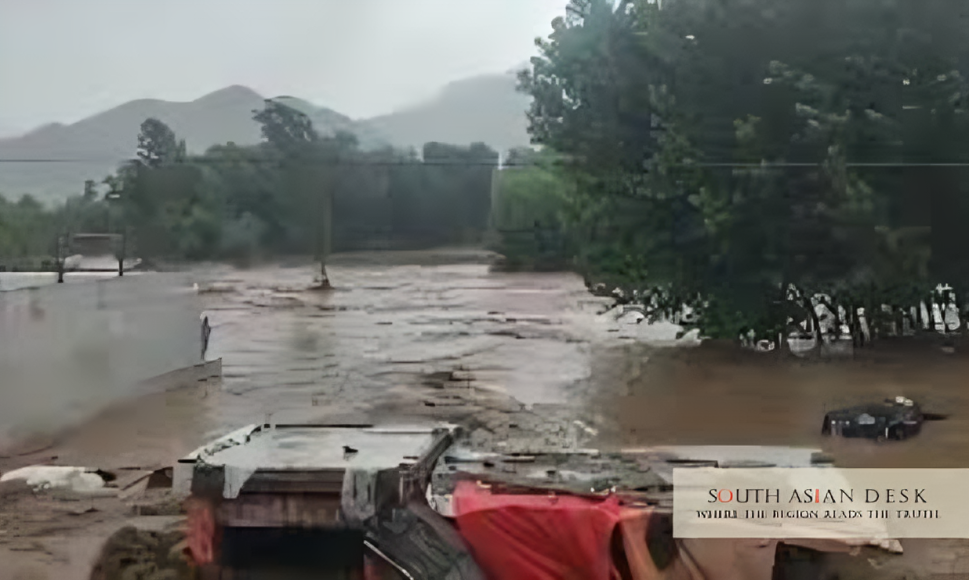
PESHAWAR: The National Disaster Management Authority informed the Peshawar High Court that 504 people, including 338 men, 76 women, and 90 children, died in the 2025 KP monsoon floods, with 218 others injured across districts like Buner and Swat. Rescue teams saved 6,395 lives amid widespread damage, as a petition seeks better disaster plans and compensation.
The 2025 KP monsoon floods highlight Pakistan’s vulnerability to extreme weather, straining resources in Khyber Pakhtunkhwa and underscoring the need for regional cooperation on climate resilience across South Asia.
Toll from 2025 KP Monsoon Floods Mounts
The NDMA submitted its report to the Peshawar High Court on the impacts of the 2025 KP monsoon floods. Heavy rains triggered flash floods and landslides from July to September. Districts in northern Khyber Pakhtunkhwa bore the brunt.
Buner district recorded the highest casualties. There, 256 people lost their lives. Swabi followed with 43 deaths. Swat saw 42 fatalities. Shangla had 39 deaths. Mansehra reported 28, and Bajaur 25. Injuries numbered 218 province-wide. Rescue operations recovered 442 bodies. Teams also saved 6,395 individuals. In Swat, rescuers pulled out 2,076 alive. Mansehra efforts freed 1,391. Buner operations rescued 1,214.
Livestock losses reached 5,467 animals. Houses suffered extensive damage. A total of 3,222 structures were affected. Of these, 701 collapsed fully. Another 2,521 sustained partial harm. In Buner alone, 971 homes were damaged. The prime minister approved compensation. Each deceased person’s next of kin receives Rs2 million. This aid aims to support families hit hardest.
Peshawar High Court Floods Petition Advances
A bench of the Peshawar High Court heard the case on November 24. Justices Sahibzada Asadullah and Dr Khurshid Iqbal presided. The hearing focused on a petition filed by Advocate Ahmad Mujtaba from Swabi.
Advocate Mohammad Hamdan represented the petitioner. He urged directives for flood prevention. Measures include afforestation and infrastructure upgrades. The plea calls for early warning systems in prone areas. It demands emergency preparedness plans.
The petition seeks a monitoring mechanism. This would ensure effective implementation of disaster strategies. It requests a full damage assessment in Khyber Pakhtunkhwa. Restoration of infrastructure follows such reviews. Basic needs provision is another demand. Food, shelter, and medical aid top the list. The filing also pushes for climate change mitigation. Adaptation steps address long-term risks.
Respondents include the NDMA. The KP relief, rehabilitation, and settlement department is named. The Ministry of Climate Change joins them. The bench postponed the hearing. Some respondents requested more time. This delay allows fuller submissions.
NDMA Monsoon Report Details Response
The NDMA outlined its role in the NDMA monsoon report KP. Pakistan’s system is three-tiered. Provinces and districts hold primary responsibility. The NDMA steps in for major events. Federal directives guide such support. The authority’s early warning wing operates nationwide. It uses satellite data. Ground networks provide real-time inputs. Monitoring covers meteorological and hydrological conditions.
The National Disaster Management Plan 2025 forms the backbone. It profiles hazards across Pakistan. Historical data informs strategies. Emerging risks receive focus. Losses align with the NDMA’s October 2 situation report. The 504 deaths match verified figures. District breakdowns confirm the scale.
Provincial Efforts in Flood Management
The KP relief department submitted detailed comments. It spans 167 pages. Standard operating procedures feature prominently. Threat alerts and weather advisories follow set protocols. A high-level meeting occurred on June 19. The chief secretary chaired it. Stakeholders reviewed the Monsoon Contingency Plan 2025. This ensured coordinated actions.
The Provincial Disaster Management Authority led assessments. Inputs came from the Pakistan Meteorological Department. NDMA data supplemented them. Severity levels guided responses. Rescue 1122 executed operations. It handled the bulk of extractions. Non-food items reached survivors. Relief funds disbursed aid. Logistic support bolstered efforts.
The department views events as natural. Cloudbursts and landslides defy prediction. No lapses tie to respondents, it argues.
Climate Ministry’s Stance on Petition
The Ministry of Climate Change seeks dismissal. Remedies exist under the KP Environmental Protection Act, 2014. Complaints go to the environmental protection tribunal. Post-18th Amendment, duties devolve to provinces. The KP Environmental Protection Agency enforces rules. Territorial jurisdiction limits federal overreach. This position underscores decentralised governance. Environmental policies adapt to local needs.
Background
The 2025 KP monsoon floods struck amid seasonal rains. Monsoon patterns intensified in July. Flash floods swelled rivers. Landslides buried villages. Northern districts faced isolation.
Preparedness began early. The Monsoon Contingency Plan 2025 set timelines. SOPs activated on alerts. Yet, scale overwhelmed initial capacities. NDMA’s final report closed assessments on October 2. It tallied human and material losses. Compensation flows from federal approval.
The petition emerged from survivor needs. Advocate Mujtaba’s filing captures grievances. Judicial oversight now probes systemic gaps. Historical parallels echo in Pakistan’s record. Past monsoons tested responses. The 2025 events build on those lessons.
What’s Next
The Peshawar High Court will reconvene post-adjournment. Rulings may mandate plan enhancements. Early warnings could expand. Afforestation drives might accelerate.
NDMA’s role in major crises persists. Provincial teams refine contingencies. Compensation payouts continue to families. Monitoring under the National Disaster Management Plan 2025 intensifies. Climate adaptation gains priority. South Asia watches for shared strategies.
Authorities eye the next season. Preparedness meetings resume soon. Data from 2025 KP monsoon floods informs updates. The 2025 KP monsoon floods demand sustained action to shield vulnerable communities.
Published in SouthAsianDesk, November 24th, 2025
Follow SouthAsianDesk on X, Instagram, and Facebook for insights on business and current affairs from across South Asia.