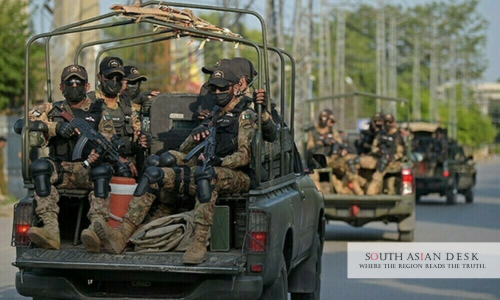
21 terrorists killed in Balochistan on Monday after responding to multiple assaults on civilians and installations. The operations unfolded in Musa Khel, Kalat, and Lasbela districts starting late Sunday and continuing into early Monday at 4:35 PM. Pakistani troops and law enforcement targeted militants who blocked highways and stormed outposts. Fourteen personnel embraced martyrdom during the clashes.
Nut Graph: Stabilising a Volatile Frontier
These events underscore Balochistan’s role as South Asia’s tinderbox. The province borders Iran and Afghanistan, hosting key routes for trade and energy. Escalating violence threatens the China-Pakistan Economic Corridor, disrupting regional connectivity and investment. Success in curbing such attacks bolsters Pakistan’s sovereignty, eases neighbourly tensions, and safeguards shared economic goals across the subcontinent.
21 Terrorists Killed in Balochistan: Timeline of Assaults
Militants launched coordinated strikes late Sunday in Musa Khel district. Armed groups blocked the inter-provincial highway near Rarasham. They stopped a passenger bus, checked identities, offloaded 23 travellers, and executed them at point-blank range. Assailants also targeted coal-transport trucks, killing drivers and torching at least 10 vehicles. Hameed Zahir, deputy commissioner of Musa Khel, confirmed the bus incident to reporters. “Armed men killed passengers and drivers of trucks carrying coal,” he stated.
In Kalat district, terrorists stormed a Balochistan Levies station early Monday. Gun battles erupted as forces repelled the intruders. Dostain Khan Dashti, a senior police official, reported six security personnel and four civilians dead in the ensuing firefight. The assault aimed to seize weapons and assert control over remote outposts.
Lasbela district saw parallel ambushes on patrols. Militants fired on convoys, prompting immediate retaliation. Security teams cordoned areas and pursued fleeing attackers through rugged terrain.
The Inter-Services Public Relations (ISPR) detailed the response. Troops conducted clearance sweeps, eliminating 21 terrorists in total. They recovered small arms and ammunition from the sites. Fourteen brave soldiers fell: ten from security forces and four from law enforcement agencies. ISPR attributed the attacks to “inimical and hostile forces” seeking to derail Balochistan’s development.
Radio Pakistan echoed the resolve. “Security forces will continue operations until terrorists are eliminated,” an official broadcast declared. Sanitisation drives now scour the districts for remnants. Planners vow to hunt instigators, facilitators, and abettors.
Trading halted briefly on affected routes. Coal supplies to power plants dipped, risking blackouts in Quetta. Local traders in Kalat reported shuttered markets, with losses estimated at PKR 50 million in the first day.
Balochistan Security Operations 2025: A Pattern Emerges
Balochistan security operations 2025 have intensified amid rising threats. January saw militants seize Zehri town in Khuzdar for eight hours, torching government buildings. February brought a major clash in Mangochar village, Kalat, where Baloch Liberation Army fighters overran posts, killing a dozen soldiers. March’s Jaffar Express hijacking near Sibi claimed 21 civilian lives and four troops during a 30-hour rescue.
May recorded a car bomb in Killa Abdullah market, killing four. July’s Operation Baam by Balochistan Liberation Front targeted army units in Zhob, claiming 18 soldier deaths. August’s school bus bombing in Khuzdar killed eight, including four children.
Forces responded with precision raids. In February, 23 militants fell in Kalat clearances. April ambushes on polio escorts in Mastung claimed two lives, prompting swift pursuits. These Balochistan security operations 2025 reflect a doctrine of proactive engagement, blending intelligence with ground assaults.
Data from the South Asia Terrorism Portal logs over 50 incidents province-wide this year. Casualties exceed 200, split between militants, troops, and civilians. Poverty fuels recruitment, with 70 per cent of Balochistan’s 15 million residents below the line. Underdevelopment hampers progress, despite vast gas, coal, and copper reserves.
The China-Pakistan Economic Corridor amplifies stakes. Gwadar port, its crown jewel, faces repeated sabotage. A September suicide blast near Quetta’s paramilitary headquarters killed 10, with four attackers neutralised. Chief Minister Mir Sarfraz Bugti condemned it as a terrorist plot against growth.
ISPR Balochistan Raid: Voices from the Front
ISPR’s Balochistan raid updates highlight tactical shifts. Drones and surveillance now map hideouts, reducing ambush risks. Troops train in urban warfare, adapting to hit-and-run tactics.
Lieutenant General Ahmed Sharif Chaudhry, ISPR chief, reiterated commitment in recent briefings. “We reaffirm the nation’s resolve to bring perpetrators to justice,” he noted in a parallel October operation. Though focused on Indian proxies there, the message resonates across efforts.
Background: Roots of the Insurgency
Baloch separatism traces to 1948, when Khan of Kalat acceded to Pakistan amid disputes. Cycles of revolt marked 1958, 1973, and 2005. The Balochistan Liberation Army, formed in 2000, targets symbols of control: troops, pipelines, and foreign workers.
Post-2000, attacks surged. 2010 saw a professor’s murder over arrests. 2011 claimed 14 guards in Musakhel. Recent years blend ethnic grievances with geopolitical plays, including Afghan sanctuaries.
Economic disparity stokes fires. Balochistan yields 40 per cent of Pakistan’s gas yet receives scant royalties. CPEC promises jobs, but locals decry exclusion. Protests by Baloch Yakjehti Committee in March followed the train hijacking, drawing crackdowns.
What’s Next: Sustained Pressure
Forces plan expanded patrols and border fortifications. The US and UK condemned recent blasts, urging dialogue. Islamabad eyes IMF reforms to fund development, potentially easing tensions.
As Balochistan security operations 2025 press on, experts monitor for de-escalation. A proposed October summit may address root causes. The 21 terrorists killed in Balochistan signal a firm stance, yet the fight demands vigilance to secure lasting calm.
Published in SouthAsianDesk, October 2nd, 2025
Follow SouthAsianDesk on X, Instagram, and Facebook for insights on business and current affairs from across South Asia.