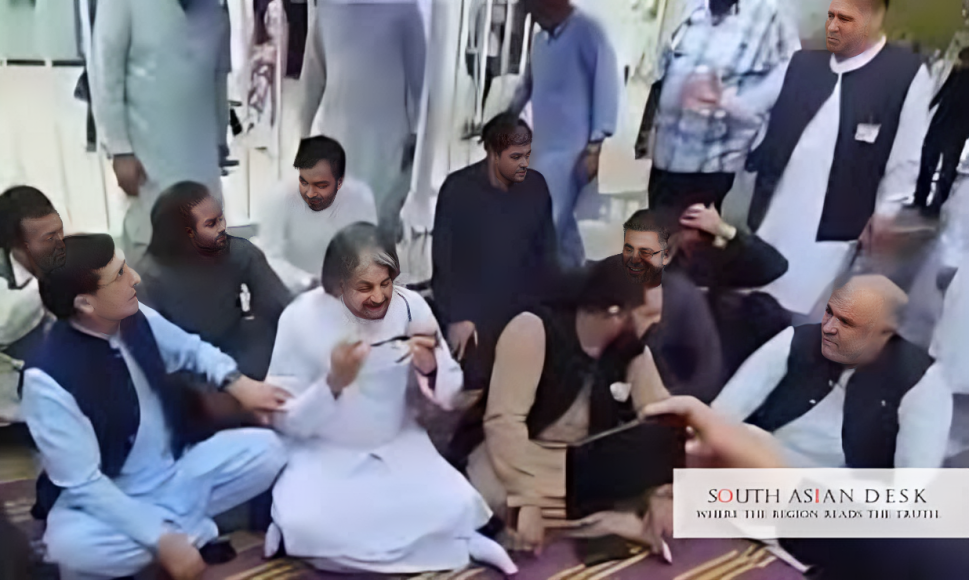
Government employees in Bangladesh staged a symbolic hunger strike in Thakurgaon demanding swift pay scale gazette implementation for the 9th pay scale Bangladesh.
Government employees in Thakurgaon held a three-hour symbolic hunger strike on Friday, protesting delays in the pay scale gazette implementation. The action, organised by local leaders, called for a discrimination-free 9th pay scale Bangladesh with a 1:4 ratio and 12-grade structure, effective from 1 January 2026.
The protest underscores growing frustration among public sector workers over stagnant wages amid rising living costs in Bangladesh. It highlights broader economic challenges in South Asia, where similar demands for fair compensation affect government stability and service delivery.
Government Employees Protest Bangladesh Escalates
On 16 January 2026, around 9:30 AM, members of the Thakurgaon District Branch of Bangladesh Government Employees Coordination Council gathered at the Thakurgaon Press Club. The symbolic hunger strike Thakurgaon lasted until 12:30 PM, drawing participants from various departments. Leaders including Chief Adviser Dabirul Islam, President Nazmul Haque, Delwar Hossain, and Aminul Islam addressed the group, reiterating demands for equitable reforms.
The core issue revolves around the 9th pay scale Bangladesh, which employees argue should eliminate discrimination through a streamlined 12-grade system. They seek a minimum salary of Tk 35000, aligning with inflation pressures. Without prompt pay scale gazette implementation, workers claim their livelihoods are at risk, especially as the interim government prepares for national elections on 12 February.
This local action mirrors nationwide government employees protest Bangladesh. In December 2025, the Bangladesh Government Employees’ Unity Council issued ultimatums for gazette publication by 15 December, effective 1 January 2026. Rallies in Dhaka, including one at Central Shaheed Minar on 5 December, saw thousands demanding the same reforms. Employee leaders warned of tougher actions if ignored, citing seven-point charters that include restoring time scales and increasing gratuity to 100 percent.
Finance Adviser Dr Salehuddin Ahmed, in statements reported on 13 January 2026, urged patience, noting the Pay Commission’s ongoing work. He said no final decision on the 9th pay scale Bangladesh would precede the commission’s report, expected soon. Earlier, on 29 September 2025, he indicated potential implementation within the interim government’s term, but recent updates suggest delays until after elections.
Symbolic Hunger Strike Thakurgaon Details
The symbolic hunger strike Thakurgaon focused on non-violent expression of discontent. Participants fasted briefly to symbolise hardships from delayed pay adjustments. Dabirul Islam emphasised the need for a 1:4 ratio in the 9th pay scale Bangladesh to ensure fairness across grades. Nazmul Haque highlighted how the absence of pay scale gazette implementation exacerbates inequalities, with entry-level salaries failing to meet basic needs.
Data from the Ministry of Finance shows the last major revision was the 2015 National Pay Scale, or 8th pay scale, setting minimum pay at Tk 8250 for grade 20. Adjusted for inflation, employees argue this is insufficient. The proposed 9th pay scale Bangladesh aims for Tk 35000 minimum and Tk 140000 maximum, a 1:4 structure reducing grades from 20 to 12.
Government employees protest Bangladesh has intensified since November 2025. On 15 November, the Unity Council demanded gazette by mid-December. By 21 December, they paused fresh programmes but promised escalation if no progress by 31 December. As of 17 January 2026, no gazette has appeared, per Department of Printing and Publications archives.
Background
Bangladesh’s pay scales are revised roughly every decade through commissions formed under the Services (Reorganisation and Conditions) Act 1975. The 8th pay scale, effective 1 July 2015, increased salaries by up to 100 percent but faced criticism for disparities. The 9th Pay Commission, formed in 2025, reviewed submissions from employee groups amid post-pandemic economic recovery.
Inflation in Bangladesh averaged 7.5 percent in 2025, per Bangladesh Bureau of Statistics, eroding purchasing power. Government employees, numbering over 1.3 million, form a key workforce in sectors like education, health, and administration. Delays in pay scale gazette implementation risk service disruptions, as seen in prior strikes.
In South Asia, comparable issues persist. Pakistan’s 2025 budget hiked federal salaries by 25 percent, while India’s 8th Pay Commission discussions target 2026 implementation. Bangladesh’s reforms could influence regional labour policies.
What’s Next
The Pay Commission plans to announce its report submission date shortly, per Dr Salehuddin’s 13 January statement. Employee groups may intensify government employees protest Bangladesh if no gazette emerges before elections. A referendum on the 9th pay scale Bangladesh, backed by the finance adviser, could resolve disputes post-polls.
The interim government faces pressure to balance fiscal constraints with worker demands. With elections looming, resolution of the 9th pay scale Bangladesh remains critical for stability.
Published in SouthAsianDesk, January 17th, 2026
Follow SouthAsianDesk on X, Instagram and Facebook for insights on business and current affairs from across South Asia.