Dhaka’s Commission of Inquiry on Enforced Disappearances submitted its report on 4 January 2026, confirming 1,569 forced disappearances in Bangladesh under Sheikh Hasina’s rule from 2009 to 2024. The panel, led by Justice Moinul Islam Chowdhury, estimates the actual figure to be between 4,000 and 6,000.
The enforced disappearances report highlights systemic abuses in Bangladesh, raising alarms across South Asia about state-sponsored repression and its impact on democratic norms.
Key Findings in Enforced Disappearances Report
The commission received 1,913 complaints. It dismissed 231 duplicates and 113 non-qualifying cases. This left 1,569 verified instances of forced disappearances in Bangladesh.
Of these, 1,282 victims resurfaced after illegal detention. Another 251 remain missing. Bodies of 36 victims were recovered. The panel classified 287 cases as missing and dead.
Commission member Nabila Idris stated the total could reach 4,000 to 6,000. She cited underreporting due to fear, lack of awareness, and victims relocating abroad.
The report on enforced disappearances attributes a primarily political motive. Opposition groups bore the brunt. Among survivors, 75 percent were linked to Jamaat-e-Islami and its student wing. A further 22 percent were affiliated with the Bangladesh Nationalist Party and its allies.
For those still missing, 68 percent were from the BNP camp. Another 22 percent from Jamaat-e-Islami. The report notes opposition-aligned victims made up 96.7 percent of cases with known political identity.
Ruling party affiliates appeared only marginally. This pattern shows forced disappearances in Bangladesh targeted at political rivals selectively.
The commission identified the agencies involved. The Rapid Action Battalion featured in 25 percent of complaints. Police accounted for 23 percent. The Detective Branch handled 14.5 percent.
Joint operations were everyday. These included combinations such as the Detective Branch and the police, or the Directorate General of Forces Intelligence with the Rapid Action Battalion.
In 37 cases, abductors were unidentified plainclothes men. Another 119 complaints described captors as administration personnel.
Cases surged after 2012. They reached their peak during the 2013-2014 election crisis. Spikes occurred ahead of the 2018 polls and after the 2022 protests.
Permanent forced disappearances in Bangladesh occurred between 2011 and 2016. After 2017, incidents declined but continued through secret detentions and fabricated charges.
The commission found 40 detention centres. Of these, 22 to 23 are operated by the Rapid Action Battalion. Evidence destruction occurred after the start of the inquiry, mainly by the Rapid Action Battalion.
Hasina Enforced Disappearances: Direct Involvement Alleged
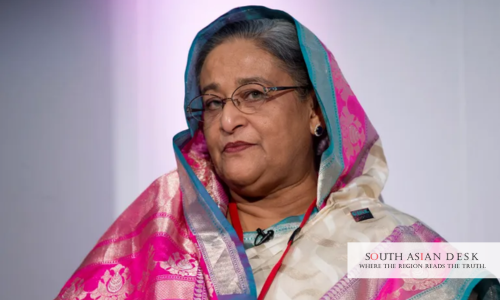
The report on enforced disappearances points to Sheikh Hasina’s direct involvement. It states that the centralised decision-making made it implausible for the system to function without her awareness.
Hasina, her defense adviser Major General Tariq Ahmed Siddique, and former Home Minister Asaduzzaman Khan Kamal face blame. The panel links Hasina to specific orders.
Notable cases include those involving BNP leaders Ilias Ali, Humam Quader Chowdhury, Salahuddin Ahmed, and Chowdhury Alam. Jamaat-e-Islami figures Abdullahil Amaan Azmi, Mir Ahmad Bin Quasem, and Maruf Zaman also feature.
Evidence suggests secret renditions to India without legal process. These required top-level authorisation.
Commission chairperson Justice Moinul Islam Chowdhury highlighted the misuse of intelligence agencies. He said they poked their noses into politics for power shares.
Chowdhury cited the Directorate General of Forces Intelligence’s interventions in non-intelligence matters. Examples include seizing the Islami Bank and attempting media takeovers. He emphasized that all previous governments had misused the Rapid Action Battalion, particularly the Awami League. Chowdhury called for disbanding the battalion to end the cycle.
The panel recommends withdrawing armed forces from civil intelligence. It urges reforming agencies and limiting the military to training and combat prep. Law and order should be the responsibility of the police. An elite force of skilled officers could handle specialised duties.
Chief Adviser Muhammad Yunus received the report at the Jamuna state guesthouse. He called the crimes brutal and a sign of institutional collapse.
Yunus praised the Bangladesh disappearances inquiry as historic. He ordered public access in simple language.
He instructed mapping all sites linked to killings and disappearances. This includes known torture centres. Yunus urged restructuring the National Human Rights Commission. He emphasised stronger victim protections to prevent recurrence.
Background: Rise of Forced Disappearances in Bangladesh
Forced disappearances in Bangladesh escalated under Hasina’s Awami League from 2009. The practice targeted opposition amid political tensions.
Protests against her rule intensified in 2024. A student-led uprising ousted Hasina in August 2024. She fled to India. In November 2025, courts sentenced Hasina to death in absentia. This stemmed from a crackdown that killed hundreds during the 2024 protests.
The interim government under Yunus established the commission after the ouster. It aimed to probe Hasina’s enforced disappearances. The panel’s work began in late 2025. Complaints poured in as victims felt safer to report.
International bodies, such as the United Nations, had flagged concerns earlier. Reports noted UAPA-like laws enabling detentions. Human rights groups documented cases. They estimated hundreds missing before the inquiry.
The report on enforced disappearances builds on these. It provides verified data and structural analysis. Cover-ups included labelling victims as pirates or drug traffickers. Such narratives lacked credibility, according to the panel.
Jamaat members faced surveillance and criminal cases before their release. BNP activists often vanished permanently. This selective targeting is closely tied to political ideologies. It aimed to suppress dissent.
What’s Next for Bangladesh Disappearances Inquiry
The commission seeks DNA testing for unidentified bodies. This could confirm more missing and dead cases. Recommendations include legal reforms. These aim to end forced disappearances in Bangladesh permanently.
The government may consider disbanding the Rapid Action Battalion. Intelligence reforms could follow. Victims’ families demand justice. Prosecutions against named officials might ensue.
International pressure could mount on India over Hasina’s exile. Extradition remains a flashpoint. The report’s public release may spur more complaints. This could raise the tally. Ongoing mapping of sites will aid evidence gathering. It supports future trials.
As Bangladesh rebuilds after Hasina, addressing these abuses is crucial. It fosters trust in institutions. The report on enforced disappearances sets a precedent. It may influence accountability in South Asia. Forced disappearances in Bangladesh demand sustained reforms to prevent return.
Published in SouthAsianDesk, January 6th, 2026
Follow SouthAsianDesk on X, Instagram and Facebook for insights on business and current affairs from across South Asia.