

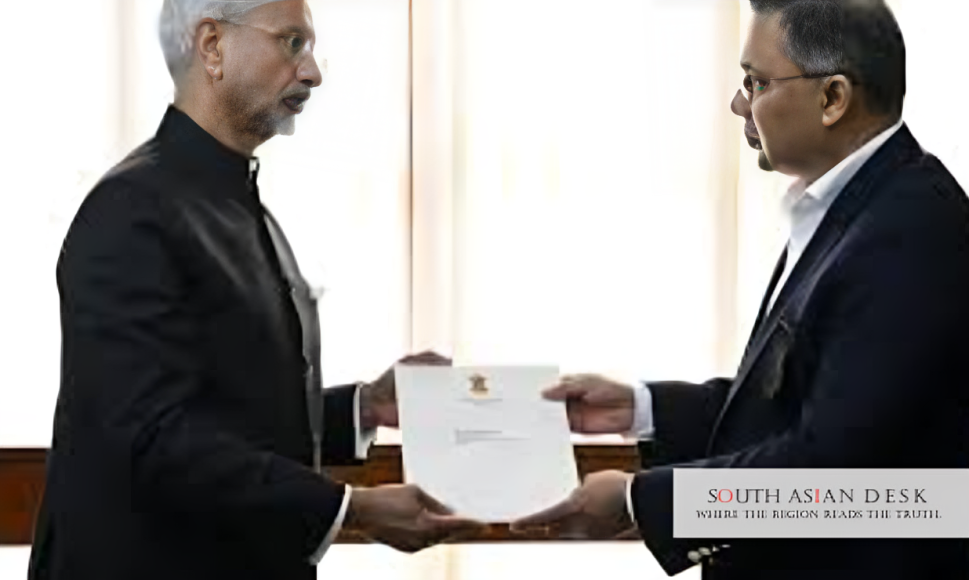
India’s foreign minister S Jaishankar met Bangladesh Nationalist Party acting chairman Tarique Rahman in Dhaka on 31 December 2025. The visit conveyed condolences over the death of former prime minister Khaleda Zia and expressed hopes for stronger bilateral ties amid India Bangladesh thaw. This move comes as Bangladesh prepares for national elections in February 2026, with the BNP emerging as a frontrunner. Sheikh Hasina, ousted in 2024, remains in exile in India, facing convictions back home.
The engagement marks a potential turning point in South Asian geopolitics. With Bangladesh’s political landscape reshaped after the 2024 uprising, India’s outreach to the BNP could stabilise border relations, trade, and security amid rising anti-India sentiments. Failure to adapt risks isolating New Delhi in a region where China’s influence grows.
BNP India Relations: A Shift from Mistrust
India’s meeting with Tarique Rahman highlights efforts to rebuild BNP India relations. Jaishankar delivered a letter from Prime Minister Narendra Modi and posted on X: “Conveyed deepest condolences on behalf of the Government and people of India. Expressed confidence that Begum Khaleda Zia’s vision and values will guide the development of our partnership.”
Humayun Kabir, foreign affairs adviser to Rahman, told Al Jazeera: “The relationship never existed between India and Bangladesh under Sheikh Hasina; it was just limited to Hasina.” He added: “Hasina used India in a bad way to legitimise her own crimes in Bangladesh, so people have a very bitter distaste for India.”
Historical tensions under BNP rule from 2001 to 2006 included border disputes, water sharing issues, and accusations of Dhaka sheltering anti-India militants. India’s preference for Hasina’s Awami League deepened the divide. Now, with the Awami League banned, India seeks to engage the BNP to protect interests like minority safety and counter-terrorism.
Analysts note Rahman’s return from 17 years in exile on 25 December 2025 positions him as a stabilising force. Harsh Vardhan Shringla, former Indian foreign secretary, said: “Rahman seems to understand that for him to be a successful prime minister, he needs India’s support – or, at the least, he doesn’t want India’s antagonism.”
Recent strains include a lynching of a Hindu man in Bangladesh and the murder of a 2024 protest leader, sparking protests. Visa services between the two nations paused temporarily. Bangladesh banned IPL broadcasts, and India dropped a Bangladeshi cricketer from a team amid backlash.
Bangladesh February Elections: Key Contenders and Stakes
The Bangladesh February elections will shape the nation’s future after the 2024 student-led uprising that ended Hasina’s 15-year rule. The interim government under Muhammad Yunus oversees the polls, with the BNP and a Jamaat-e-Islami-led coalition as main contenders.
The BNP has severed ties with Jamaat-e-Islami, which now allies with a party formed by student leaders. This split improves BNP India relations, as Jamaat’s pro-Pakistan leanings concern New Delhi. Sreeradha Datta, a South Asian studies professor, said: “Rahman’s apparent popularity – hundreds of thousands gathered on the streets of Dhaka to greet him when he arrived from London – suggests that he could bring a sense of stability in the neighbourhood.”
Jon Danilowicz, a former US diplomat, viewed the student revolutionaries and Jamaat as threats to Indian interests. Michael Kugelman, a South Asia analyst, noted: “There is a lot of baggage from the past, in addition to the BNP’s longstanding alliance with Jamaat.”
Voter turnout could exceed 80 percent, based on past trends, amid calls for fair polls. The elections follow inquiries into thousands of forced disappearances under Hasina, with UN estimates of 1400 deaths in the 2024 crackdown.
Sheikh Hasina Exile India: Lingering Tensions
Sheikh Hasina’s exile in India since July 2024 fuels discord. Convicted in absentia for the 2024 crackdown, she faces death penalty demands. Dhaka seeks her extradition, but India refuses, citing legal processes.
Kabir warned: “India needs to move on from Hasina’s era and should not be seen complicit with her rogue activities to destabilise Bangladesh, while she sits in India.” Hasina’s criticisms of the Yunus government from New Delhi anger Bangladeshi officials.
This issue tests the India Bangladesh thaw. Anti-India protests erupted over perceived support for Hasina, including attacks on Indian businesses. Anil Trigunayat, a former Indian diplomat, said: “India’s biggest challenge would be to keep a check on Pakistan and other anti-India militant groups being embedded in Bangladesh.”
Trade between the nations, valued at USD 12 billion in 2024, suffered from the tensions. Border security remains critical, with 4000 km shared frontier prone to smuggling and migration.
Background
Bangladesh’s politics trace to the 1971 liberation war, where India aided independence from Pakistan. The BNP, founded by Ziaur Rahman, gained power in 1991 but faced exile after 2006. Hasina’s Awami League dominated until the 2024 uprising, which killed hundreds and forced her flight.
Khaleda Zia’s death on 30 December 2025 at age 81 accelerated the India Bangladesh thaw. Her burial saw Rahman and Yunus together, signalling unity. The BNP now promises inclusive governance, minority protection, and balanced foreign policy.
India’s pivot reflects pragmatic diplomacy. Past BNP governments leaned towards Pakistan, but Rahman’s statements emphasise “Bangladesh first” and cooperation with neighbours.
What’s Next
Experts predict sustained dialogue to foster the India Bangladesh thaw. If the BNP wins the Bangladesh February elections, extradition talks on Sheikh Hasina’s exile in India could intensify. Kabir called for a “clean break from the past” to rebuild people-to-people ties.
Shringla urged watching Rahman’s actions. Kugelman said engagement is necessary despite baggage. Success hinges on addressing border issues, water sharing, and minority rights.
The India Bangladesh thaw could enhance regional stability, but mistrust lingers without concrete steps.
Published in SouthAsianDesk, January 7th, 2026
Follow SouthAsianDesk on X, Instagram and Facebook for insights on business and current affairs from across South Asia.
