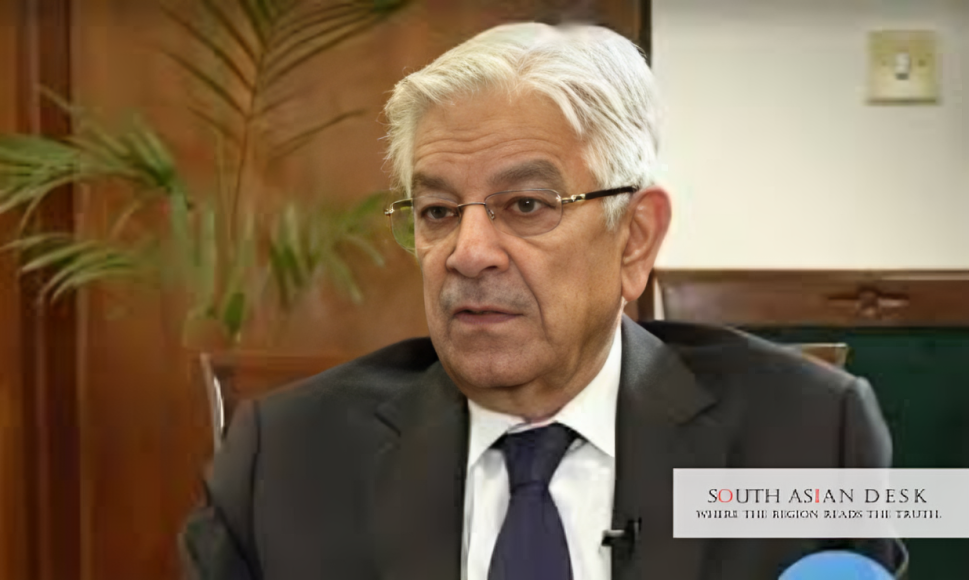
Defence Minister Khawaja Asif stated on Tuesday that Pakistan is fully prepared to confront aggression on eastern and western borders simultaneously. Khawaja stated about Pakistan two-front war. This comes amid heightened Pakistan India Afghanistan tensions following conflicts in 2025.
Pakistan’s declaration of readiness for a two-front war highlights the volatile security dynamics in South Asia. With nuclear capabilities on both sides of the eastern border and persistent instability on the western front, any escalation could disrupt regional trade routes and draw in international powers.
Khawaja Asif Borders Statement Sparks Debate
In a session on 6 January 2026, Defence Minister Khawaja Asif addressed concerns over Pakistan border readiness. He said: “Absolutely, we are ready, by the grace of God.” Asif referenced the May 2025 conflict with India as evidence of Pakistan’s capabilities in a potential Pakistan two-front war scenario.
The minister highlighted how Pakistan responded to Indian air strikes on 7 May 2025. Pakistan forces launched counter-attacks using guided weapons and drones, targeting Indian airbases, Line of Control posts, and S-400 systems. The four-day engagement ended with a ceasefire on 10 May 2025 after US intervention.
Asif claimed: “The way we gave them a crushing response is the strongest evidence that we were prepared and responded in time.” He added that the world saw how Indian Prime Minister Modi “lost all credibility both within his country and internationally” following the clashes.
Pakistan Border Readiness Demonstrated in 2025 Conflicts
Pakistan’s armed forces showcased their preparedness during the May 2025 war. According to official briefings, Pakistan Air Force downed at least six Indian fighter jets. The conflict began after an attack on tourists in occupied Kashmir, which India attributed to Pakistan. Islamabad denied involvement and called for a neutral probe.
On the western front, an October 2025 skirmish with Afghan Taliban forces tested Pakistan border readiness further. Tensions arose from cross-border incursions, with Pakistan accusing Kabul of sheltering militants. The brief exchange involved artillery fire but did not escalate to full war.
Inter Services Public Relations (ISPR) stated on 11 May 2025 that Pakistan maintained operational effectiveness on both fronts during the India conflict. DG ISPR said: “Pakistan’s armed forces and its people stand together — ready to overcome every challenge, internal or external.”
Recent defence orders for fighter aircraft underscore this readiness. Asif noted: “Recent orders for fighter aircraft show that our jets have been battle tested.” Pakistan has invested PKR 500 billion in military upgrades since 2025, focusing on drones and air defence systems.
Amid Pakistan India Afghanistan tensions, Islamabad has conducted joint exercises with allies. In December 2025, Pakistan and China held drills simulating two-front scenarios. These efforts aim to bolster deterrence against aggression.
Historical Context of Pakistan India Afghanistan Tensions
Relations between Pakistan and India have been strained since 1947, with multiple wars over Kashmir. The 2025 conflict marked the first major clash since 1999. India launched strikes in Punjab and Azad Kashmir, prompting Pakistan’s retaliation.
On the Afghanistan side, ties deteriorated after the Taliban regained power in 2021. Border fencing disputes and militant safe havens have fueled clashes. In October 2025, Pakistani forces repelled an incursion, killing 15 Taliban fighters.
Asif remarked: “You can determine from that how badly they were shattered — to the point that they had to call China.” This refers to India’s alleged outreach during the 2025 war. Pakistan maintains that its nuclear doctrine ensures no full-scale war with India, even in a Pakistan two-front war.
Experts note that Pakistan’s strategy relies on rapid mobilisation. The army can deploy 500,000 troops within days, as demonstrated in 2025. ISPR affirmed on 2 May 2025: “Army vows to respond decisively to any attempt to impose war on Pakistan.”
Challenges in Maintaining Pakistan Border Readiness
Despite claims, Pakistan faces logistical hurdles in a prolonged Pakistan two-front war. The western border spans 2,600 kilometres of rugged terrain, prone to insurgent attacks. Eastern defences along the 3,300-kilometre Line of Control require constant vigilance.
Funding remains a concern. Defence spending reached 2.8 percent of GDP in 2025, up from 2.5 percent in 2024. Asif hinted at reduced IMF reliance due to rising defence exports, valued at USD 300 million annually.
Pakistan India Afghanistan tensions have prompted diplomatic moves. In November 2025, Asif warned of “all-out hostilities” if provoked, urging dialogue. Islamabad hosted talks with Kabul in December 2025, but no breakthroughs occurred.
What’s Next for Regional Stability
Looking ahead, Pakistan seeks UN mediation on Kashmir to ease eastern pressures. On the western border, enhanced intelligence sharing with allies could prevent escalations. Asif expressed confidence: “Our armed forces’ strength is recognised by the entire world.”
This forward-looking stance aims to deter aggression while promoting peace. However, unresolved Pakistan India Afghanistan tensions could lead to further incidents, testing Pakistan border readiness anew.
In conclusion, Khawaja Asif’s assertion reinforces Pakistan’s posture in a potential Pakistan two-front war, backed by 2025 experiences and ongoing upgrades.
Published in SouthAsianDesk, January 7th, 2026
Follow SouthAsianDesk on X, Instagram and Facebook for insights on business and current affairs from across South Asia.