Pakistan’s military revealed Afghan nationals played key roles in major terror attacks last year, prompting cross-border strikes and heightened security measures amid rising regional tensions.
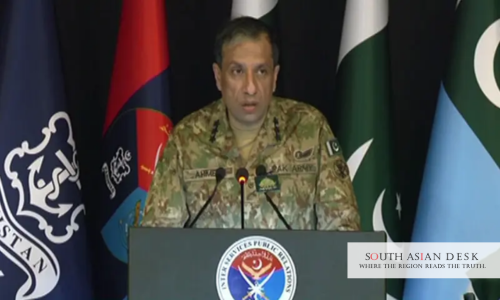
On Monday, 6 January 2026, in Islamabad, DG ISPR Lieutenant General Ahmed Sharif Chaudhry disclosed during a press conference that Afghan involvement in terrorism nationwide was a feature of all 10 major incidents in 2025. Security forces killed 2,597 terrorists in 75,175 operations, but 1,235 personnel and civilians died amid 5,397 attacks.
The revelations underscore escalating threats from Afghan soil, straining bilateral ties and demanding unified South Asian responses to cross-border militancy that jeopardises stability across the region.
DG ISPR Press Conference Highlights
Lieutenant General Ahmed Sharif Chaudhry addressed journalists at the DG ISPR press conference, labelling 2025 a landmark year in counter-terrorism. He stressed that terrorism remains Pakistan’s foremost threat, requiring national resolve. “This is the only purpose of this press conference, and I would request that we remain focused on counter-terrorism as terrorism is the biggest threat that is being faced by the state of Pakistan,” he said.
He outlined four reasons for the year’s significance: intensified operations, national consensus on labelling militants as khawarij with no Islamic links, international recognition of Afghanistan as a terror hub, and the revival of the National Action Plan under Azm-i-Istehkam.
Terrorism Incidents Pakistan 2025: Key Statistics
Terrorism incidents in Pakistan in 2025 reached 5,397, with 71% in Khyber Pakhtunkhwa at 3,811 and 29% in Balochistan at 1,557. Other regions saw 29 attacks. Security agencies conducted 75,175 intelligence-based operations, averaging 206 daily. These included 14,658 in Khyber Pakhtunkhwa, 58,778 in Balochistan, and 1,739 in other areas.
Forces killed 2,597 terrorists: 1,800 in Khyber Pakhtunkhwa, 784 in Balochistan, and 10 in other areas. Casualties totalled 1,235 martyrs among law enforcement and civilians. Suicide bombings numbered 27, with 16 in Khyber Pakhtunkhwa, 10 in Balochistan, and one in Islamabad. Two involved female bombers.
The ratio of terrorists killed to martyrs improved from 1:3 in 2021 to 2:1 in 2025. High-value targets included 16 militants, such as TTP shura deputy Amjad Ali.
Afghan Involvement in Pakistan Terrorism Exposed
DG ISPR highlighted Afghan involvement in Pakistan terrorism as central to the surge. All 10 major high-impact incidents involved Afghans, resulting in 78 terrorists killed; none escaped. These attacks claimed 60 civilian lives. “And who are involved in all of these high-impact [terror incidents]? They are all Afghans,” Chaudhry stated.
He accused the Afghan Taliban of nurturing terrorism, serving as the “mother organisation” for groups like TTP. Afghanistan has become a hub post-2021 Doha Agreement, with unmet pledges on governance and barring terrorist use of its soil. Around 2,500 foreign fighters from Syria entered Afghanistan recently.
US equipment worth USD 7.2 billion, including night-vision devices and rifles, reached militants via black markets. India emerged as the primary patron, providing funds and technology, such as quadcopters, used in 405 attacks in Khyber Pakhtunkhwa.
Security forces use drones primarily for surveillance purposes to minimize collateral damage. “We use it with care, and your army does not cause any collateral damage. We hit only terrorists and their facilitators,” the DG ISPR noted.
TTP Attacks Pakistan 2025 and Counter Measures
TTP attacks Pakistan 2025 intensified after Pakistan’s May 2025 victory in a brief conflict with India, using Afghan bases. The Afghan Taliban organised, trained, and directed TTP, mirroring their structure. They promoted a narrative of defeating US forces to recruit new members.
In October 2025, Pakistan launched strikes on TTP sites along the border, targeting Pakistani citizens involved in terrorism, not Afghan Taliban posts. Dozens of Afghan positions were hit in retaliation. The border closure followed, boosting the number of terrorists killed to 276 monthly in the final quarter.
Chaudhry emphasised: “We targeted our own citizens who were present there and involved in terrorism in Pakistan.” Evidence shows the Afghan Taliban granting refuge, prompting calls for a verifiable mechanism against cross-border threats.
Non-kinetic efforts included community engagements, with videos showing military-public unity. In Balochistan, 472 district meetings took place from February to November 2025, resulting in the completion of 127 projects with provincial funds amounting to PKR 23 billion and federal funds of PKR 8 billion. Another 949 projects are planned.
Afghan repatriation under the NAP progressed unevenly: all camps in Punjab and Balochistan were cleared, but only 5 of 43 in Khyber Pakhtunkhwa. Of 150,000 repatriated from Khyber Pakhtunkhwa, just 1.2% were deported.
Low conviction rates in courts for narcotics, weapons, and terrorism cases hinder progress, especially in Khyber Pakhtunkhwa.
Background: Rise in Regional Militancy
Post-2021 US withdrawal, Afghanistan’s instability fuelled militancy exports. UN reports note 20 terrorist groups there. Pakistan first flagged this two years ago, and it is now gaining global acknowledgment. The Afghan Taliban shifted to a war economy after losing USD 144 billion in aid, seeking patrons like India for proxy actions against Pakistan.
Internal facilitators and external sponsors exacerbate threats. Militants lack ideology or nationality; “There is only one type of good terrorist: a dead terrorist,” Chaudhry said.
Confessions from captured terrorists, including a Balochistan professor, linked to Indian media clips showing collusion.
What’s Next
Pakistan vows to continue operations with force, not appeasement. Diplomatic engagement with Afghanistan persists, but firm responses to threats remain a priority. The border closure yields benefits, with no reported losses. Enhanced NAP implementation and court reforms could curb future incidents.
Ongoing Afghan involvement in Pakistan terrorism demands vigilance, as unresolved repatriation and border issues risk sustained TTP attacks, Pakistan 2025 patterns into 2026.
Published in SouthAsianDesk, January 7th, 2026
Follow SouthAsianDesk on X, Instagram and Facebook for insights on business and current affairs from across South Asia.