Islamabad, Monday, January 12, 2026 — Pakistan’s Planning Minister Ahsan Iqbal has warned that the nation’s development, economic sovereignty, and national security depend on accelerating exports to shift to an export-led growth model. A prime minister-appointed panel, chaired by Iqbal, has recommended urgent Pakistan export reforms to address structural constraints and double exports from the current $30-35 billion to over $60 billion within three years.
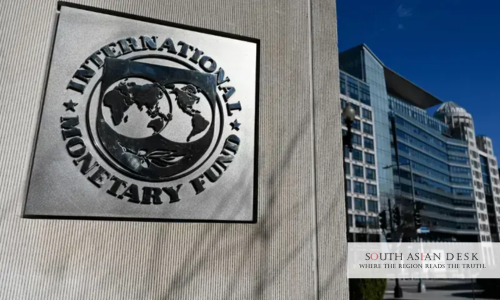
The proposals come amid Pakistan’s ongoing $8.4 billion IMF Extended Fund Facility, set to expire at the end of 2027. The panel stresses that without rapid export growth and stronger foreign exchange reserves, the country risks needing another IMF programme.
Ahsan Iqbal Export Plan Targets Structural Overhaul
The panel’s recommendations focus on easing high energy costs, overhauling tariffs, reducing policy unpredictability, and tackling institutional fragmentation. High and volatile energy prices above regional benchmarks inflate production costs across manufacturing, agro-processing, minerals, fisheries, and services sectors.
The plan calls for debt refinancing and rationalisation of price structures for electricity and gas. It also targets distortionary taxation, including inverted input tariffs, advance income tax deductions, delayed sales tax refunds, and working capital lockups that hit exporters and small and medium enterprises (SMEs) hardest.
Policy unpredictability from frequent changes in tax policy, energy pricing, tariff structures, export incentives, and regulations constrains long-term planning and scaling. The panel urges consistent policies to enable exporters to invest confidently.
Institutional issues include inconsistent SME definitions across the State Bank of Pakistan, SMEDA, Federal Board of Revenue, and provincial authorities, alongside overlapping mandates, discretionary enforcement, excessive audits, and weak coordination.
Uraan Pakistan Plan Drives Export-Led Growth
These Pakistan export reforms align with the Uraan Pakistan plan, the government’s five-year National Economic Transformation Plan (2024-29), launched on 31 December 2024. The Uraan Pakistan plan centres on five pillars — Exports, E-Pakistan, Environment (including food and water security), Energy and Infrastructure, and Equity, Ethics and Empowerment.
The first pillar emphasises export-led growth, targeting $60 billion in annual exports by prioritising sectors such as IT, manufacturing, agriculture, minerals, manpower, blue economy, and creative industries. The plan aims for sustainable GDP growth of 6% by 2028, one million additional jobs annually, and $10 billion in private investment per year.
Ahsan Iqbal has described the transition to export-led growth as essential for long-term economic sustainability. In recent statements, he has pushed for exports to reach higher ambitions, including up to $100 billion in some contexts, though the immediate panel focus remains on doubling to over $60 billion.
The Uraan Pakistan plan includes a data-driven, sector-specific roadmap developed through stakeholder consultations. From 5 to 9 January 2026, the panel held sessions with public and private sector representatives. An ongoing private-sector survey will refine inputs, leading to product-wise diagnostics and a targeted facilitation framework for submission to the prime minister.
Priority Sectors and Export Drivers Face Multiple Constraints
The reforms address challenges affecting 20 priority export products and six export drivers. The products include copper, gems and jewellery, software and IT services, fish and fish preparations, rice, fruits and vegetables, meat and meat preparations, guar gum, handicrafts, textile and apparel, sports goods, leather and leather products, surgical instruments, chemicals and pharmaceuticals, cement, carpets and rugs, engineering goods, footwear, plastic material, and cutlery.
Constraints include weak quality infrastructure, limited access to finance, and logistics bottlenecks such as high inland freight, underutilised rail, port congestion, slow customs clearance, inadequate cold-chain facilities, and weak courier systems for SMEs.
Additional measures involve improving domestic quality testing and compliance to reduce reliance on overseas laboratories, enhancing export credit, insurance, guarantees, and long-term financing instruments, reforming export facilitation schemes to cut procedural delays, and addressing skills gaps, low value addition, and weak branding for higher-value market entry.
Why Export Growth Matters for South Asia
In South Asia, where economies compete for global market share in textiles, agriculture, and IT services, Pakistan’s stagnant export performance has contributed to recurring balance-of-payments pressures. Successful Pakistan export reforms under the Uraan Pakistan plan could boost regional competitiveness, attract investment, and reduce dependence on external financing, offering a model for neighbours facing similar structural challenges.
What’s Next for Pakistan Export Reforms
The panel will consolidate findings into a comprehensive roadmap, subject to IMF conditions. Implementation will require coordination across ministries, provinces, and the Special Investment Facilitation Council. Fortnightly reviews and alignment with the Uraan Pakistan plan will ensure accountability.
Success hinges on political stability, policy continuity, and private sector engagement. Ahsan Iqbal has called for banks to establish special export development windows and for collective efforts to realise the vision.
These Pakistan export reforms represent a critical step towards breaking the cycle of IMF dependency and building resilient foreign exchange reserves through sustained export growth.
Published in SouthAsianDesk, January 12th, 2026
Follow SouthAsianDesk on X, Instagram and Facebook for insights on business and current affairs from across South Asia.