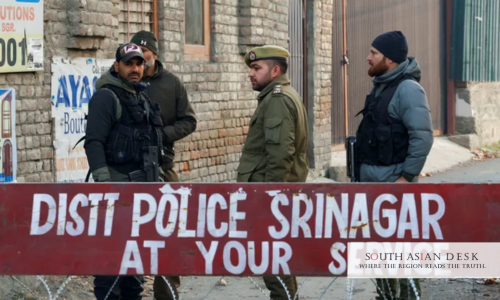
Indian authorities have imposed a sweeping Kashmir VPN ban across multiple districts in Jammu and Kashmir since 29 December 2025, citing national security concerns. More than 100 residents have faced police action for alleged violations, intensifying psychological pressure on VPN Kashmir and raising serious concerns about internet freedom in Kashmir.
Indian-administered Kashmir has witnessed the rapid rollout of district-level orders banning the use of virtual private networks (VPNs). Residents describe the Kashmir VPN ban as a significant escalation in existing digital restrictions, further limiting access to secure internet tools in a region already marked by frequent communication curbs.
India VPN Restrictions Kashmir Intensify
District magistrates in several Kashmir districts invoked Section 163 of the Bharatiya Nagarik Suraksha Sanhita 2023 to prohibit unauthorised VPN applications on mobile phones and other devices. The orders, which took effect from 29 December 2025 in Kupwara, were quickly extended to Shopian, Kulgam, Budgam, Srinagar, and other areas.
Police initiated widespread verification campaigns, stopping individuals to check their devices for VPN software. By early January 2026, authorities reported that over 100 people had been questioned, with phones examined for potential links to terrorist activity. Genuine users typically received warnings, while suspected violators faced preventive legal action.
In Budgam, the police registered two FIRs against alleged violators by January 3, 2026, and 11 individuals were bound under prohibitory orders. A police statement issued on January 2, 2026, confirmed that enforcement followed sustained monitoring of online activity since the ban began.
Officials justify the India VPN restrictions in Kashmir by arguing that VPNs conceal IP addresses, enable encrypted communication, and allow users to bypass government-imposed blocks. Such tools, they claim, can facilitate the spread of misinformation and incite unrest.
Residents and rights advocates report aggressive enforcement tactics, including demands to unlock phones. Digital rights groups have criticized these practices as disproportionate and a violation of fundamental rights.
Psychological Pressure VPN Kashmir Mounts
The Kashmir VPN ban has significantly increased psychological pressure on VPN users in Kashmir, particularly for professionals who rely on secure connections for their work.
IT professional Basit Banday, 27, from Pulwama, explained: “VPN is mandatory for any IT organisation. Even corporate email cannot be accessed without it.” The restriction threatens remote employment opportunities for many Kashmiris working with companies outside the region.
Journalists also face heightened risks. A 32-year-old Kashmiri reporter stated: “It is common for journalists in conflict zones to use VPNs for safety.” Without these tools, accessing restricted websites or protecting sensitive communications becomes extremely difficult, further undermining internet freedom in Kashmir.
Religious content consumers and small business owners have been similarly affected. Mir Umair, 24, from Srinagar, used VPNs to access banned religious channels such as Bayyinah TV. He said: “There’s nothing political in his speeches. Just religion.”
Digital rights activist Srinivas Kodali described the blanket ban as unjustified, noting that “people from diverse professions use VPNs for legitimate reasons.” He criticised the routine nature of such measures in Kashmir.
ProtonVPN head David Peterson drew parallels with repressive regimes in Iran and China, where VPNs serve as essential safeguards for users in high-risk environments.
Background
The communication landscape in Kashmir has been shaped by decades of political conflict. Following the 1947 partition, the region was divided between India and Pakistan, leading to three wars and ongoing territorial claims. An armed insurgency against Indian rule began in the late 1980s, prompting the deployment of large security forces and resulting in tens of thousands of deaths, mostly civilians.
In August 2019, the Indian government revoked Article 370, ending Jammu and Kashmir’s special constitutional status and bringing it under direct central administration. A prolonged internet blackout followed in 2020, recognised as the longest in democratic history. According to Access Now, India has imposed 901 internet shutdowns since 2012, with Jammu and Kashmir accounting for nearly half of them.
The current Kashmir VPN ban fits into this broader pattern of digital control. India remains the world’s largest VPN market, with approximately 20 percent of its 800 million internet users employing such services, generating a market value of USD 17 billion (Surfshark data).
Legal experts have questioned the constitutional validity of the orders under India’s Information Technology Rules. Despite these concerns, enforcement continues.
What’s Next
Most district orders are set to remain in force for two months, potentially extending beyond late February 2026, if authorities deem the security threats to be persistent. Tighter restrictions are widely anticipated around Republic Day on 26 January 2026.
Digital rights organisations are preparing legal challenges, seeking judicial review of the orders. In the meantime, many users continue to search for workarounds, risking further penalties in their pursuit of internet freedom in Kashmir.
The Kashmir VPN ban underscores the ongoing tension between national security imperatives and individual digital rights in one of South Asia’s most sensitive regions.
Published in SouthAsianDesk, January 13th, 2026
Follow SouthAsianDesk on X, Instagram and Facebook for insights on business and current affairs from across South Asia.