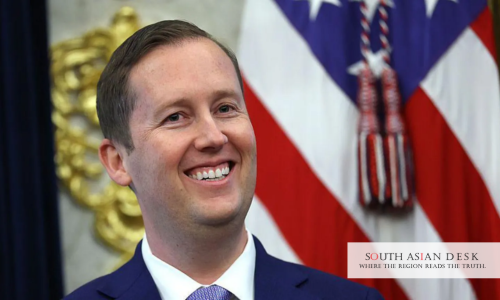
US Ambassador Sergio Gor stated on January 12, 2026, that India and the United States are actively engaged in advancing the India-US trade deal, with the next round of talks scheduled for January 13, 2026. The announcement by the newly appointed envoy comes amid ongoing challenges posed by India’s Russian oil tariffs and previous hurdles in Trump-Modi trade talks.
Sergio Gor, who assumed his post in New Delhi on the same day, expressed a strong commitment to concluding the bilateral trade agreement despite the complexities arising from the scale of both economies. His remarks reflect renewed momentum to strengthen ties following several months of tariff disputes and public disagreements.
Sergio Gor India: Fresh Momentum from New Envoy
Sergio Gor India delivered his arrival remarks on 12 January 2026, describing the US-India partnership as potentially the most consequential of the century. He stated: “India is the world’s largest nation, so it’s not an easy task to get this across the finish line, but we are determined to get there.”
The ambassador confirmed continued progress on the India-US trade deal, adding, “Both sides continue to actively engage. In fact, the next call on trade will occur tomorrow.” He noted that the discussions extend well beyond trade to include security, counterterrorism, energy, technology, education, and health cooperation.
Gor emphasised the importance of personal diplomacy, highlighting President Donald Trump’s warm regards for Prime Minister Narendra Modi and describing their relationship as “real.” He remarked, “Real friends can disagree, but always resolve their differences in the end.”
The envoy also announced that India has received an invitation to join Pax Silica next month, a US-led initiative aimed at building a secure global silicon supply chain with eight partner countries.
Indian markets responded positively to Gor’s optimistic tone, with key indices showing modest gains.
India, Russian Oil Tariffs Continue to Complicate Talks
The India-US trade deal faces persistent obstacles related to US tariffs on India’s purchases of Russian oil. In August 2025, the United States imposed a 50% tariff on select Indian goods, incorporating a 25% punitive duty related to energy imports from Russia.
President Trump warned in early January 2026 that additional tariff increases could follow if India does not reduce its reliance on Russian oil. He stated, “We could raise tariffs on India if they don’t help on the Russian oil issue.”
Indian refiners have already significantly reduced volumes of Russian crude in response to the current measures.
A proposed U.S. sanctions bill, known as the Sanctioning Russia Act of 2025, could impose secondary tariffs of up to 500% on nations that continue to purchase Russian oil. U.S. Senator Lindsey Graham confirmed that President Trump had approved moving forward with the legislation.
India has defended its energy procurement strategy as a matter of national interest and market necessity. The Ministry of External Affairs has called the proposed sanctions “unfair, unjustified, and unreasonable.”
Trump Modi Trade Talks: Overcoming Earlier Setbacks
Trump and Modi trade talks have experienced several public disagreements in recent months. US Commerce Secretary Howard Lutnick claimed the deal stalled because Prime Minister Modi did not make an expected call to finalise the agreement. Lutnick said: “It was all set up… Modi didn’t call.”
India’s Foreign Ministry spokesperson Randhir Jaiswal rejected this version of events as “not accurate.” He explained that both sides had been “close to a deal” on multiple occasions since formal negotiations began in February 2025. Jaiswal added that Modi and Trump held eight conversations throughout 2025 covering various dimensions of the bilateral partnership.
Talks have resumed after initial interruptions, with several rounds completed. The United States continues to press for greater access to India’s agricultural market, an area where India has maintained firm positions.
Both governments have reiterated their commitment to achieving a balanced and mutually beneficial trade agreement.
Background
Negotiations for a comprehensive bilateral trade agreement between India and the United States commenced in early 2025. The lack of such a pact positions India as one of the few major economies without a formal trade framework with Washington.
Tariffs introduced in 2025 have impacted Indian exports in labour-intensive sectors such as textiles, pharmaceuticals, and marine products. The Indian rupee faced notable depreciation pressure amid investor concerns over prolonged economic delays.
The broader strategic relationship, encompassing Quad cooperation, defence partnerships, and technology collaboration, continues to develop alongside these trade challenges.
What’s Next
The trade discussion scheduled for January 13, 2026, represents an immediate opportunity to make tangible progress on the India-US trade deal and potentially reduce tariff-related tensions.
Ongoing developments related to the proposed Russia sanctions bill will continue to shape the negotiation environment. India’s potential participation in Pax Silica could pave the way for expanded cooperation in critical technology sectors.
Under the leadership of the new US ambassador, the India-US trade deal remains a key priority in defining the future trajectory of one of the world’s most important bilateral relationships.
Published in SouthAsianDesk, January 13th, 2026
Follow SouthAsianDesk on X, Instagram and Facebook for insights on business and current affairs from across South Asia.