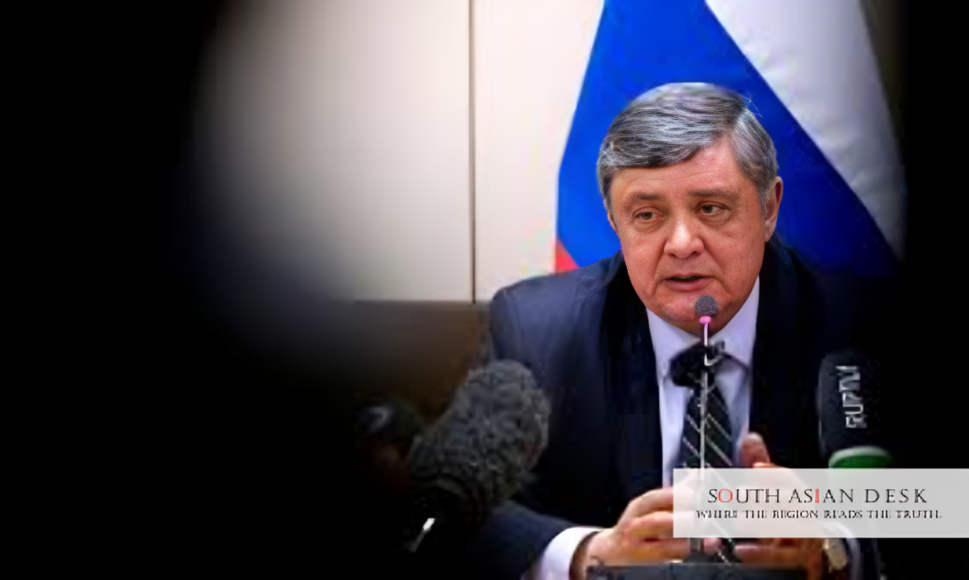
Russia’s special presidential envoy for Afghanistan, Zamir Kabulov, confirmed on 13 January 2026 that Moscow maintains no talks with US on Afghan matters. This declaration from Kabulov underscores the absence of Russia US Afghanistan negotiations, amid heightened concerns over regional security in South Asia. Russia’s envoy Zamir Kabulov stated in Moscow that no Moscow Washington Afghanistan contacts exist currently. He told TASS there have been no approaches from the US side, leading to zero discussions on Afghanistan. This stance aligns with his 2023 comments on severed channels.
The lack of Russia US Afghanistan negotiations matters deeply in South Asia. Afghanistan’s instability directly influences neighbours like Pakistan, which grapples with cross-border terrorism, and India, focused on countering threats from groups such as ISIS-K. Without coordinated efforts between major powers, risks of escalated conflicts rise, potentially destabilising trade routes and refugee flows in the region.
Zamir Kabulov Afghanistan Insights
Zamir Kabulov Afghanistan role as Russia’s key diplomat has shaped Moscow’s policy since the Taliban regained control in 2021. In his recent interview, Kabulov emphasised: “No, they have not made contact, which is why there has been no such conversation so far.” This reiterates Russia’s position that US sanctions and hostility hinder dialogue.
Experts note that Zamir Kabulov Afghanistan statements reflect broader geopolitical shifts. Russia has engaged with the Taliban through formats like the Moscow consultations, hosting delegations in 2025. However, without Russia US Afghanistan negotiations, joint actions against terrorism remain stalled. South Asian nations, including Pakistan and India, rely on such cooperation to address threats from Afghan soil.
Pakistan faces direct fallout. Islamabad has deported over 1 million Afghan refugees since 2025, citing security risks. Tensions with Kabul escalated in October 2025 after border clashes, blamed on insurgents. The absence of Moscow Washington Afghanistan contacts means no unified pressure on the Taliban to curb militancy, exacerbating Pakistan’s internal instability.
India, meanwhile, has strengthened ties with Afghanistan through aid and trade. New Delhi hosted a regional security dialogue in 2021, involving Russia and Central Asian states. Yet, without Russia US Afghanistan negotiations, India’s concerns over Kashmir-linked terrorism persist. A 2025 terrorist attack in Pahalgam heightened fears of spillover, with alleged Pakistan ties.
Russia US Afghanistan Negotiations History
Russia US Afghanistan negotiations have been sporadic since the US withdrawal in 2021. Earlier, both powers cooperated on counter-narcotics and stability. But relations soured post-Ukraine conflict in 2022. Kabulov noted in 2023 that all channels vanished, a point echoed now.
Moscow Washington Afghanistan contacts were once facilitated through envoys like Thomas West for the US. However, US focus shifted to other regions, leaving a vacuum. Russia filled part of it by recognising the Taliban formally in 2024, the only major power to do so. This move aimed at economic ties, including potential pipelines through Afghanistan to South Asia.
In South Asia, the implications are stark. Pakistan’s military enhanced powers via 2025 constitutional changes, bolstering its stance against Afghan threats. India, facing US tariffs under Trump, turned to Russia for arms and energy. Joint statements in December 2025 between Modi and Putin stressed coordination on Afghanistan, but without US involvement, progress stalls.
Data from the International Crisis Group highlights 2025 as a year of near-misses. Afghanistan-Pakistan clashes and India-Pakistan exchanges in Kashmir risked wider war. The lack of Russia US Afghanistan negotiations amplifies these dangers, as no forum exists for de-escalation.
Background
Afghanistan’s turmoil traces to the 2021 Taliban takeover after US forces left. Russia, wary of extremism spilling into Central Asia, initiated the Moscow Format in 2017. This platform includes China, Iran, and Pakistan, but excludes the US. Zamir Kabulov Afghanistan leadership in these talks has positioned Russia as a mediator.
South Asia’s stake is high. Pakistan hosts millions of Afghan refugees, straining resources. India invested over USD 3 billion in Afghan infrastructure pre-2021, now at risk. Both nations fear Taliban harbouring groups like Tehrik-e-Taliban Pakistan or Lashkar-e-Taiba.
Moscow Washington Afghanistan contacts dwindled amid broader US-Russia tensions. The Ukraine war diverted attention, with Russia prioritising Europe. US sanctions on Russia further eroded trust, leading to Kabulov’s firm rejection.
What’s Next after Russia Rejects Talks with US Over Afghanistan
Regional forums like the Shanghai Cooperation Organisation may fill the gap left by absent Russia US Afghanistan negotiations. India and Pakistan could pursue bilateral tracks, but experts predict heightened vigilance against terrorism. Russia rejects talks with US over Afghanistan unless Washington shifts its approach, potentially prolonging isolation.
Zamir Kabulov Afghanistan comments signal Moscow’s focus on independent ties with Kabul. South Asia must navigate this divide, with Pakistan seeking Gulf support and India deepening Russia relations. Without renewed Moscow Washington Afghanistan contacts, instability may persist.
The declaration reinforces Russia’s standalone strategy. As South Asian economies recover from 2025 disruptions, coordinated global action remains vital. Yet, with no Russia US Afghanistan negotiations on the horizon, local initiatives will define the path forward.
Russia rejects talks with US over Afghanistan, a stance that could hinder counter-ISIS efforts. Joint operations in the past disrupted networks, but current divides weaken responses. Pakistan reported 500 terrorism incidents in 2025, many linked to Afghan borders.
India’s intelligence agencies warn of similar threats. The absence of Moscow Washington Afghanistan contacts means fragmented intelligence sharing. Regional powers must compensate, perhaps through trilateral formats with China.
Zamir Kabulov Afghanistan expertise, from his ambassadorship in Kabul (2004-2009), informs Russia’s caution. He views US policies as destabilising, preferring direct Taliban engagement.
In conclusion, Russia rejects talks with US over Afghanistan, prioritising its regional alliances.
Published in SouthAsianDesk, January 15th, 2026
Follow SouthAsianDesk on X, Instagram and Facebook for insights on business and current affairs from across South Asia.