The Commission of Inquiry on Enforced Disappearances has confirmed 1,569 cases of enforced disappearances during the Awami League’s 15-year rule, describing them as systematic, politically motivated crimes with spikes ahead of elections targeting opposition members.
Dhaka, Saturday, January 17, 2026 – Bangladesh’s Commission of Inquiry on Enforced Disappearances has verified 1,569 cases of enforced disappearances in Bangladesh under the former Awami League government. The final report, submitted on January 4, 2026, to Chief Adviser Professor Muhammad Yunus, reveals that these forced disappearances in Bangladesh were institutional and driven by political motives, primarily targeting members of opposition parties such as BNP and Jamaat-e-Islami.
The findings highlight a pattern of state-sponsored abductions that violated human rights and eroded public trust, with significant implications for accountability in South Asian transitional governance.
Commission Report Enforced Disappearances: Core Statistics and Verification
The commission received 1,913 complaints following its establishment on August 27, 2024. After thorough verification, 1,569 cases satisfied the criteria for enforced disappearances in Bangladesh. Among these, 287 cases fall into the “missing and dead” category, including 251 individuals still missing and presumed dead, plus 36 bodies recovered.
Of the verified cases, many victims resurfaced after periods of secret detention, often facing fabricated charges. The report estimates the actual number of forced disappearances in Bangladesh during 2009–2024 could range from 4,000 to 6,000, accounting for underreporting due to fear.
The commission documented peaks in incidents during election periods: cases rose significantly in years such as 2013, 2014, 2017, and 2018, aligning with political contests in which opposition figures faced heightened risks.
Awami League Disappearances: Agencies and Patterns
Multiple state agencies were implicated in the Awami League disappearances. The Rapid Action Battalion (RAB) accounted for approximately 25% of cases, the police for 23%, and the Detective Branch (DB) for 14.5%. Other entities, including the Directorate General of Forces Intelligence (DGFI), National Security Intelligence (NSI), and Counter Terrorism and Transnational Crime (CTTC) unit, participated in joint operations.
Victims, predominantly male (1,546) and aged 15–59, included students, activists, businesspeople, and politicians. Political affiliations showed clear bias: around 50.2% linked to Jamaat-e-Islami, 24.9% to Islami Chhatra Shibir, and 15% to BNP. Among resurfaced victims, 75% belonged to Jamaat-Shibir, while 68% of those still missing were BNP affiliates.
Methods involved plainclothes abductions, blindfolding, cross-border renditions (including cooperation with Indian authorities in some instances), and transfer to secret detention facilities.
Forced Disappearances in Bangladesh: Torture and Detention Infrastructure
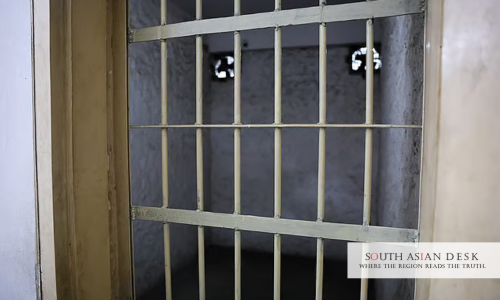
Forced disappearances in Bangladesh featured routine torture in hidden centres. Survivors described electric shocks, waterboarding, stress positions, beatings, and coerced confessions under Section 164 of the Criminal Procedure Code. Facilities included disguised locations such as clinics or stores, with RAB’s Training and Field Intelligence unit in Uttara featuring soundproof cells equipped for prolonged abuse.
The report characterises these as coordinated, institutional practices, not isolated incidents, serving as a tool of governance to suppress dissent. High-level direction is alleged, with evidence pointing to former Prime Minister Sheikh Hasina and senior officials.
Background
The Awami League governed from 2009 until its ouster in August 2024 amid a student-led uprising. Enforced disappearances became prominent after 2012, with documented increases in politically charged years. Bangladesh acceded to the International Convention for the Protection of All Persons from Enforced Disappearance in 2024.
The interim government, under Chief Adviser Muhammad Yunus, formed the five-member commission, chaired by Justice Moyeenul Islam Chowdhury. It submitted interim reports in December 2024 and June 2025, with the mandate extended to December 31, 2025, before finalisation.
The commission interviewed 765 individuals, including victims and families, and questioned 222 officials from various forces.
What’s Next
The report urges prosecutions under the International Crimes (Tribunals) Act 1973, classifying enforced disappearances in Bangladesh as crimes against humanity. Recommendations include a new ordinance for prevention and redress, establishment of a permanent framework, a national DNA database for identification, investigation of suspected mass graves, and reforms to security agencies and the judiciary.
Over 200 cases have been recommended for FIR registration, with exhumations ongoing in areas like Barisal. International forensic assistance and cooperation for cross-border cases are sought.
Addressing enforced disappearances in Bangladesh is essential for rebuilding institutional trust and preventing recurrence in the country’s evolving political landscape.
Published in SouthAsianDesk, January 17th, 2026
Follow SouthAsianDesk on X, Instagram and Facebook for insights on business and current affairs from across South Asia.