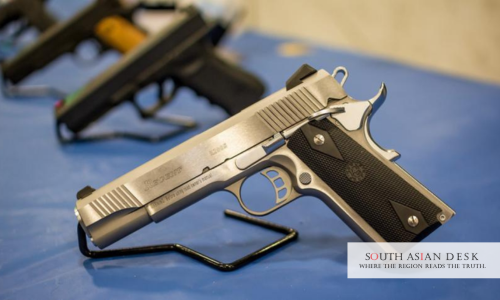
Dhaka, 19 January 2026: Bangladesh’s interim government has ordered a Bangladesh firearms deposit, requiring all firearms licence holders to submit their weapons at the nearest police station by 31 January 2026. The directive, issued by the Ministry of Home Affairs, aims to enhance security before the 12 February national election and referendum.
This firearms licence holders order underscores broader efforts to maintain law and order in South Asia’s densely populated nations during electoral periods. In Bangladesh, where political tensions can escalate, such measures prevent potential violence, ensuring fair polls and protecting public safety amid historical precedents of election-related unrest.
Firearms Licence Holders Order: Key Provisions
The firearms licence holders order prohibits carrying or displaying firearms until 15 February 2026. Exceptions apply to politically important persons and parliamentary candidates with accepted nominations, including their authorised armed retainers. The Ministry of Home Affairs political-4 wing issued the notification on 18 January 2026.
Violations attract legal action under the Arms Act 1878. Superintendents of police must enforce compliance. Law enforcement officials describe the Bangladesh firearms deposit as a routine step to reduce risks of intimidation and clashes during voting.
The order aligns with recent policy guidelines. On 14 December 2025, the government released the Firearm Licence and Retainer Appointment Policy-2025 for Politically Important Persons and Candidates for the Post of Member of Parliament. This framework allows temporary licences after scrutiny by district magistrates and intelligence agencies.
Under the policy, applicants must be Bangladeshi citizens, at least 25 years old, with no criminal records. Retainers require military or police experience. Licences expire 15 days after election results, then cancel automatically unless converted to general licences.
Bangladesh Weapons Deposit Jan 31 Deadline
The Bangladesh weapons deposit Jan 31 deadline applies nationwide. Licence holders must comply without exception, except for exempted categories. The measure covers all licensed firearms, ensuring temporary suspension during the sensitive period.
Ministry guidelines emphasise scrutiny for threats. Approved retainers carry firearms for protection. The policy relaxes income tax requirements but mandates clean records.
This Bangladesh firearms deposit follows standard protocols. During past elections, similar bans curbed misuse. The Arms Act 1878 provides the legal basis, empowering authorities to regulate possession.
Enforcement involves police stations as deposit points. Holders receive receipts for retrieval post-15 February. Non-compliance risks fines, imprisonment, or licence revocation under the Act.
Background on Election Firearms Ban Bangladesh
The election firearms ban Bangladesh context stems from the country’s history of electoral violence. Since independence in 1971, polls have seen clashes, often involving armed groups. The 2018 election reported over 100 incidents, prompting stricter controls.
The interim government, formed after recent political shifts, prioritises neutral administration. The 13th parliamentary election includes a referendum, heightening stakes. Voter turnout exceeds 80 percent typically, with 120 million eligible.
Firearms regulation in Bangladesh falls under the Ministry of Home Affairs. As of 2025, thousands hold licences, mainly for personal security. Renewal for 2026 occurs from 2 November 2025 to 31 January 2026, coinciding with the deposit deadline.
The Firearm License Issuance, Renewal and Use Policy 2025, issued on 10 July 2025, sets fees: BDT 10,000 for dealers, BDT 6,000 for safe-keeping. Applicants submit documents including TIN certificates and photos.
South Asia sees similar measures. India enforces arms deposits during polls under the Election Commission. Pakistan bans carrying during sensitive times. These prevent misuse in regions with active insurgencies or political rivalries.
In Bangladesh, the ban addresses concerns over partisan violence. Intelligence reports guide exemptions, ensuring only verified needs allow retention.
The policy for candidates specifies one retainer per person. Approval involves home ministry review. This balances security with restrictions.
Implications of Election Firearms Ban Bangladesh
The election firearms ban Bangladesh impacts civic life. Businesses reliant on security may face disruptions. Rural areas, where licences aid against theft, see temporary vulnerabilities.
Advocates praise the move for promoting peace. Critics argue it burdens law-abiding citizens while criminals evade. Enforcement challenges persist in remote districts.
Police prepare through awareness campaigns. Stations stock secure storage. Retrieval post-ban requires verification.
Regional observers monitor compliance. The South Asian Association for Regional Cooperation notes such steps enhance democratic processes.
What’s Next
By 31 January 2026, compliance monitoring intensifies. Police report non-adherence to the ministry. Post-election, normalcy resumes after 15 February.
The Bangladesh firearms deposit reinforces electoral integrity, setting precedents for future polls.
Published in SouthAsianDesk, January 19th, 2026
Follow SouthAsianDesk on X, Instagram and Facebook for insights on business and current affairs from across South Asia.