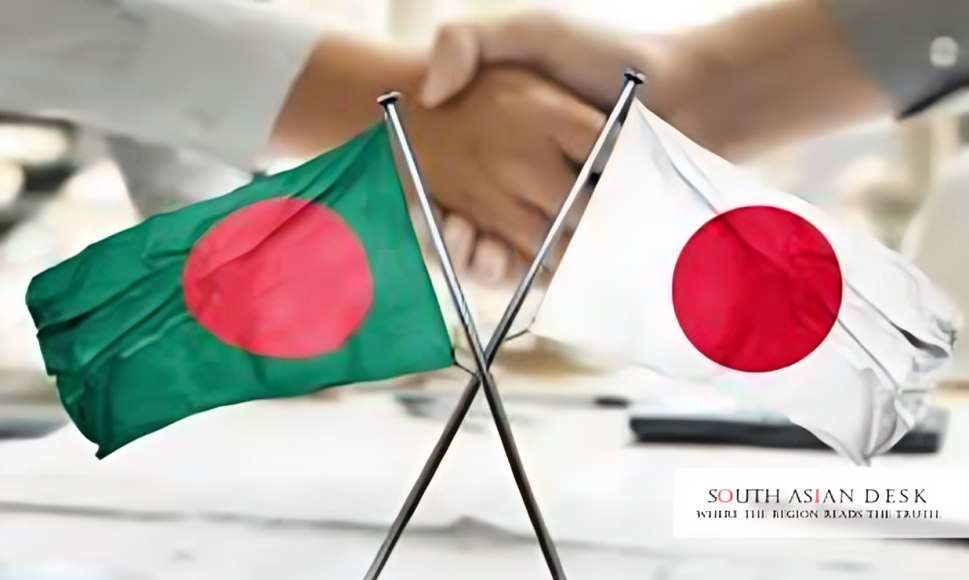
Bangladesh has approved a proposal to sign the Economic Partnership Agreement with Japan, granting immediate duty-free access for 7,379 Bangladeshi products to the Japanese market. This milestone follows an agreement in principle reached last month.
Bangladesh’s Council of Advisers approved the proposal to sign the Bangladesh Japan EPA on Thursday, 22 January 2026, during a meeting chaired by Chief Adviser Prof Muhammad Yunus. The decision paves the way for enhanced trade ties with Japan, the world’s fourth-largest economy. Press Secretary Shafiqul Alam announced the approval at a briefing in Dhaka, highlighting its role in diversifying exports amid Bangladesh’s impending LDC graduation.
This Bangladesh Japan EPA holds significance for South Asia by fostering stronger economic partnerships beyond traditional aid. It positions Bangladesh as a key player in regional trade diversification, potentially influencing similar agreements in the neighbourhood and boosting investment flows in a region reliant on export-led growth.
Details of the Bangladesh Japan Trade Agreement
The Bangladesh Japan trade agreement, formally the Economic Partnership Agreement, outlines reciprocal duty-free benefits. Bangladesh will gain immediate access for 7,379 products to Japan, including ready-made garments (RMG), which form a core of its exports. In exchange, Japan secures duty-free entry for 1,039 products into Bangladesh.
Negotiations for the Bangladesh Japan EPA began after a Joint Study Group report on 27 December 2023 recommended covering 17 sectors. Official talks started on 12 March 2024, with the first round held in Dhaka from 19-23 May 2024. Subsequent rounds occurred in November and December 2024, leading to an agreement in principle on 22 December 2025.
Japan’s Ministry of Foreign Affairs confirmed the agreement during a telephone conversation between Foreign Minister Motegi Toshimitsu and Bangladesh’s Adviser Sheikh Bashir Uddin. Minister Motegi expressed pleasure at the progress, noting it builds on the Strategic Partnership established between the two nations. He recalled his 2019 visit to Bangladesh and emphasised the EPA’s potential to expand trade and investment.
Adviser Bashir Uddin welcomed the development, underscoring Bangladesh’s role in regional growth. Both sides agreed to cooperate towards formal signing, expected to strengthen economic relations and contribute to a Free and Open Indo-Pacific.
Economic Impacts of Bangladesh Approves EPA with Japan
Bangladesh approves EPA with Japan at a critical juncture, as the country prepares for LDC graduation in 2026. Post-graduation, Bangladesh risks losing preferential trade access under existing schemes. The Bangladesh Japan Economic Partnership Agreement mitigates this by ensuring continued duty-free market entry, vital for sustaining export growth.
Data from the Export Promotion Bureau indicates the EPA could boost bilateral trade, currently valued at USD 2.5 billion annually, with Bangladesh exporting USD 1.2 billion to Japan in 2025. RMG accounts for 80% of these exports, and duty-free status will enhance competitiveness against rivals like Vietnam.
Investment opportunities under the Bangladesh Japan trade agreement extend to sectors like infrastructure, energy, and technology. Japan, a major ODA donor to Bangladesh with over USD 30 billion provided since 1972, shifts towards partnership-based relations. The EPA includes provisions for improved investment environments, potentially attracting more Japanese firms to Bangladesh’s special economic zones.
Shafiqul Alam stated: “It will be a milestone and historic agreement.” He added: “We are trying to diversify exports and markets.” As an LDC, this marks Bangladesh’s first EPA with a developed economy, setting a precedent for future deals.
Background
Bangladesh-Japan relations date back to 1972, with Japan supporting development through aid and technical cooperation. The push for the Bangladesh Japan EPA intensified amid global supply chain shifts post-COVID-19. Bangladesh’s economic rise, with GDP growth averaging 6.5% annually over the past decade, aligns with Japan’s interest in South Asia as a growth hub.
The Joint Study Group, formed in 2023, analysed trade barriers and proposed a comprehensive pact. Negotiations paused briefly in 2024 due to domestic challenges in Bangladesh but resumed swiftly. The agreement in principle last December resolved key issues on tariffs, rules of origin, and services.
What’s Next
Formal signing of the Bangladesh Japan EPA is anticipated by late January 2026, pending final reviews. Implementation will involve ratification by both parliaments. Bangladesh aims to leverage the pact for export diversification, targeting non-RMG sectors like pharmaceuticals and IT services. Japan seeks stable supply chains for its industries.
Monitoring bodies will track compliance, with reviews scheduled every five years. Potential expansions could include digital trade and sustainability clauses.
The Bangladesh Japan EPA concludes a two-year negotiation process, promising sustained growth in bilateral trade. This agreement not only secures market access but also deepens economic integration, benefiting both nations in the long term.
Published in SouthAsianDesk, January 23rd, 2026
Follow SouthAsianDesk on X, Instagram and Facebook for insights on business and current affairs from across South Asia.