

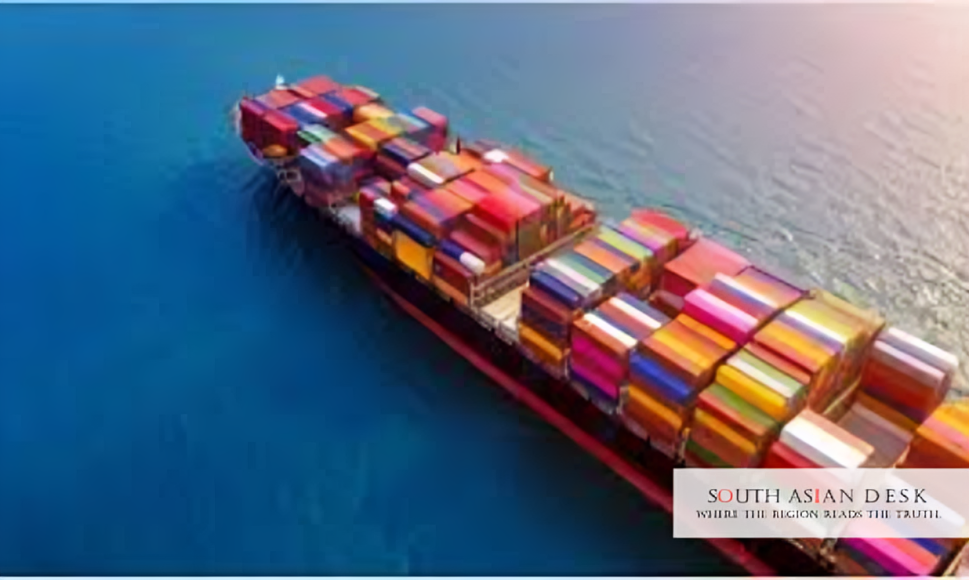
India plans to triple its annual goods exports to $1.3 trillion by 2035 through manufacturing-led reforms under the National Manufacturing Mission. India exports 2035 given by the Government officials outlining structural changes to boost output in 15 key sectors, focusing on deregulation rather than subsidies.
New Delhi, January 25, 2026 – India has outlined ambitious plans to triple its goods exports by 2035, aiming for $1.3 trillion annually. The strategy centres on manufacturing reforms India, led by the National Manufacturing Mission, which targets regulatory easing and infrastructure development. This push comes as the third major effort under Prime Minister Narendra Modi to elevate manufacturing’s role in the economy.
The initiative holds significance for South Asia, where India’s export growth could reshape regional trade dynamics. Neighbouring countries like Pakistan may face increased competition in sectors such as textiles and leather, potentially influencing bilateral trade balances and supply chains across the region.
Manufacturing Reforms India: Key Changes Ahead
The National Manufacturing Mission, announced in the Union Budget 2025-26, forms the backbone of these reforms. It emphasises five focal areas: ease and cost of doing business, future-ready workforce, innovation and R&D, infrastructure and logistics, and sustainable manufacturing. A minister-led panel of senior bureaucrats will oversee faster approvals, land clearances, and access to cheaper financing.
Government plans include spending about INR 100 billion to develop infrastructure for around 30 manufacturing hubs. Additional grants of roughly $218 million are allocated to advanced sectors like semiconductors and battery storage. States will collaborate to harmonise labour and business rules, address power supply challenges, and cut red tape that increases costs for cross-state operations.
Officials stress that the focus shifts from blanket subsidies to targeted deregulation. This approach aims to address past shortcomings where manufacturing’s GDP share remained at 15-18 per cent, far below the 25 per cent target.
National Manufacturing Mission: Sector Focus and Goals
The National Manufacturing Mission prioritises 15 sectors, including high-tech areas like semiconductors, metals, and energy storage, alongside labour-intensive industries such as leather. This selection seeks to balance advanced technology with job creation.
Prime Minister Narendra Modi, in a conference of chief secretaries on December 28, 2025, stated that India would soon launch the National Manufacturing Mission. He urged every state to prioritise it and create manufacturing zones. The mission, with an outlay in the 2025-26 budget, aims to support small, medium, and large industries under the Make in India framework.
In a February 1, 2025, press release, the government detailed that the National Manufacturing Mission would further the Make in India initiative by providing policy support and roadmaps. It targets easing compliance hurdles to make India a competitive manufacturing hub.
Current goods exports stand at around $450 billion for the fiscal year ending March 2025, according to trade data. Tripling this to meet the India export target 2035 requires an average annual growth rate of about 11 per cent, assuming steady global demand.
Background: Past Efforts and Challenges
India’s manufacturing sector has faced persistent hurdles despite previous initiatives. The 2014 Make in India campaign aimed to attract foreign investment and boost local production. It was followed by the $23 billion production-linked incentive scheme in 2020, which offered cash incentives for output in sectors like electronics and pharmaceuticals.
However, these efforts yielded limited results. Manufacturing’s contribution to GDP has hovered below 20 per cent, constrained by regulatory complexities, land acquisition delays, and inconsistent power supply. The new reforms under the National Manufacturing Mission seek to tackle these issues head-on.
In South Asia, India’s push could intensify competition. For instance, Pakistan’s leather exports, valued at $800 million annually, might face pressure from India’s scaled-up production. Regional trade agreements like SAFTA could see shifts, with India potentially increasing its market share in neighbouring economies.
Experts note that successful implementation depends on state-level cooperation. Power reforms are critical, as inconsistent supply raises costs by up to 20 per cent in some regions. Labour law harmonisation could reduce disputes and improve investor confidence.
The government has also highlighted integration with other policies. A November 28, 2025, address by Commerce Minister Piyush Goyal linked the National Manufacturing Mission to free trade agreements and the One District One Product scheme. He mentioned a INR 25,000 crore Export Promotion Mission to complement these efforts.
What’s Next for India Exports 2035
The panel under the National Manufacturing Mission will convene soon to finalise sector-specific roadmaps. Initial focus will be on pilot hubs in states like Gujarat and Tamil Nadu, known for industrial infrastructure.
Stakeholders anticipate budget allocations in the upcoming fiscal year to accelerate progress. Monitoring mechanisms will track export growth quarterly, with adjustments based on global trade trends.
Challenges remain, including geopolitical tensions affecting supply chains. India must navigate US-China trade dynamics to attract relocated manufacturing.
If realised, these manufacturing reforms India could position the country as a global leader, driving economic growth and job creation. The India exports 2035 goal underscores a long-term vision for self-reliance and international competitiveness.
The strategy’s success will hinge on execution, with the National Manufacturing Mission serving as the coordinating force. As South Asia watches, India’s progress may inspire similar reforms in the region, fostering collaborative growth.
In conclusion, the push towards the India export target 2035 through targeted reforms marks a pivotal shift. It prioritises efficiency over expenditure, aiming to unlock manufacturing potential for sustained export expansion.
Published in SouthAsianDesk, January 25th, 2026
Follow SouthAsianDesk on X, Instagram and Facebook for insights on business and current affairs from across South Asia.
