Separatists launched deadly Balochistan attacks across multiple sites, killing security personnel and civilians while security forces eliminated dozens of militants.
Armed militants carried out coordinated assaults on police stations, prisons and government buildings in Balochistan province early Saturday, resulting in at least 33 deaths. The Balochistan Liberation Army claimed the attacks, which targeted Quetta and other areas. Security forces responded swiftly, killing 92 assailants. Officials condemned the violence and vowed to eradicate terrorism.
The Balochistan attacks underscore the persistent instability in Pakistan’s largest province, where separatist groups demand greater autonomy amid resource exploitation grievances. Such incidents heighten regional tensions in South Asia, affecting border security with Afghanistan and Iran, and potentially disrupting economic projects like the China-Pakistan Economic Corridor.
Details of Quetta Coordinated Attacks
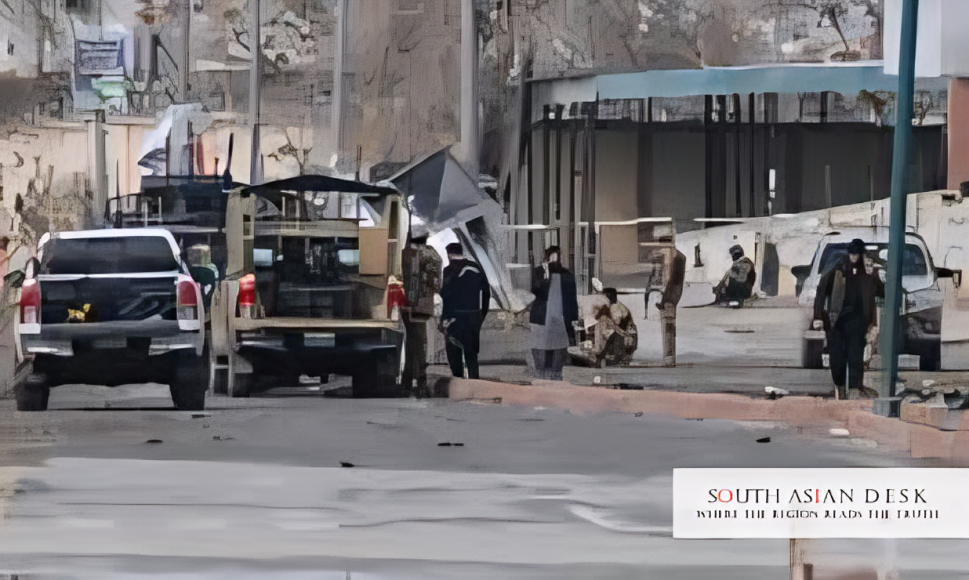
The Quetta coordinated attacks began around 3:00 AM local time, with gunmen using firearms and grenades to strike police vehicles and stations in the provincial capital. At least four policemen died in initial grenade blasts in Quetta. Militants also targeted a high-security prison, attempting to free inmates, but forces repelled the assault.
Across Balochistan, assailants hit over 12 locations including Turbat, Panjgur and Gwadar. In one incident, militants attacked paramilitary installations, leading to fierce gunbattles. A senior military official described the Balochistan attacks as coordinated but poorly executed, noting rapid security response prevented greater losses.
Casualties included 15 security personnel and 18 civilians, with women and children among the dead. Officials reported 92 militants killed during clearance operations. The BLA attack Pakistan involved suicide bombings in some areas, though most were foiled according to Balochistan government spokesman Shahid Rind.
Interior Minister Mohsin Naqvi stated the attacks were orchestrated by Fitna al-Hindustan, a term for the outlawed Balochistan Liberation Army, allegedly backed by external forces. Prime Minister Shehbaz Sharif praised the forces for their bravery in countering the Pakistan separatists violence.
BLA Attack Pakistan: Claims and Responses
The Balochistan Liberation Army issued a statement claiming responsibility for the Balochistan attacks, asserting they targeted military installations, police and civil administration to protest state oppression. The group blocked highways to delay reinforcements, but security forces restored access after hours of clashes.
Pakistan’s military reported eliminating 41 militants in raids the previous day, bringing the 48-hour toll to 133 insurgents killed. Chief Minister Sarfraz Bugti announced that over 700 terrorists have been neutralised in Balochistan in the past 12 months, including 70 in the last two days. He emphasised that such Pakistan separatists violence will not weaken the resolve against terrorism.
Prime Minister Sharif reiterated commitment to the war on terrorism until its eradication. He accused neighbouring India of supporting separatists, though New Delhi offered no immediate response.
Mobile services were jammed and train operations suspended during the Quetta coordinated attacks to aid security efforts. A security operation continues, with several militants arrested and weapons recovered.
Background
Balochistan has endured a decades-long insurgency driven by ethnic Baloch demands for independence or fair resource sharing. The province, rich in minerals and gas, remains Pakistan’s poorest, with locals accusing the central government of exploitation.
Recent years saw escalated Pakistan separatists violence, including the August 2024 attacks where rebels destroyed bridges and stormed hotels, killing dozens. Last year, separatists derailed a train carrying 450 passengers, sparking a prolonged siege.
The BLA attack Pakistan fits a pattern of targeting state symbols and foreign interests, often linked to opposition against Chinese investments. Balochistan borders Afghanistan, where the Taliban alliance with Pakistan Taliban adds complexity to regional security.
Insurgent groups like BLA and Tehreek-e-Taliban Pakistan have intensified operations since 2021, following the Afghan Taliban’s return to power. Security forces conducted over 500 operations in Balochistan last year, resulting in hundreds of militant deaths.
The Balochistan attacks highlight economic disparities, with the province contributing 40% of Pakistan’s natural gas but receiving minimal development funds. Unemployment stands at 15%, double the national average, fuelling grievances.
International observers note human rights concerns, including enforced disappearances of activists, which militants cite as justification for violence. The government denies such claims, attributing unrest to foreign interference.
What’s Next
Authorities plan intensified operations against hideouts in remote Balochistan areas to prevent future Quetta coordinated attacks. The military aims to clear remaining threats within days, while investigations probe militant networks.
Prime Minister Sharif called for national unity against terrorism, potentially leading to increased funding for Balochistan security. Diplomatic tensions with India may rise if allegations persist, affecting South Asian stability.
The Balochistan attacks could delay infrastructure projects, prompting reviews of security protocols. Community leaders urge dialogue to address root causes of Pakistan separatists violence.
Published in SouthAsianDesk, February 1st, 2026
Follow SouthAsianDesk on X, Instagram and Facebook for insights on business and current affairs from across South Asia.