China and the UN warn terror spillover from Afghanistan into Pakistan, with both highlighting militant threats and calling for stronger cooperation to curb cross-border terrorism.
China and the United Nations have raised alarms over the growing terror spillover from Afghanistan Pakistan, as militant violence continues to affect the country amid resurgent attacks linked to groups operating across the border.
Chinese Ambassador to the UN Sun Lei addressed a high-level briefing on the Counter-Terrorism Early Warning Network for Central Asia on Friday. He noted that while the Central Asia region remains generally stable, it is still deeply affected by the spillover effect of terrorist threats. Sun Lei referenced recent attacks in Syria, Afghanistan, and Pakistan that deserve high vigilance.
“We need to strengthen engagement and cooperation with Afghanistan to prevent it from once again becoming a safe haven for terrorist organisations, and to jointly prevent and address the return of foreign terrorist fighters,” Sun Lei said. He added that accelerating the implementation of the UN 2030 Agenda for Sustainable Development is essential to eliminate the root causes of terrorism.
UN Secretary-General Antonio Guterres expressed parallel concerns during a briefing in New York the previous day. He emphasised the requirement for inclusive Afghan institutions representing all ethnic groups and sectors of society as a basic condition for consolidating peace. Guterres criticised restrictions on women’s rights under the Taliban as unacceptable and noted limited progress on allowing female UN staff to work fully in the country.
On security matters, Guterres stated: “Another aspect is the need to make sure that no terrorist organisations can operate from Afghanistan into other countries. We are particularly concerned about what has happened with the Pakistani Taliban [Tehreek-e-Taliban Pakistan] and the support they might receive.” He highlighted frustration over the lack of advancement on inclusivity, human rights, and regional security issues, despite some steps on curbing drug trafficking.
Terror Spillover from Afghanistan Pakistan
Since the Taliban’s return to power in August 2021, Pakistan has experienced a marked increase in terrorist incidents, especially in Khyber Pakhtunkhwa and Balochistan. Authorities link much of this violence to cross-border infiltration from Afghanistan, where the Tehreek-e-Taliban Pakistan (TTP) and affiliated groups are said to maintain safe havens. Islamabad has consistently pressed Kabul and the international community to act against these sanctuaries to halt the terror spillover from Afghanistan Pakistan.
The situation reflects broader South Asian security challenges, where instability in Afghanistan directly fuels militant activities in neighbouring states through porous borders and unresolved grievances.
China Warns Pakistan Terrorism
Beijing’s position underscores its strategic interests in Pakistan, including major economic projects under the China-Pakistan Economic Corridor, and concerns over groups that could threaten regional stability. Ambassador Sun Lei’s emphasis on cooperation with Afghanistan aligns with efforts to address cross-border terrorism that impacts Central Asia, Pakistan, and beyond. China warns Pakistan terrorism risks could undermine shared security and development goals.
UN Warns Pakistan Terror Afghanistan
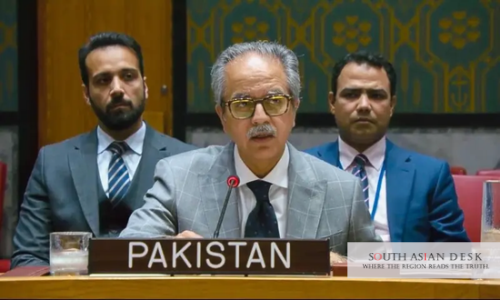
The UN chief’s remarks reinforce global apprehensions that Afghanistan could revert to a hub for international terrorism without meaningful reforms and decisive action against militant networks. Guterres specifically flagged TTP operations from Afghan soil, aligning with Pakistan’s longstanding calls to prevent such threats. Pakistan’s envoy to the UN has described the exponential rise in cross-border terrorist attacks as intolerable, with widespread Security Council recognition of the dangers posed by terrorism emanating from Afghanistan.
Background
The Taliban takeover in August 2021 altered regional dynamics, leading to heightened militant activity along the Pakistan-Afghanistan border. Pakistan has endured hundreds of attacks in recent years, many attributed to TTP fighters using Afghan territory. Joint statements from Pakistan and China, including from their strategic dialogue earlier in 2026, have urged concrete actions to dismantle terrorist organisations based in Afghanistan and block the use of its soil for attacks against other nations.
These issues feature prominently in UN discussions on Afghanistan, where multiple speakers have warned against the country becoming a safe haven for terrorism, with cross-border incidents threatening wider regional instability.
What’s Next after UN Warn Terror Spillover
Progress depends on intensified regional and international cooperation involving Pakistan, Afghanistan, China, and UN mechanisms. Persistent demands for verifiable measures against terrorist safe havens could lead to additional trilateral or multilateral talks. Absent concrete steps on governance inclusivity and counter-terrorism in Afghanistan, the threat of ongoing terror spillover into Pakistan will persist, potentially escalating tensions across South Asia.
Pakistan maintains its push for global pressure on Kabul while bolstering domestic counterterrorism efforts to mitigate these risks.
Published in SouthAsianDesk, February 2nd, 2026
Follow SouthAsianDesk on X, Instagram and Facebook for insights on business and current affairs from across South Asia.