China condemns Balochistan attacks that killed 33 people and pledged firm support to Pakistan against terrorism, as Foreign Ministry Spokesperson Lin Jian stated during a press briefing in Beijing on February 3, 2026.
The declaration underscores the deepening alliance between Beijing and Islamabad amid rising security threats in South Asia, where instability in Balochistan could impact regional trade routes and economic projects.
Lin Jian Balochistan Statement Highlights
Lin Jian addressed the Balochistan attacks 2026 during a regular press conference. He said China strongly condemned the incidents. “We mourn for the lives lost, and our hearts go out to the injured and those who lost their loved ones,” Lin stated. He added that China firmly opposes any form of terrorism and will always support Pakistan in combating terrorism, maintaining social stability, and protecting public safety.
The Chinese embassy in Islamabad echoed this position in a post on X on February 2, 2026. It condemned the multiple terrorist activities in Balochistan, expressed deep mourning for the victims, and extended sympathies to the bereaved families and injured.
These statements follow a pattern of solidarity between the two nations, especially as China condemns Balochistan attacks that threaten joint interests.
Details of Balochistan Attacks 2026
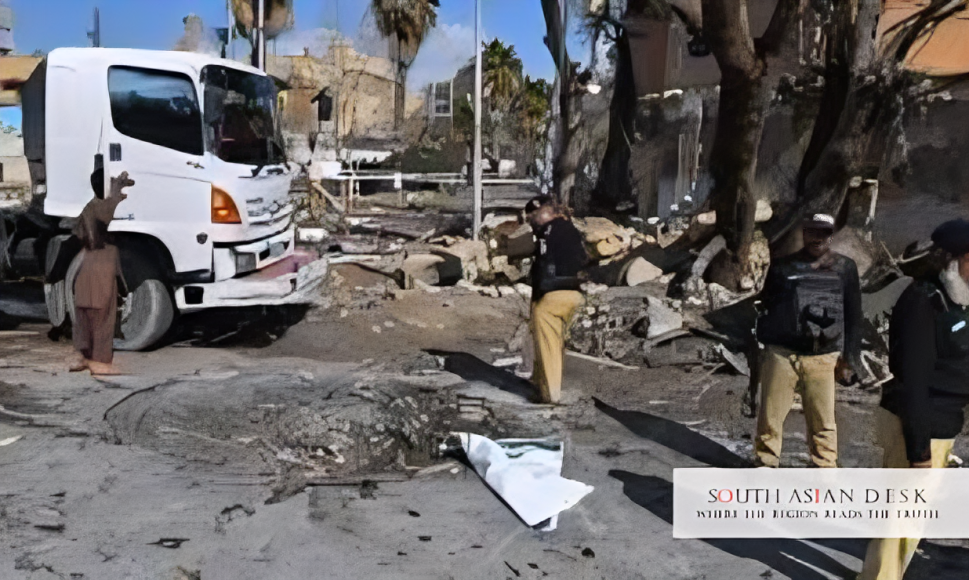
The Balochistan attacks 2026 unfolded over the weekend of January 31 to February 1, 2026, across multiple districts. Militants from the banned Baloch Liberation Army (BLA) targeted police stations, banks, and government buildings in Quetta, Mastung, Nushki, Dalbandin, Kharan, Panjgur, Tump, Gwadar, and Pasni.
Security forces repelled the assaults, killing 92 terrorists, according to the Inter-Services Public Relations (ISPR) statement on January 31, 2026. However, 15 security personnel were martyred, and 18 civilians lost their lives. In Quetta’s Sariab area, assailants torched police records and opened fire. In Kharan, armed men attacked the residence of the Mullazai Qaumi Etihad chairman, killing him and six guards.
Similar violence hit Mastung, where militants burned a police station, freed 30 prisoners from the district jail, and targeted banks. In Kalat, three police personnel were injured as attackers set banks ablaze and struck government offices. In Tump, a former tehsildar was shot dead after resisting kidnapping.
By February 2, 2026, Interior Minister Mohsin Naqvi reported that security forces had killed an additional 22 militants, raising the total to 177. Operations continued in various areas to hunt down remaining insurgents.
Pakistan’s government has designated such groups as Fitna al Hindustan, highlighting alleged external sponsorship. Naqvi, in a joint press conference with Balochistan Chief Minister Sarfraz Bugti on January 31, 2026, directly accused India of orchestrating the attacks. “India is behind these attacks. I can tell you for sure that India planned these attacks along with these terrorists,” he said. He claimed India provided financial support and aided in planning, without presenting evidence at the time.
The BLA claimed responsibility, marking one of their largest operations. Witnesses in affected areas described explosions and gunfire that shook homes, bringing the province to a standstill. Provincial authorities imposed restrictions on public gatherings and face coverings to curb further unrest.
China Pakistan CPEC Security Implications
The Balochistan attacks 2026 raise concerns over China Pakistan CPEC security, as the province hosts key infrastructure for the China-Pakistan Economic Corridor (CPEC). This multibillion-dollar initiative includes roads, ports, and energy projects linking Gwadar to China’s Xinjiang region.
Past incidents have targeted Chinese workers and projects in Balochistan, prompting Beijing to seek enhanced protection. Lin Jian’s Balochistan statement reinforces commitment to these efforts, as China condemns Balochistan attacks that could disrupt CPEC progress.
Pakistani officials have linked such violence to attempts to undermine bilateral ties. The ISPR noted the attacks aimed to disturb peace in Balochistan, a region vital for CPEC. Enhanced security measures, including joint patrols, have been discussed in recent diplomatic talks.
In a joint statement from the 7th Pakistan-China Strategic Dialogue on January 5, 2026, both sides called for visible actions against terrorist groups in Afghanistan, which they say pose threats to regional security. This context amplifies why China condemns Balochistan attacks and pledges support.
Background
Balochistan has faced a low-level insurgency for decades, with separatist groups like the BLA demanding greater autonomy or independence. They accuse the federal government of exploiting resources without fair returns. The province’s strategic location, bordering Afghanistan and Iran, makes it prone to cross-border influences.
CPEC, launched in 2015, has invested over USD 60 billion in infrastructure, but it has also drawn criticism from locals over job opportunities and environmental impacts. Terrorist attacks on CPEC sites have killed Chinese nationals in the past, straining relations until security protocols improved.
Recent escalations, including the Balochistan attacks 2026, follow a pattern. In May 2025, Pakistan’s Director General ISPR alleged Indian involvement in Balochistan terrorism, citing evidence of financing. Similar accusations surfaced after attacks in 2023 and 2018.
The United States, European Union, Iran, and other nations have condemned the latest violence, aligning with China’s stance.
What’s Next
Security forces plan to continue clearance operations in Balochistan to eliminate remaining militants. Naqvi vowed to pursue all involved and expose external roles internationally. Diplomatic channels between Pakistan and China may see further discussions on China Pakistan CPEC security enhancements.
Analysts expect increased intelligence sharing to prevent future incidents. Provincial restrictions could extend if threats persist.
As investigations proceed, China condemns Balochistan attacks and remains committed to aiding Pakistan’s anti-terrorism drive.
Published in SouthAsianDesk, February 4th, 2026
Follow SouthAsianDesk on X, Instagram and Facebook for insights on business and current affairs from across South Asia.