

India-Germany partnership: India and Germany have strengthened their partnership with a focus on rare earths and wind energy, following German Chancellor Friedrich Merz’s visit to India in January 2026. During his meeting with Prime Minister Narendra Modi, 19 Memorandums of Understanding (MoUs) were signed, including a key Joint Declaration of Intent on Cooperation in the Field of Critical Minerals.
China currently dominates the rare earths market, essential for industries like electric mobility and renewable energy. In 2025, India imported over 90% of its permanent rare-earth magnets from China, a dependency that has strategic implications. Germany also relies heavily on China for these materials, particularly in its offshore wind energy sector.
India’s National Critical Mineral Mission, announced in January 2025, aims to secure its critical mineral supply chain with a $4 billion budget until 2031. The mission includes a dedicated rare earth corridor in states like Odisha and Tamil Nadu to reduce reliance on imports.
Germany’s Resilience Roadmap for Permanent Magnets, released in August 2025, seeks to diversify the supply chain. With 90% of permanent magnets for wind turbines sourced from China, Germany plans to source over 30% from outside China by 2030.
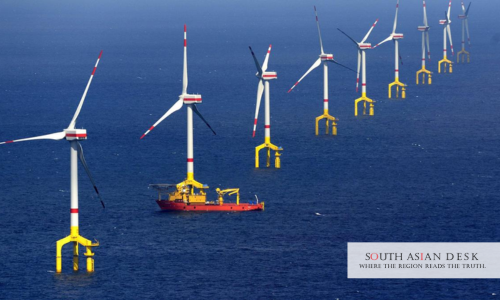
The Indo-German collaboration extends to technology transfer and joint ventures in offshore wind energy, with India identifying 70 GW of potential offshore capacity. The partnership aims to establish a resilient supply chain, integrating sectors like defence and green hydrogen initiatives. Both countries are working towards their 2030 wind energy targets, with India aiming for 107 GW and Germany 145 GW.
Published in SouthAsianDesk, February 7th, 2026
Follow SouthAsianDesk on X, Instagram and Facebook for insights on business and current affairs from across South Asia.
