

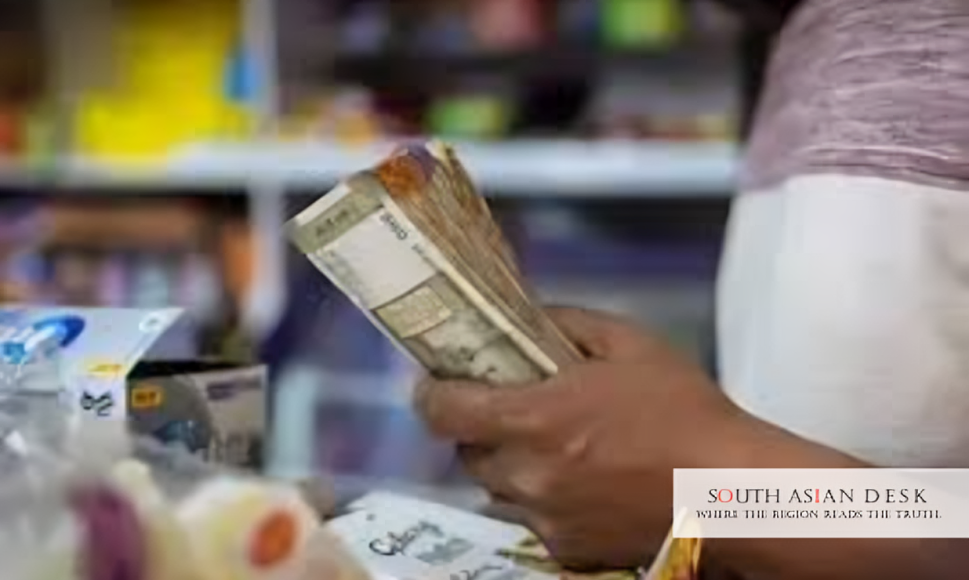
India’s rupee strengthens ground against the dollar as traders assessed the new US-India interim trade framework, which slashes tariffs and boosts economic ties. Announced on 6 February 2026, the deal aims to reshape energy relations and enhance market access amid regional economic shifts.
The Indian rupee opened stronger on 9 February 2026, buoyed by the US-India interim trade framework that reduces US tariffs on Indian goods to 18%. This development follows months of negotiations, providing relief to exporters and potentially reviving foreign inflows into South Asian markets.
The rupee vs dollar rate improved, with the currency expected to trade in the 90.49-90.53 range, up from Friday’s close of 90.6550. Analysts attribute this to diminished short positions on the rupee after the deal’s unveiling.
In South Asia, the agreement holds significance as it stabilises India’s economy, the region’s largest, influencing cross-border trade and currency stability. With Pakistan and other neighbours reliant on Indian imports, lower US tariffs on India could indirectly affect regional supply chains and commodity prices.
Interim Trade Framework Boosts Ties
The US-India joint statement, released on 6 February 2026, outlines the interim trade framework. India will eliminate or reduce tariffs on all US industrial goods and various agricultural products, including dried distillers’ grains, red sorghum, tree nuts, fresh fruit, soybean oil, wine, and spirits.
In return, the US applies an 18% reciprocal tariff on Indian exports such as textiles, apparel, leather, footwear, plastics, rubber, organic chemicals, home décor, artisanal products, and machinery. This marks a reduction from prior rates, including the elimination of a 25% additional duty linked to India’s Russian oil imports.
US President Donald Trump and Indian Prime Minister Narendra Modi launched broader bilateral trade agreement negotiations on 13 February 2025. The interim framework reaffirms this commitment, paving the way for a full pact.
Prime Minister Modi stated on social media: “Great news for India and USA! We have agreed on a framework for an Interim Trade Agreement between our two great nations. I thank President Trump for his personal commitment to robust ties between our countries.”
The deal includes India’s intent to purchase $500 billion in US energy products, aircraft, precious metals, technology, and coking coal over five years. This shift reshapes energy ties, with India committing to halt Russian oil imports and boost US energy buys.
Rupee vs Dollar Gains Momentum
The rupee strengthens US deal implications are evident in currency markets. The rupee has declined 3.5% since US tariffs took effect in late August 2025. Now, with tariff relief, traders anticipate further appreciation.
A Mumbai-based bank trader noted: “The appetite to take on short rupee wagers diminished last week, going by the softness seen in NDF points and onshore market action.” The one-month non-deliverable forward stood at 90.61, with the onshore premium at 12.75 paise.
Foreign portfolio inflows turned positive, with $900 million net buys in Indian stocks in February 2026, reversing January’s $4 billion outflows. This supports the rupee vs dollar stability.
Goldman Sachs analysts estimate the effective US tariff rate on Indian imports at 20 percentage points lower than the previous 34%, after exclusions. This could enhance India’s export competitiveness in South Asia.
US Tariffs India Reductions Detailed
Under Executive Order dated 6 February 2026, the US eliminates the 25% duty on Indian imports effective 7 February 2026. This follows India’s commitments to cease Russian oil purchases, buy US energy, and expand defence cooperation over 10 years.
The order states: “India has committed to stop directly or indirectly importing Russian Federation oil, purchase United States energy products, and expand defense cooperation with the United States over the next 10 years.”
US tariffs India adjustments also remove duties on certain aircraft and parts under national security proclamations. India gains a preferential tariff quota for automotive parts.
The framework addresses non-tariff barriers. India agrees to resolve issues in medical devices, ICT goods, and food products. Both nations commit to preferential market access in key sectors and rules of origin to ensure benefits accrue to them.
Technology trade expands, with increased GPU and data centre goods exchanges. Digital trade rules will be negotiated in the broader agreement.
Background
Tensions arose in 2025 when the US imposed 25% reciprocal tariffs on India for trade deficits, plus another 25% for Russian oil buys amid geopolitical strains. India’s oil imports from Russia surged post-2022 Ukraine conflict, prompting US sanctions.
Negotiations intensified after Trump-Modi talks in February 2025. The interim trade framework resolves immediate issues, with the joint statement noting no formal pledge on oil cessation but implying shifts via energy commitments.
South Asian context includes India’s role in regional trade blocs like SAARC, where currency fluctuations impact neighbours. Pakistan’s economy, tied to dollar pegs, watches rupee vs dollar moves closely.
The rupee strengthens US deal amid broader Asian market gains, with the dollar index at 97.59 and Brent crude at $67.6 per barrel.
What’s Next
Further negotiations aim to finalise the interim agreement by March 2026, leading to a comprehensive bilateral trade pact. Monitoring of India’s oil imports continues, with potential duty reimposition if resumed.
Traders eye exporter activity and inflows to determine if the rupee breaks past 90 vs dollar. The rupee strengthens US deal outlook depends on implementation and global cues.
In conclusion, the rupee strengthens US deal provides a foundation for sustained economic growth in India and stronger ties with the US.
Published in SouthAsianDesk, February 9th, 2026
Follow SouthAsianDesk on X, Instagram and Facebook for insights on business and current affairs from across South Asia.
