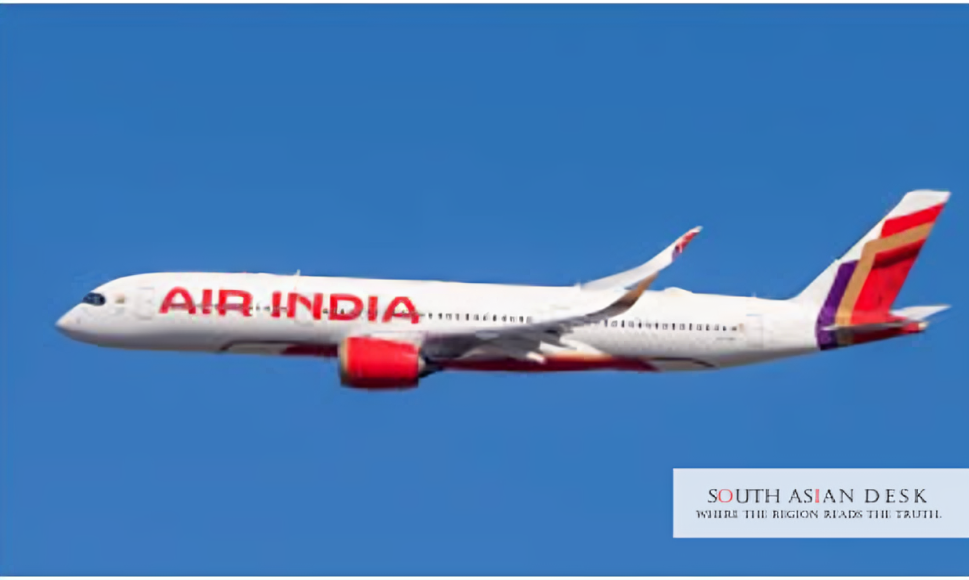
India’s aviation regulator imposed a hefty penalty on Air India after the airline operated an Airbus A320 without a valid airworthiness certificate, raising fresh concerns over compliance in South Asia’s busy skies.
India’s DGCA fines Air India Rs 1 crore on 5 February 2026 for operating an Airbus A320 aircraft on eight passenger flights without the required Airworthiness Review Certificate. The flights occurred on 24 November and 25 November 2025 between New Delhi, Bengaluru, Mumbai and Hyderabad. The regulator cited systemic failures that eroded public confidence in aviation safety.
The DGCA fines Air India decision highlights ongoing challenges in maintaining rigorous safety standards amid rapid growth in regional air travel. In South Asia, where airlines like Air India connect major hubs with neighbouring countries, such lapses could undermine trust in cross-border operations and prompt stricter oversight from bodies like Pakistan’s Civil Aviation Authority.
Details of the Air India Airbus Incident
The Air India Airbus incident involved aircraft registration VT-EXR, which flew without the mandatory annual Airworthiness Review Certificate. This certificate confirms a plane’s compliance with safety and maintenance checks. According to the confidential DGCA order, the airline’s internal probe revealed “systemic failures” in its processes.
Joint Director General Maneesh Kumar stated in the order: “The accountable manager on behalf of Air India is found blameworthy for the above lapses.” This refers to CEO Campbell Wilson. The document added that the Air India safety violation “further eroded public confidence and adversely impacted the safety compliance of the organisation.”
Air India reported the issue voluntarily to the DGCA in November 2025. In response to the penalty, the airline issued a statement: “Air India acknowledges the regulatory order on the incident, which it had voluntarily reported last year to authorities. All identified gaps have since been satisfactorily addressed and shared with the authority.”
The DGCA fines Air India action requires payment within 30 days. Failure to comply could lead to further sanctions.
Impact of the Air India Safety Violation
The Air India safety violation comes at a time when the airline is expanding its fleet under Tata Group ownership, with Singapore Airlines as a partner. Analysts note that repeated infractions could affect investor confidence in South Asian aviation, where markets like India and Pakistan compete for international routes.
Data from the DGCA shows Air India operated over 2000 domestic flights in November 2025. The affected Airbus A320 carried passengers on busy routes, potentially exposing hundreds to risks.
In the broader context, South Asia’s aviation sector has seen a 15% rise in passenger traffic year-on-year, per International Air Transport Association figures. Incidents like this Air India airworthiness fine underscore the need for harmonised regulations across the region to prevent similar breaches.
Pilots involved in the Air India Airbus incident failed to follow standard operating procedures before takeoff, as per the airline’s investigation. This points to gaps in training and oversight.
Background on Air India’s Recent Challenges
Air India has faced multiple regulatory actions in recent years. In June 2025, a Boeing Dreamliner crashed shortly after takeoff from Ahmedabad, killing 260 people. The DGCA issued warnings for operating planes without checked emergency equipment and other audit lapses.
The airline admitted in its probe of the Air India Airbus incident that compliance culture needs urgent improvement. Tata Group acquired Air India in 2022, aiming to revive it amid competition from IndiGo and regional carriers.
South Asia’s aviation landscape includes shared concerns over safety. Pakistan’s airlines have dealt with similar fines, and the DGCA fines Air India case may influence bilateral agreements on airworthiness standards.
What’s Next
Air India must submit proof of payment and implement enhanced compliance measures. The DGCA may conduct follow-up audits. If unresolved, this could lead to fleet groundings or licence reviews.
Industry experts predict tighter scrutiny on airworthiness certificates across South Asia, potentially delaying expansions. The DGCA fines Air India penalty serves as a reminder for airlines to prioritise safety over schedules.
Published in SouthAsianDesk, February 14th, 2026
Follow SouthAsianDesk on X, Instagram and Facebook for insights on business and current affairs from across South Asia.