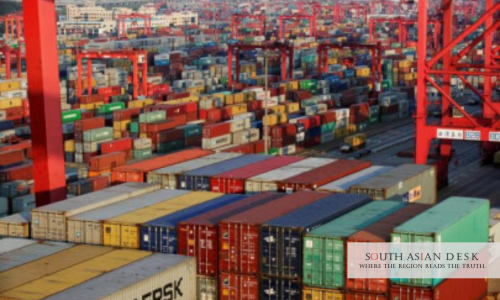
Pakistan Trade Deficit: Pakistan’s external accounts have come under significant pressure as the trade deficit continues to widen in the first seven months of the FY 2025-26. The State Bank of Pakistan (SBP) released data on February 18, 2026, indicating a current account deficit of $1.07 billion, a stark reversal from the $564 million surplus recorded in the same period last year.
The deterioration is primarily due to an expanding goods trade gap, with imports accelerating faster than exports. The goods trade deficit reached $18.4 billion in the July to January period, up from $14.1 billion the previous year. Exports fell slightly to $18.26 billion, while imports surged to $36.66 billion.
Despite some resilience in services exports, which rose to $5.66 billion, the broader goods and services trade deficit expanded to $20.47 billion. The services sector, particularly IT and IT-enabled services, showed growth, but it was insufficient to offset the larger goods deficit.
Workers’ remittances, a critical source of external financing, increased to $23.20 billion, providing some buffer against the widening trade deficit. However, foreign direct investment inflows fell to $982 million, reflecting cautious investor sentiment.
The overall balance recorded a deficit of $653 million, narrower than last year’s $1.39 billion deficit, supported by multilateral and bilateral disbursements. SBP’s foreign exchange reserves rose to $17.44 billion by the end of January 2026, indicating improved external liquidity.
The financial account posted a net outflow of $1.35 billion, and portfolio investment remained negative. Despite these challenges, the reserve buildup was aided by government loan disbursements exceeding amortizations. Pakistan’s economic outlook remains uncertain as it navigates these external pressures.
Published in SouthAsianDesk, February 18th, 2026
Follow SouthAsianDesk on X, Instagram and Facebook for insights on business and current affairs from across South Asia.