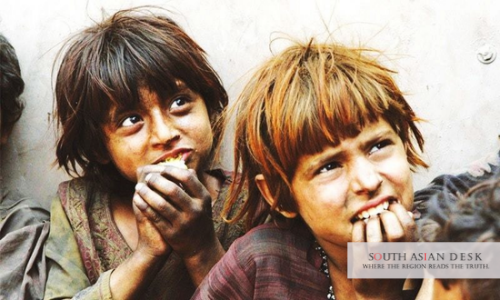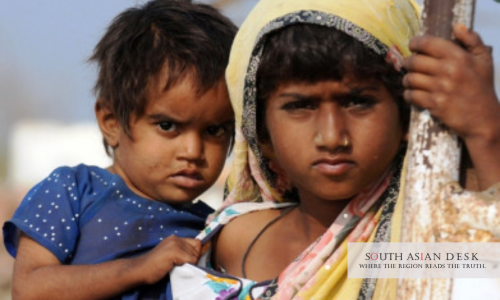
Poverty in Pakistan is has hit its highest rate in over a decade, with 29% of the population now living below the poverty line, according to a report released by Planning Minister Ahsan Iqbal on February 21, 2026. The country’s income inequality has also reached a 27-year high, exacerbating the economic challenges faced by millions.
The report reveals that approximately 70 million Pakistanis are living in poverty, defined by a monthly expenditure threshold of Rs8,484. Since the last poverty survey in 2018-19, poverty has increased by 32%. The poverty rate climbed from 21.9% in 2019 to 28.9% during the fiscal year 2024-25, marking the highest level since 2014.
Poverty in Pakistan: Findings of the Report
Income inequality is particularly alarming, with the Gini coefficient reaching 32.7, the highest since 1998. The unemployment rate stands at 7.1%, the highest in 21 years, reflecting the broader economic instability.
Minister Iqbal attributed the rise in poverty to economic stabilization policies under the IMF programme, which included subsidy withdrawals and exchange rate devaluation, leading to inflation. Natural disasters and sluggish economic growth further contributed to the crisis.
Rural poverty has surged from 28.2% to 36.2%, while urban poverty rose from 11% to 17.4%. Provincial disparities are stark, with Balochistan experiencing the worst conditions, where poverty increased from 42% to 47%. Security challenges in regions like Khyber-Pakhtunkhwa and Balochistan have further disrupted livelihoods.
Real household incomes have declined, falling from Rs35,454 in 2019 to Rs31,127 in 2025, a 12% reduction. This decline has been driven by inflation, energy price hikes, and exchange rate depreciation, eroding purchasing power.
Despite some macroeconomic improvements, the economic policies have not translated into real income growth for households. Minister Iqbal emphasized the need for balanced growth and fiscal stability, advocating for investments in agriculture and IT sectors to spur future growth.
The ongoing stabilization efforts are seen as a foundation for future poverty reduction, but success will depend on employment growth, income recovery, and enhanced social protection.
Published in SouthAsianDesk, February 21st, 2026
Follow SouthAsianDesk on X, Instagram and Facebook for insights on business and current affairs from across South Asia.