

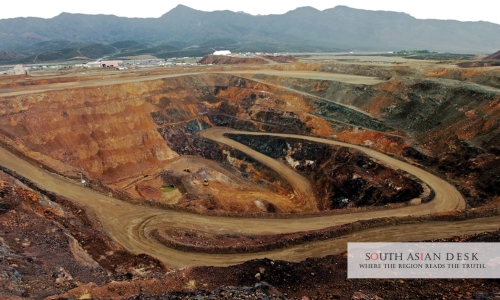
India is taking decisive steps to secure its critical mineral supply chain, as announced by the Ministry of Mines on February 22, 2026. The Geological Survey of India (GSI) has intensified efforts to locate strategic resources, with 195 exploration projects completed in 2024-25 and 230 underway for 2025-26, according to Minister of Mines G Kishan Reddy.
The National Mineral Exploration and Development Trust (NMEDT) has sanctioned 62 projects for 2024-25 and 60 for 2025-26, working with both private and government agencies. An amendment to the Mines and Minerals (Development and Regulation) Act in 2025 expanded the NMEDT’s scope to support overseas mineral exploration and mining.
Since 2023, India has auctioned 46 blocks of critical and strategic minerals and introduced a ₹1,500 crore incentive scheme for mineral recycling. Internationally, Khanij Bidesh India Limited (KABIL) has partnered with Argentina’s state-owned CAMYEN to mine lithium brine blocks, covering over 15,000 hectares.
Domestically, plans are in place to develop four mineral processing parks by 2030. The 2025-26 budget exempted 25 minerals from basic customs duty, enhancing the domestic mineral industry.
The National Critical Mineral Mission aims to reduce import dependence for sectors like electronics and clean energy. However, experts warn of potential environmental impacts, drawing comparisons to China’s past practices. Lauri Myllyvirta from the Centre for Research on Energy and Clean Air highlighted the risks of environmental degradation.
India’s strategic focus on critical minerals includes identifying 30 key minerals such as cobalt and lithium. The government’s actions reflect a broader strategy to bolster its mineral supply chain amidst global competition.
Published in SouthAsianDesk, February 22nd, 2026
Follow SouthAsianDesk on X, Instagram and Facebook for insights on business and current affairs from across South Asia.
