

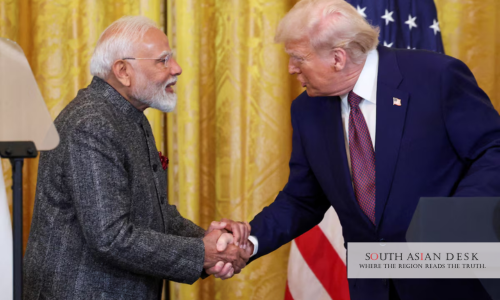
India-US Trade Negotiations: Indian and American officials have postponed a crucial three-day meeting initially set for this week to discuss their interim trade deal. This development, reported by informed sources, casts doubt on the March timeline that New Delhi and Washington had agreed upon for finalizing the agreement.
Supreme Court Decision & the Delay in India-US Trade Negotiations
The delay follows a US Supreme Court decision on February 20, 2026, which struck down President Donald Trump’s use of emergency powers to impose tariffs. This ruling has forced the administration to explore alternative legal provisions, including Section 338 of the Trade Act of 1974, which allows tariffs up to 50%.
The uncertainty surrounding the US tariff strategy complicates negotiations, as noted by sources who requested anonymity. The departure of Indian chief negotiator Darpan Jain, scheduled for February 22, has been postponed, with both sides agreeing to reschedule the meeting once the implications of the recent developments are fully assessed.
The postponement affects the broader negotiation calendar. The engagement was intended to finalize the legal text of the interim bilateral trade agreement before a visit by US Trade Representative Jamieson Greer in March. All meetings are currently on hold.
The commerce ministry of India stated on February 21 that it is examining the implications of the US Supreme Court’s ruling and subsequent US moves. Tariffs on Indian goods, which had fluctuated significantly, are currently at 15%, better than the previously agreed 18%.
Analysts from Emkay Global Financial Services have described the ruling as a positive development for India, suggesting that the US has lost immediate tariff leverage. They anticipate that India may renegotiate the trade deal to make it more equitable, given the relaxed tariffs.
However, the situation remains fluid. The US administration’s reliance on Section 122’s 150-day limit adds pressure to finalize a strategy. Legal expert Neal Katyal emphasized the need for congressional approval for sweeping tariff policies, aligning with the Supreme Court’s ruling that such measures fall under the legislative domain.
Published in SouthAsianDesk, February 24th, 2026
Follow SouthAsianDesk on X, Instagram and Facebook for insights on business and current affairs from across South Asia.
