The Permanent Court of Arbitration in The Hague ruled in favor of Pakistan on May 15, 2026, concerning the Indus Waters Treaty (IWT). The court upheld Pakistan’s position on pondage limits for Indian hydroelectric projects on the western rivers, a decision that could significantly impact water rights in the region.
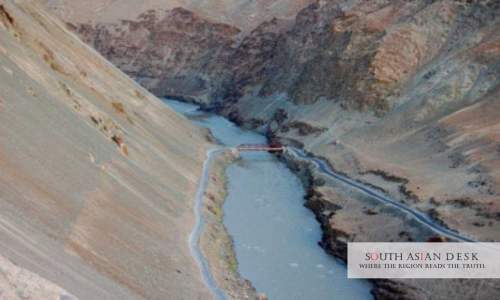
The IWT, signed in 1960 with the World Bank’s facilitation, allocates the Ravi, Beas, and Sutlej rivers to India, while the Indus, Jhelum, and Chenab rivers are primarily for Pakistan. The dispute arose over the Kishenganga and Ratle hydroelectric plants that India is constructing in Kashmir.
Pakistan approached the court in August 2016 to address these disputes. The court’s recent decision reinforces restrictions on India’s ability to store or alter water flows from these rivers, which are crucial for Pakistan’s agriculture and economy.
The ruling comes after India’s decision to hold the IWT in “abeyance” following the Pahalgam attack in April 2025, a move not permitted by the treaty. Pakistan expressed satisfaction with the ruling, emphasizing that it affirms enforceable limits on India’s control over water flows.
The court’s decision highlights the necessity for India’s hydroelectric projects to justify pondage based on actual needs and conditions. Any deviation in operations must be supported by verifiable data, ensuring compliance with treaty obligations.
Pakistan plans to present these interpretations to the Neutral Expert process, reaffirming its commitment to peaceful dispute resolution and treaty adherence. This ruling consolidates Pakistan’s treaty position, advocating for realistic, evidence-based project designs.
Published in SouthAsianDesk, May 18, 2026
Follow SouthAsianDesk on X, Instagram and Facebook for insights on business and current affairs from across South Asia.