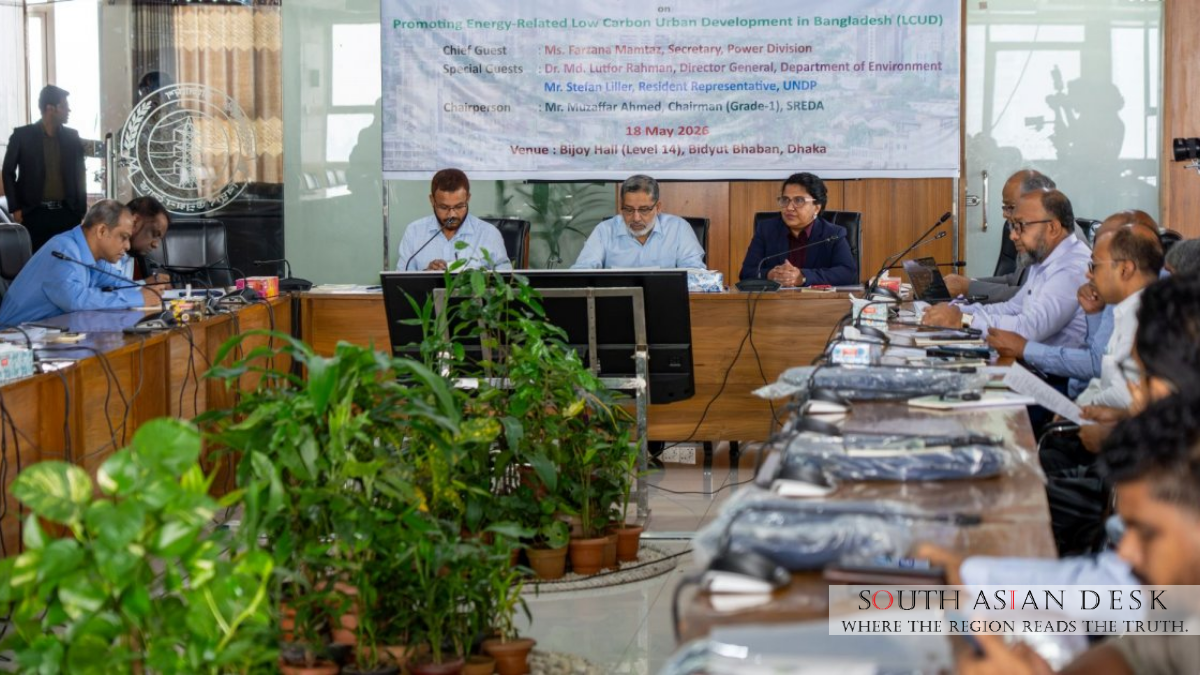
On May 18, 2026, Bangladesh, in collaboration with the United Nations Development Programme (UNDP), launched a significant initiative to foster low-carbon urban development. The project, titled ‘Promoting Energy-Related Low Carbon Urban Development (LCUD) in Bangladesh,’ is supported by a $3.7 million grant from the Global Environment Facility (GEF).
The initiative aims to reduce greenhouse gas emissions in rapidly growing cities such as Dhaka and Chittagong by promoting renewable energy adoption, energy-efficient infrastructure, and low-carbon urban planning solutions. This five-year project is expected to decrease emissions by over 1.5 million tonnes during its lifetime.
K M Ali Reza, additional secretary of the Power Division, emphasized the importance of energy efficiency and the need for investment-grade projects. He highlighted the ongoing challenge of dependence on imported fuel and called for sustainable business models with strong financial linkages.
Sonali Dayaratne, UNDP’s deputy resident representative, underscored the partnership’s significance, stating that urbanization poses both challenges and opportunities for climate action. The LCUD project exemplifies a collaborative effort among government agencies, development partners, and the private sector.
The project’s success hinges on cooperation between various stakeholders, including government bodies, city corporations, and private entities. Muzaffar Ahmed, chairman of SREDA, expressed confidence in the project’s potential to serve as a replicable model for sustainable urban development in Bangladesh.
Published in SouthAsianDesk, May 19, 2026
Follow SouthAsianDesk on X, Instagram and Facebook for insights on business and current affairs from across South Asia.