Child Malnutrition in Nepal Raises Fresh Alarm
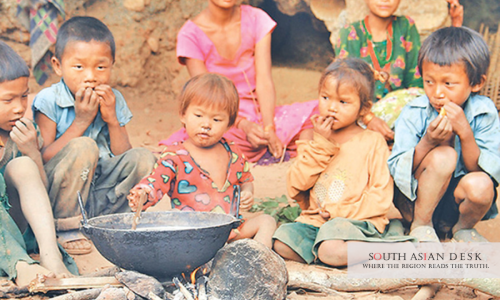
Child malnutrition in Nepal has reached worrying levels after major nutrition programmes lost funding, according to a recent large-scale survey that has renewed concern over child health, food insecurity and access to treatment in vulnerable districts.
The survey, which assessed more than one million children under the age of five, found that wasting and underweight rates have risen sharply in parts of the country. The situation appears especially serious in Madhesh province, where wasting reportedly reached 12.3% and 24.2% of children were underweight.
The findings come after the abrupt end of major USAID-backed nutrition support in Nepal. The discontinued programme had been expected to provide about $72 million over five years through Helen Keller Intl, supporting nutrition services for women, children and adolescents in underserved communities. Subsequent donor support has not matched the scale of the original programme, leaving treatment, outreach and monitoring systems under pressure.
The concern is not only that more children are becoming malnourished, but that fewer are being identified and treated early. Nutrition experts warn that without community-level screening, counselling and follow-up, many children suffering from wasting may not reach health facilities until their condition becomes severe.
USAID Funding Cuts Nepal Nutrition Programmes
USAID funding cuts in Nepal have affected programmes that were designed to support the country’s long-term fight against malnutrition. These programmes did more than distribute food. They helped train health workers, screen children at home, counsel families on feeding practices, strengthen local health systems and provide therapeutic food for children with acute malnutrition.
Helen Keller Intl had worked with Nepal’s government and local partners on nutrition interventions, including through the USAID Integrated Nutrition activity. The programme was designed to build on previous progress under Nepal’s Multi-Sector Nutrition Plan and reach marginalised communities across all seven provinces.
The funding disruption has weakened that system. Even where supplies of therapeutic food are available, children may not receive treatment if outreach workers are no longer screening them, families do not know where to go, or health facilities lack the staff and support needed to follow up properly.
This is why the Nepal nutrition crisis is not simply a food supply issue. It is also a service delivery issue. Malnutrition treatment depends on a chain of identification, referral, treatment and follow-up. When one part of that chain breaks, children are missed.
Nepal’s Nutrition Progress at Risk
Nepal had made major gains in child health over recent decades. Under-five mortality declined from 118 deaths per 1,000 live births in 1996 to 33 in 2022. Stunting among children under five also fell from 57% in 2001 to 25% in 2022, while underweight prevalence dropped from 42% in 1996 to 19% in 2022. Wasting declined from 15% to 8% over the same period.
Those gains made Nepal an example of how sustained investment in nutrition, public health and community outreach can improve child survival. However, current warning signs suggest that progress could stall or reverse if nutrition programmes remain underfunded.
UNICEF data still shows that Nepal faces serious nutrition challenges. Around 8% of children under five are wasted nationally, with higher rates in some provinces. Anaemia also remains widespread among children, adolescent girls, pregnant women and women of reproductive age. Only a limited share of young children receive sufficiently diverse diets.
These figures matter because wasting in children is an acute and potentially life-threatening condition. A wasted child is dangerously thin for their height, often because of poor food intake, illness or both. Without timely treatment, wasting can increase the risk of death, weaken immunity and affect long-term development.
Madhesh Province Malnutrition Shows Regional Gaps
The reported figures from Madhesh province highlight how child malnutrition in Nepal varies sharply by region. National averages can hide local crises, especially in communities facing poverty, poor sanitation, limited access to health services and rising food prices.
Madhesh has previously recorded nutrition indicators above the national average for wasting. The new survey’s reported 12.3% wasting rate suggests that many children are facing acute nutritional stress. The underweight figure of 24.2% also points to a wider problem of poor dietary intake, repeated infections and household vulnerability.
Nutrition experts have also warned that rising food prices are making it harder for families to afford diverse diets. For low-income households, even small increases in the price of eggs, milk, vegetables, pulses or fortified foods can reduce the quality of children’s meals.
The problem is especially severe during the first 1,000 days of life, from pregnancy to a child’s second birthday. Poor nutrition during this period can affect growth, immunity, brain development and learning potential. Once stunting occurs, its effects are often difficult to reverse.
Treatment Gap Deepens Child Mortality Nepal Concerns
One of the most serious concerns is the treatment gap. According to the reported findings, only about 35% of malnourished children are receiving treatment. That means many children who need urgent nutritional care may not be reached by the health system.
This has direct implications for child mortality Nepal indicators. Malnutrition is rarely just a standalone condition. It increases the danger posed by common childhood illnesses such as diarrhoea, pneumonia and infections. A child who is severely wasted is far more vulnerable to disease and complications.
Therapeutic food can be highly effective for children with severe acute malnutrition, but it must be delivered through a functioning system. Families need to know when a child is at risk. Health workers need to identify cases early. Clinics need supplies. Children need follow-up until recovery. Funding cuts can damage each part of that process.
The risk now is that Nepal’s earlier success in reducing deaths among children under five could be undermined by weaker nutrition coverage. Experts are urging donors and the government to restore support before short-term gaps become a longer-term public health setback.
Beyond Emergency Food: What Nepal Needs
The response to child malnutrition in Nepal cannot rely only on emergency supplies. Therapeutic food is essential for children who are already acutely malnourished, but prevention requires a broader approach.
Nepal needs sustained investment in maternal nutrition, breastfeeding support, complementary feeding, micronutrient supplementation, clean water, sanitation, gender equality and local food systems. Families also need practical support to access affordable, nutritious diets.
Community health workers remain central to this effort. In many rural and low-income areas, they are the first to notice when a child is losing weight, failing to grow or showing signs of illness. Their absence leaves families without guidance and health systems without early warning.
The present crisis also shows the danger of sudden aid withdrawal. Nutrition programmes often take years to build trust in communities. When funding ends abruptly, staff leave, local partnerships weaken and families lose contact with services they had come to rely on.
Aid Cuts Leave Nepal Facing a Preventable Crisis
Child malnutrition in Nepal is not new, but the current situation is especially concerning because it follows years of measurable progress. The country had reduced stunting, wasting, underweight prevalence and child mortality through sustained public health work. Those gains now appear vulnerable.
The survey’s findings should be treated as a warning. If children are screened early, treated quickly and supported with proper nutrition, many deaths and long-term harms can be prevented. If services remain underfunded, more children may slip into severe malnutrition before anyone reaches them.
For Nepal, the priority is clear: restore nutrition outreach, protect treatment supplies, support families facing food insecurity and rebuild the local systems that detect malnutrition before it becomes life-threatening. Without that, the country risks losing hard-won progress in child survival and development.
Published in SouthAsianDesk, June 28, 2026
Follow SouthAsianDesk on X, Instagram and Facebook for insights on business and current affairs from across South Asia.