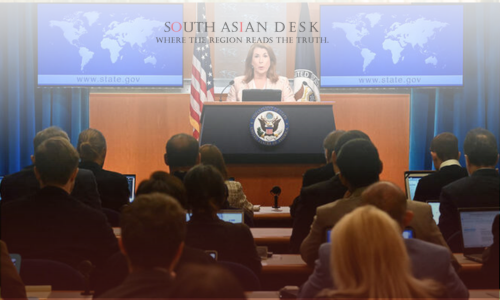
The United States has affirmed its involvement in facilitating a ceasefire between India and Pakistan earlier this year, highlighting the diplomatic efforts of President Donald Trump and his administration. This statement, made during a recent State Department briefing in Washington, counters India’s repeated denials of any American mediation in the agreement. Pakistan, on the other hand, has openly acknowledged and praised U.S. efforts, with its government even nominating Trump for a Nobel Peace Prize following the truce.
The ceasefire, which paused heightened tensions between the two nuclear-armed neighbors, followed a period of intense cross-border exchanges. Social media posts on X reflect mixed sentiments, with some users emphasizing Pakistan’s economic fragility and the need for diplomatic stability, while others focus on regional security dynamics. The U.S. clarification underscores the complex interplay of diplomacy and public perception in South Asia, where both nations continue to navigate their strategic interests.
Pakistan’s foreign office has expressed gratitude for international support in de-escalating the conflict, while Indian officials maintain that the ceasefire was a bilateral decision. The contrasting narratives highlight the challenges of achieving lasting peace in the region, particularly amid ongoing territorial disputes like Kashmir. As both countries move forward, global observers stress the need for transparent dialogue to sustain the truce and address underlying tensions.
Published in SouthAsianDesk, July 9th, 2025
Follow SouthAsianDesk on X, Instagram and Facebook for insights on business and current affairs from across South Asia.