

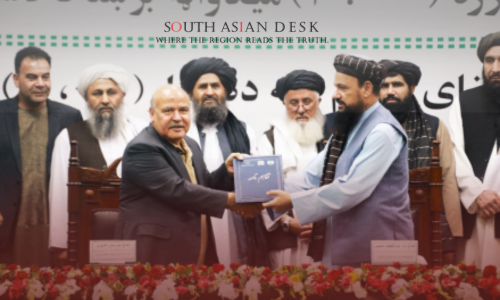
On August 2, 2025, Afghanistan’s Ministry of Energy and Water signed a $10 billion agreement with Azizi Energy, a domestic private company, to produce, transmit, and distribute 10000 MW energy by 2032. The deal, formalized in Kabul, aims to address the country’s chronic energy shortages and drive economic growth. The project will utilize a mix of coal, gas, hydro, wind, and solar resources across multiple provinces, including Balkh, Herat, Kabul, and Kandahar.
Initiative of 10000 MW Energy
The initiative allocates 4,000 MW for public consumption and 6,000 MW for industrial use, with an estimated 150,000 jobs to be created, 98% of which will employ Afghan workers. Acting Minister Abdul Latif Mansoor described the agreement as a historic step toward energy self-sufficiency, potentially enabling electricity exports to neighboring countries within a decade. The project will begin with 2,000–3,000 MW in its initial phase, with surveys starting immediately and design completion expected within six months.
Current Scenario
Afghanistan currently generates only 600 MW domestically and imports over 720 MW from Iran, Tajikistan, Turkmenistan, and Uzbekistan, far below the projected 7,000 MW needed in coming years. This deal, backed by Azizi Energy’s chairman Mirwais Azizi, also includes plans for a training center to build local technical expertise, supporting long-term energy security and industrial development.
Published in SouthAsianDesk, August 3rd, 2025
Follow SouthAsianDesk on X, Instagram, and Facebook for insights on business and current affairs from across South Asia.
