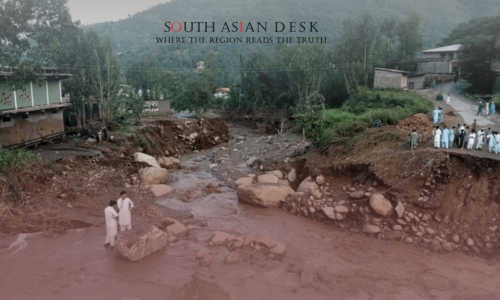
Buner, Pakistan – Khyber Pakhtunkhwa Floods have claimed 307 lives, leaving families heartbroken and communities in ruins. The Provincial Disaster Management Authority (PDMA) reported a sharp rise in fatalities, with Buner district suffering the heaviest toll in a disaster fuelled by relentless monsoon rains. For residents, the destruction of homes and livelihoods is a painful reminder of nature’s growing unpredictability, yet their spirit of solidarity offers hope amid the sorrow.
Reports of Khyber Pakhtunkhwa Floods
According to the PDMA, Buner alone accounts for 93 additional deaths, bringing the province’s total to 307. Torrential rains, intensified by shifting climate patterns, have unleashed flash floods and landslides, obliterating homes, roads, and bridges across Buner, Bajaur, Mansehra, Battagram, and Swat. Entire villages have been swept away, leaving families to mourn loved ones amidst the wreckage. The sight of rescuers navigating mud-soaked debris to recover bodies has left communities reeling, but neighbours are banding together, sharing shelter and solace in this time of grief.
Rescue operations are in full swing, with over 5,000 personnel, supported by 90 vehicles, including ambulances and excavators, working tirelessly across affected areas. The PDMA reports that 3,567 people have been rescued, but dozens remain missing, raising fears of a rising death toll. In Buner, where 184 lives were lost, the scale of devastation is staggering. Homes have been reduced to rubble, and critical infrastructure lies in tatters, isolating villages and complicating relief efforts. The emotional weight is heavy, as parents search for missing children and communities rally to support one another.
The Khyber Pakhtunkhwa government has declared a state of emergency, with Chief Minister Ali Amin Gandapur announcing a day of mourning for the victims, whom he described as “true heroes.” A tragic helicopter crash in Bajaur, which killed five people, including two pilots delivering relief supplies, highlighted the perilous conditions faced by rescuers. The crash, caused by severe weather, has deepened the province’s sorrow, yet rescue teams remain steadfast in their mission to save lives.
Climate change is a significant factor in the disaster’s intensity. Experts highlight that sudden, heavy downpours, known as cloudbursts, are becoming more frequent in Khyber Pakhtunkhwa’s mountainous terrain, driven by global warming. These events overwhelm drainage systems and trigger landslides, leaving communities vulnerable. The PDMA has warned of continued rainfall, urging residents to avoid flood-prone areas and seek safe shelter. For many, the unpredictability of these disasters is a source of fear, underscoring the need for long-term solutions.
Prime Minister Shehbaz Sharif has expressed deep sorrow, directing authorities to hasten rescue efforts and ensure medical aid reaches the injured. The government has allocated 500 million rupees for relief in the worst-affected districts, with two additional helicopters deployed to support operations. In Buner, hospitals are stretched to their limits, with 54 bodies received at the Tehsil Headquarters Hospital alone. The PDMA has set up flood control rooms to coordinate aid, ensuring medicines and equipment are available for those in need.
The Khyber Pakhtunkhwa floods have disrupted cultural and religious activities, with an annual Hindu pilgrimage in KP halted after floodwaters destroyed a community kitchen serving over 200 devotees. In Gilgit-Baltistan, eight additional deaths were reported, and major highways, including the Karakoram Highway, remain blocked, hindering relief efforts. These disruptions highlight the far-reaching impact of the disaster, affecting both residents and visitors.
For the people of Khyber Pakhtunkhwa, this tragedy is a call to unite. Communities are sharing resources and offering comfort to those who have lost everything, reflecting a resilience that shines through the grief. The government’s rapid response, coupled with growing international focus on climate change, underscores the urgency of addressing environmental challenges to protect vulnerable regions.
The wounds from these floods will linger, but the spirit of Khyber Pakhtunkhwa remains unbroken. Families, though devastated, are determined to rebuild, supported by a nation united in their pain. The Khyber Pakhtunkhwa floods have laid bare the fragility of life against nature’s might, urging collective action to confront the escalating threat of climate change.
Published in SouthAsianDesk, August 16th, 2025
Follow SouthAsianDesk on X, Instagram, and Facebook for insights on business and current affairs from across South Asia.