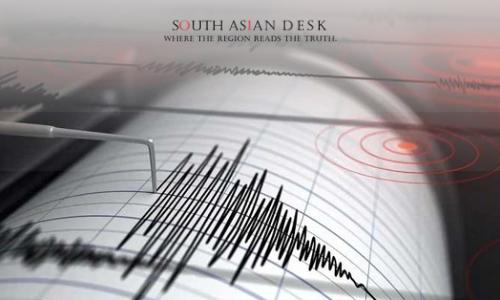
A 5.2-magnitude earthquake struck Islamabad, Rawalpindi, and several areas of Khyber Pakhtunkhwa on Tuesday, sending tremors through communities and sparking concern among residents. The Pakistan Meteorological Department (PMD) reported the seismic event, which originated in the Hindu Kush region of Afghanistan, at 10:20 AM PKT, with a depth of 190 kilometres.
5.2-Magnitude Earthquake Tremors Felt Across Multiple Regions
The earthquake’s impact was felt widely, with reports confirming its reach in Islamabad, Rawalpindi, and Khyber Pakhtunkhwa cities such as Peshawar, Swat, Chitral, and Abbottabad. In Punjab, the Provincial Disaster Management Authority noted that the quake affected divisions including Bahawalpur, Dera Ghazi Khan, Faisalabad, Gujranwala, Gujrat, Lahore, Multan, Sahiwal, and Sargodha. The tremors caused unease among residents, many of whom rushed out of buildings for safety, recalling similar events in the region.
According to Bilal Faizi, spokesperson for KP’s Rescue 1122, no casualties or significant damage have been reported, and an emergency has not been declared. However, the event has heightened awareness of Pakistan’s vulnerability to seismic activity, given its position on the convergence of the Arabian, Eurasian, and Indian tectonic plates.
Hindu Kush: A Seismic Hotspot
The earthquake’s epicentre in the Hindu Kush region underscores its status as one of the world’s most seismically active zones. Located at the junction of the Indian and Eurasian tectonic plates, the region experiences frequent earthquakes due to ongoing tectonic collisions. The United States Geological Survey explains that the Hindu Kush–Pamir area is prone to deep-focus earthquakes, often exceeding depths of 200 kilometres, driven by subduction processes and slab break-off. This geological activity places Pakistan within the broader Himalayan seismic belt, which has a history of destructive quakes affecting Afghanistan, Pakistan, and northern India.
The PMD highlighted that Pakistan’s location across three major tectonic plates creates five seismic zones within the country, making earthquakes a recurring phenomenon. This latest 5.2-magnitude quake follows a similar 5.1-magnitude event earlier this month, which also rattled Islamabad and Rawalpindi, causing panic but no reported damage.
Community Response and Preparedness
Residents across the affected areas described moments of anxiety as buildings shook, prompting many to evacuate homes and offices. In Islamabad, office workers recounted pausing their routines to seek open spaces, while in Peshawar, shopkeepers and pedestrians gathered outside, wary of aftershocks. The absence of reported injuries or structural damage has brought relief, but the event serves as a reminder of the region’s seismic risks.
Local authorities, including Rescue 1122, remain on alert, monitoring for any developments. The PMD and disaster management agencies have urged residents to stay informed and prepared, emphasising the importance of earthquake readiness in a country prone to such events. Community awareness campaigns and structural safety measures are critical, experts say, to mitigate risks in high-seismic zones like the Hindu Kush region.
A Region on Edge
This earthquake comes amidst a period of relative calm in Pakistan, but the recurring seismic activity underscores the challenges of living in a geologically volatile region. The nation’s history includes devastating quakes, such as the 2005 Kashmir earthquake, which claimed thousands of lives. While Tuesday’s 5.2-magnitude earthquake caused no reported harm, it has reignited discussions on improving infrastructure resilience and public preparedness.
As communities recover from the scare, authorities continue to assess the situation, ensuring no underlying damage goes unnoticed. The event highlights the unpredictable nature of seismic activity in Pakistan and the need for sustained efforts to bolster disaster response mechanisms. For now, residents of Islamabad, Rawalpindi, and Khyber Pakhtunkhwa remain vigilant, aware that the ground beneath them is part of a dynamic and ever-shifting tectonic landscape.
Published in SouthAsianDesk, August 19th, 2025
Follow SouthAsianDesk on X, Instagram, and Facebook for insights on business and current affairs from across South Asia.