Indian police have unearthed human remains in Dharmasthala, a revered temple town in Karnataka, as part of a chilling mass-burial investigation that has gripped the nation. The probe, centred on allegations of hundreds of murders and sexual assaults spanning decades, has cast a shadow over the 800-year-old temple dedicated to Lord Shiva, drawing intense scrutiny and public outrage.
A Whistleblower’s Disturbing Revelations
The investigation was sparked by a former temple cleaner, whose identity remains protected for safety reasons, who came forward in July 2025 with harrowing claims. He alleged that between 1995 and 2014, he was coerced by temple superiors to dispose of numerous bodies, many of them women and girls bearing signs of sexual assault. Driven by guilt, the whistleblower fled Dharmasthala in 2014 but returned to expose the alleged crimes, stating in his July 4 police complaint that he hoped proper funeral rites for the victims would bring peace to their souls and ease his conscience.
To substantiate his claims, the former cleaner secretly exhumed a skeleton from one of the burial sites and presented it to authorities. His testimony, coupled with public pressure, prompted the Karnataka government to form a Special Investigation Team (SIT) led by Director General of Indian Police Pronab Mohanty to probe the allegations. The complainant identified 16 suspected burial sites, primarily along the Netravathi River, where he claimed bodies were buried or burned to conceal evidence.
Progress in the Mass-Burial Investigation
As of August 19, 2025, the SIT has excavated 16 sites, recovering human remains from two locations, including bone fragments, a skull, and a partial skeleton. At one site, over 114 bones and a skull were found, with preliminary reports suggesting the remains belong to a male, possibly strangled, accompanied by a red sari. Forensic analysis is ongoing to determine the age, cause of death, and identity of the remains. Karnataka’s Interior Minister, Gangadharaiah Parameshwara, cautioned that the investigation is in its early stages, urging the public not to sensationalise the issue or frame it as a religious matter.
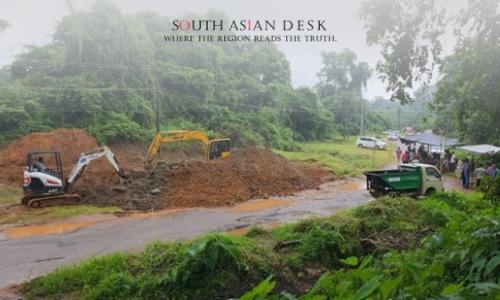
The SIT has employed advanced tools, including ground-penetrating radar, to locate potential burial sites without disturbing the soil, marking a significant step in the probe. Despite the recovery of remains, some sites have yielded no evidence, raising questions about the scale of the alleged crimes. Posts on X reflect mixed sentiments, with some expressing scepticism about the claims, while others demand justice for the victims.
Historical Context and Unresolved Cases
The allegations have reignited interest in unsolved cases linked to Dharmasthala, including the 1986 rape and murder of college student Padmalatha. Her sister, Indravathi, revealed that the family chose burial over cremation, hoping to preserve evidence for future investigations. Similarly, the 2012 rape and murder of 17-year-old Sowjanya and the 2003 disappearance of medical student Ananya Bhat have resurfaced, with families alleging connections to the temple’s leadership.
Protests over violence in Dharmasthala date back to the 1980s, with local groups and activists alleging cover-ups by influential figures. The temple, managed by a prominent Jain family, has faced accusations of suppressing dissent, though a temple spokesperson welcomed a thorough investigation to uncover the truth.
A Nation Awaits Answers
The Dharmasthala mass-burial investigation has sparked widespread debate, with legal experts and activists criticising the probe’s transparency. A gag order, briefly imposed and later lifted, raised concerns about judicial impartiality after revelations that the presiding judge had ties to the temple. The complainant, now under Indian police protection, has expressed willingness to undergo polygraph tests to validate his claims, underscoring his commitment to justice.
As forensic teams analyse the exhumed human remains, the nation watches closely, grappling with the horrifying possibility of a decades-long cover-up. The Dharmasthala mass-burial investigation, with its complex web of allegations and historical grievances, demands answers for the victims and their families, who have long sought justice in the shadow of one of India’s holiest sites.
Published in SouthAsianDesk, August 19th, 2025
Follow SouthAsianDesk on X, Instagram and Facebook for insights on business and current affairs from across South Asia.