

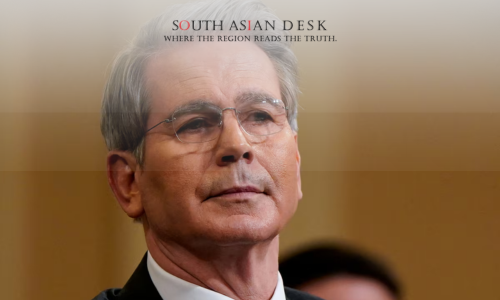
India US relations face new tensions as US Treasury Secretary Scott Bessent accuses India of profiteering from Russian crude oil purchases amid the Ukraine war. The claims, aired on August 19, 2025, during a CNBC interview, have led to punitive US tariffs on Indian exports, prompting New Delhi to defend its energy trade as essential for economic stability and consumer welfare.
India US Relations Under Pressure from US Allegations
In a pointed critique, Bessent accused India of exploiting “Indian arbitrage” by purchasing discounted Russian crude oil and reselling refined products for profit. He highlighted that Russian oil now accounts for 42% of India’s total oil imports, a sharp rise from less than 1% before Russia’s 2022 invasion of Ukraine, generating an estimated $16 billion in excess profits. Bessent contrasted this with China’s more modest increase in Russian oil imports, from 13% to 16%, arguing that India’s actions indirectly support Russia’s war efforts. The accusations, backed by White House trade advisor Peter Navarro, have cast a shadow over India US relations, raising questions about the future of bilateral cooperation.
Russian Crude Oil Trade Sparks US Tariffs
The US response has been swift, with President Donald Trump imposing a 25% penalty tariff on Indian goods, effective August 27, 2025, in addition to an existing 25% reciprocal tariff, totalling 50%. This escalation follows stalled trade negotiations, despite earlier hints of a potential deal with Prime Minister Narendra Modi’s government. The US claims these tariffs aim to pressure Russia into peace talks for Ukraine, but India has called them “unjustified”. In a conciliatory move, India temporarily suspended an 11% cotton import duty until September 30, addressing US agricultural concerns. However, a planned US trade delegation visit to New Delhi from August 25-29 was cancelled, further straining India US relations.
India Defends Russian Crude Oil Imports
India has firmly defended its reliance on Russian crude oil, which constitutes nearly 38% of its imports, up from under 2% before the war. Foreign Ministry spokesperson Randhir Jaiswal stressed that India’s energy choices are driven by market dynamics and national interests, particularly to protect consumers from global price volatility.
In 2022, the US encouraged India to buy Russian oil to stabilise markets disrupted by Western sanctions, a point New Delhi now raises to highlight perceived double standards. India notes that the EU and US continue trading with Russia, with EU imports of Russian goods in 2024 exceeding India’s. Purchasing Russian crude below the EU’s $60 per barrel price cap, India argues, is critical for controlling inflation and sustaining economic growth.
Russian Crude Oil and the Future of India US Relations
The dispute over Russian crude oil threatens to undermine progress in India US relations, previously strengthened by robust defence and technology partnerships vital for regional security. Critics like Navarro have accused India’s private refiners, such as Reliance and Nayara Energy, of opportunistic profiteering, with Nayara facing EU sanctions due to its deep Russian ties. Despite Trump’s suggestion that India might scale back Russian oil imports, Indian officials, speaking to The New York Times on August 2, confirmed no policy shift, as refiners prioritise cost-effective Russian crude to ensure affordable energy.
The controversy underscores India’s delicate balancing act in global trade, navigating economic necessities and geopolitical pressures amidst complex international dynamics. Restoring trust in India US relations will require sustained dialogue to address these tensions, ensuring that accusations over Russian crude oil do not derail a critical partnership essential for regional stability and global economic cooperation.
Published in SouthAsianDesk, August 20th, 2025
Follow SouthAsianDesk on X, Instagram and Facebook for insights on business and current affairs from across South Asia.
