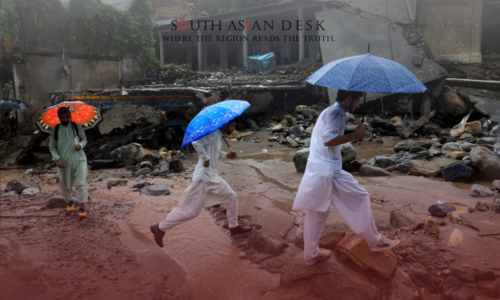
As flash floods wreak havoc across South Punjab, the Provincial Disaster Management Authority (PDMA) has ordered urgent evacuations along the Sutlej and Indus rivers, leaving communities in distress and underscoring the region’s vulnerability to intensifying monsoon rains.
The relentless monsoon season, now in its seventh spell, has brought unprecedented challenges to South Punjab, with rising river levels submerging homes, farmland, and livelihoods. The PDMA’s swift response aims to protect thousands of residents, but the scale of the crisis has evoked widespread concern for those affected by these devastating floods.
PDMA’s Response to Escalating Flash Floods
The PDMA has issued a red alert across multiple districts in South Punjab, including Layyah, Taunsa, Dera Ghazi Khan, Rajanpur, and Muzaffargarh, as the Indus River has washed away protective structures, such as guide bunds and dykes, near the Layyah-Taunsa Bridge. The Sutlej River, swollen by water releases from India’s Harike Headworks, has reached critical levels at Ganda Singh Wala, recording a discharge of 75,000 cusecs. These conditions have prompted mass evacuations, with rescue teams deploying boats to assist stranded families.
According to PDMA Director General Irfan Ali Kathia, the current monsoon spell is more intense than previous ones, necessitating round-the-clock vigilance. Emergency control rooms are fully operational, and Rescue 1122 teams are working tirelessly to relocate residents to relief camps providing food, medical care, and livestock support. The authority has also restricted movement along riverbanks in Bahawalnagar under Section 144, as breaches in embankments have flooded villages, heightening fears of further destruction.
Impact on Communities and Agriculture
The flash floods have left a trail of devastation across South Punjab, submerging entire villages and destroying thousands of acres of crops, including sugarcane and cotton fields. In areas like Sumra Nashaib, Loni, and Mosan Shah, earthen homes have collapsed, leaving families without shelter and forcing many to grapple with the loss of livestock, a critical source of income. The emotional toll is palpable, as residents struggle to salvage belongings and secure safety amidst rising waters.
In Chishtian, additional water releases from India have exacerbated the crisis, threatening economic stability for farmers already reeling from crop losses. The inundation of roads has disrupted access to essential services, further isolating communities and complicating rescue efforts. The PDMA has reported that the Indus River is at medium flood levels at Taunsa and Chashma, with low-level flooding at Tarbela and Kalabagh, while the Sutlej remains precarious at Sulemanki. These conditions reflect the broader impact of monsoon rains, which have claimed over 164 lives and injured 582 across Punjab since June.
Climate Change and Infrastructure Challenges
The intensifying floods in South Punjab highlight the growing impact of climate change, which is making monsoon rains more erratic and severe. Warmer air holding more moisture, combined with glacial melt, has increased flood vulnerability, a pattern seen in the catastrophic 2022 floods that killed over 1,700 people and caused billions in damages. Poor drainage systems and outdated infrastructure exacerbate the situation, leaving low-lying areas particularly susceptible to inundation.
The PDMA has stressed the need for long-term solutions, such as reinforcing embankments and constructing additional water storage facilities. Currently, 24 underground storage tanks exist in Lahore, with six more under development, and plans for 64 additional facilities across Punjab aim to mitigate urban flooding. However, rural areas like South Punjab require similar investments to protect vulnerable populations from recurring disasters.
Resilience and Recovery
As the monsoon season continues until August 23, the PDMA remains on high alert, urging residents to avoid rivers, canals, and low-lying areas. The Pakistan Meteorological Department has warned of further heavy rainfall, raising fears of additional floods and landslides in upper Punjab and beyond. Relief camps are operational, but the scale of displacement underscores the need for coordinated efforts between federal and provincial authorities.
The plight of South Punjab’s residents has sparked calls for enhanced disaster preparedness and climate adaptation measures. Community leaders and farmers are advocating for sustainable solutions to protect livelihoods and prevent future losses. As the region braces for more rain, the PDMA’s proactive evacuations and relief efforts offer a lifeline to those affected, yet the road to recovery remains daunting.
The ongoing crisis in South Punjab serves as a stark reminder of the human and economic costs of floods, with the PDMA and monsoon rains shaping a challenging narrative for the region. As communities band together to rebuild, the focus remains on strengthening resilience against the unpredictable wrath of nature.
Published in SouthAsianDesk, August 21st, 2025
Follow SouthAsianDesk on X, Instagram and Facebook for insights on business and current affairs from across South Asia.