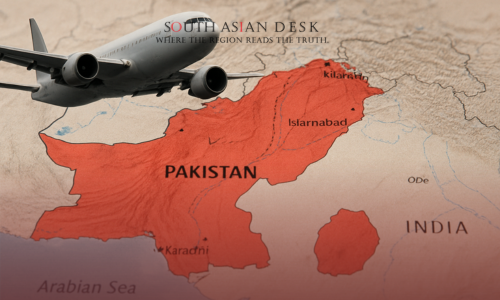
Pakistan extends its airspace ban on Indian aircraft until September 25 via a new Notam, escalating regional tensions. Pakistan issued a Notam on Thursday, August 21, 2025, extending its airspace ban on Indian aircraft until Wednesday, September 25, 2025, due to ongoing tensions, barring Indian-registered or leased planes from its skies, the Pakistan Airports Authority (PAA) announced.
Why It Matters in South Asia
The Notam extending Pakistan’s airspace ban on Indian aircraft underscores the deepening India-Pakistan rift, disrupting aviation routes and escalating economic costs in South Asia. With both nations imposing reciprocal bans, regional connectivity and trade face significant challenges, impacting airlines and passengers across the region.
Notam Details and Implementation
The Pakistan Airports Authority issued Notam A0472/25, extending the airspace closure for Indian-registered, operated, or leased aircraft, including military flights, from Sunday, August 24, 2025, to Wednesday, September 25, 2025. According to Dawn, the restriction applies to all Indian carriers and aircraft, prohibiting transit through Pakistani airspace from ground level to unlimited height.
This marks the fourth extension since the ban’s inception on Wednesday, April 23, 2025, following the Pahalgam terrorist attack in Jammu and Kashmir, which killed 26 people. The PAA stated, “All aircraft operated by Indian airlines will not be allowed to use Pakistani airspace,” reinforcing the comprehensive nature of the restriction.
Economic and Operational Impact
The airspace ban forces Indian airlines like Air India, IndiGo, and SpiceJet to reroute flights to Europe, the Middle East, and North America via longer paths, increasing fuel costs and flight times. Industry estimates suggest Indian carriers face monthly losses of PKR 307 crore (USD 37 million) due to rerouting. Air India reported potential annual losses of USD 600 million if the ban persists, prompting requests for government subsidies.
Pakistan has also incurred financial losses, with the Pakistani Ministry of Defence reporting a PKR 4.1 billion shortfall in overflying revenue from April 24 to June 30, 2025. The ban affects 100–150 daily Indian flights, reducing Pakistan’s transit traffic by nearly 20 per cent.
India’s Reciprocal Airspace Measures
India responded to Pakistan’s initial ban with a reciprocal Notam on Wednesday, April 30, 2025, closing its airspace to Pakistani aircraft until Saturday, August 23, 2025. The Indian Ministry of Civil Aviation stated that no Pakistani-registered, operated, or leased aircraft, including military flights, could enter Indian airspace. This tit-for-tat escalation has led to mutual disruptions, with Pakistani carriers like Pakistan International Airlines (PIA) rerouting via Chinese or Sri Lankan airspace, increasing operational costs.
A separate Indian Notam, issued for a large-scale Indian Air Force exercise in Rajasthan from Wednesday, July 23, to Friday, July 25, 2025, further restricted airspace near the Pakistan border, complicating regional aviation.
Background
The airspace bans stem from heightened India-Pakistan tensions following the Pahalgam attack on Monday, April 22, 2025, which India linked to cross-border terrorism. Pakistan’s initial Notam on April 23 was accompanied by measures like suspending the Indus Waters Treaty and expelling Indian diplomats. India’s countermeasures included closing the Attari border crossing and downgrading diplomatic ties. Previous bans, extended on May 23, June 24, and July 24, reflect the ongoing diplomatic standoff, with both nations leveraging airspace restrictions as geopolitical tools.
What’s Next
The Notam extending the airspace ban to September 25 signals continued strain in India-Pakistan relations. Further extensions or retaliatory measures could exacerbate economic losses and disrupt South Asian aviation. Diplomatic efforts or de-escalation talks will be critical to resolving the airspace deadlock and restoring regional connectivity.
Published in SouthAsianDesk, August 22nd, 2025
Follow SouthAsianDesk on X, Instagram, and Facebook for insights on business and current affairs from across South Asia.