The Pakistan Bar Council decries new Supreme Court fee hikes as a violation of constitutional rights to affordable justice.
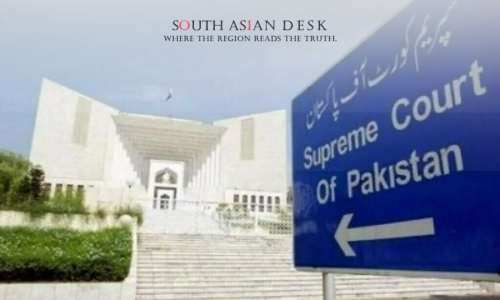
The Pakistan Bar Council (PBC) on Saturday, August 23, 2025, condemned recent amendments to the Supreme Court Rules, 2025, particularly the increase in court fees, labelling them a violation of fundamental rights under Pakistan’s Constitution. The changes, which replaced the Supreme Court Rules, 1980, have sparked concerns over access to justice, prompting the PBC to demand their immediate withdrawal.
Why This Matters in South Asia
The controversy over the Supreme Court Rules amendments underscores a critical issue in South Asia: ensuring equitable access to justice. In Pakistan, where economic disparities are stark, higher court fees could disproportionately affect marginalised communities, undermining constitutional guarantees. The PBC’s response highlights the broader struggle to balance judicial reforms with affordability, a concern resonating across the region where legal systems often grapple with accessibility.
PBC Slams Fee Hike as Unconstitutional
In a meeting chaired by PBC Executive Committee Chairman Muhammad Yaseen Azad, the council passed a resolution asserting that the fee increase violates Article 37(d) of Pakistan’s Constitution, which mandates “inexpensive and expeditious justice.” The PBC expressed dismay that the Supreme Court implemented these changes without consulting the council, a key stakeholder representing the legal community. “The unilateral decision to raise court fees disregards the needs of the poor, who rely on affordable access to justice,” the resolution stated, according to a PBC press release.
The council argued that the amendments disproportionately burden lower-income litigants, effectively pricing them out of the judicial system. The PBC has called for the amendments’ immediate reversal to restore equitable access to the Supreme Court.
Multiparty Conference Planned
Beyond the fee dispute, the PBC announced plans to host an All Parties Conference in Islamabad on Saturday, September 27, 2025. The event aims to unite leaders from political parties, bar councils, and associations to formulate a national strategy addressing terrorism and economic challenges. “This conference will foster a unified approach to strengthen Pakistan’s stability and prosperity,” the PBC stated.
Condemning Attacks on Legal Community
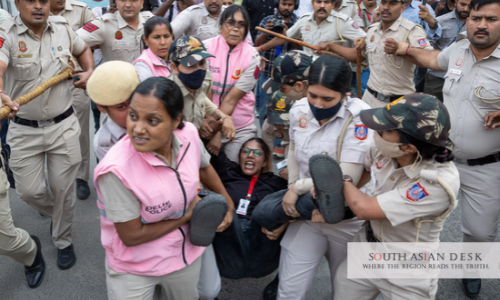
The PBC also addressed recent incidents targeting legal professionals. The council condemned a raid by counterterrorism officials and plainclothes personnel at the residence of former judge Zahoor Ahmed Shahwani, describing it as “unlawful and unwarranted.” The officials reportedly entered without a search warrant, violating privacy rights and due process.
Additionally, the PBC denounced the “intimidating and disrespectful” conduct of police officials at Matta police station towards Shahid Khan, a member of the Matta Bar Association in Upper Swat. The council labelled such actions an attack on the legal profession’s integrity, vowing to protect advocates’ safety and dignity.
Most gravely, the PBC expressed outrage over the killing of Mian Asim Kakakhel, a junior advocate and brother of Advocate Syed Muhammad Zohiab, by police. The resolution called the act a “heinous assault” on human life and the legal fraternity’s independence, demanding accountability.
Background
The Supreme Court Rules, 1980, governed the apex court’s procedures for over four decades, balancing efficiency with accessibility. The 2025 amendments, intended to modernise judicial processes, have instead ignited debate over their impact on affordability. Pakistan’s justice system already faces criticism for delays and costs, with the Supreme Court handling approximately 20,000 cases annually, according to 2024 judicial statistics. Rising fees could exacerbate these challenges, particularly for rural and low-income litigants.
The PBC, as the principal regulatory body for Pakistan’s legal profession, has historically advocated for judicial reforms that prioritise public interest. Its opposition to the amendments reflects ongoing tensions between the judiciary and legal community over procedural changes.
What’s Next
The PBC’s demand for the withdrawal of the Supreme Court Rules amendments sets the stage for a potential standoff with the judiciary. The upcoming All Parties Conference could amplify these concerns, rallying broader support for accessible justice. Meanwhile, the council’s condemnation of attacks on legal professionals signals a robust defence of the profession’s independence, likely influencing future discussions on judicial and police reforms in Pakistan.
Published in SouthAsianDesk, August 2nd, 2025
Follow SouthAsianDesk on X, Instagram, and Facebook for insights on business and current affairs from across South Asia.