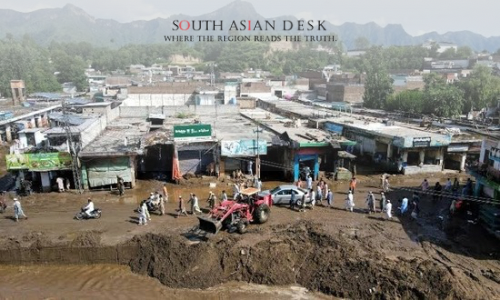
Torrential rains in Dera Ismail Khan kill eight, pushing Khyber-Pakhtunkhwa’s rain-related death toll to 406 since August 15.
Heavy rains in Dera Ismail Khan (DI Khan) killed eight people and injured 48 on Saturday, August 23, 2025, contributing to Khyber-Pakhtunkhwa’s (KP) rain-related death toll of 406 since August 15, as reported by Rescue 1122 and the Provincial Disaster Management Authority (PDMA).
Why This Matters in South Asia
The escalating death toll from monsoon rains in KP highlights the region’s vulnerability to climate-driven disasters, exacerbating challenges in Pakistan’s northwest and straining relief efforts, with broader implications for disaster preparedness across South Asia’s monsoon-affected areas.
Devastation in DI Khan
The latest downpour in DI Khan triggered widespread destruction, with Rescue 1122 reporting that strong winds and heavy rainfall caused roof collapses, uprooted trees, and damaged walls and solar panels. The PDMA confirmed 48 injuries, primarily from collapsing structures, with victims promptly transported to local hospitals. District Emergency Officer Engineer Fasihullah stated, “Our top priority is the protection of citizens, and we are utilising every available resource in the rescue operation.” Rescue teams continue to clear debris and assist affected communities.
Provincial Impact of Rains
The PDMA’s latest report, issued on Sunday, August 24, 2025, details a provincial death toll of 406 since August 15, comprising 305 men, 55 women, and 46 children. Buner remains the hardest-hit district with 237 fatalities, followed by Swabi (42 deaths), Mansehra (25 deaths), and Battagram (three deaths). Abbottabad, Nowshera, Mardan, Upper Kohistan, Torghar, and South Waziristan each reported one to two deaths. Additionally, 247 people have been injured, with Buner recording 128 cases. The rains have damaged 3,526 houses, including 577 completely destroyed, and caused the loss of 5,727 cattle.
Background
Monsoon rains, spanning June to September, have wreaked havoc across Pakistan since late June 2025, with KP bearing the brunt. The current spell, beginning August 15, has caused flash floods, landslides, and infrastructure collapse, particularly in vulnerable areas like Buner, Swat, and Shangla. The KP government declared an emergency last week, and the PDMA issued an advisory on Thursday, August 21, 2025, forecasting heavy rains until August 26. The National Disaster Management Authority (NDMA) reported on Friday, August 22, 2025, that nationwide, 788 people have died and over 1,000 have been injured since June 25, underscoring the scale of the crisis.
In DI Khan, the rains have compounded existing challenges, with power outages reported due to downed electricity lines. Posts on X attributed to KP government spokesperson Faraz Mughal indicate that Chief Minister Ali Amin Gandapur has directed district administrations to remain on high alert, with hospitals under emergency protocols to treat the injured.
Government and Political Response
Rescue and Relief Efforts
Rescue 1122 teams are actively engaged in DI Khan, clearing debris and providing medical aid. The PDMA’s emergency operation centre is fully operational, with a helpline (1700) available for public assistance. The NDMA issued a red alert on Friday, August 22, 2025, warning of potential flooding until August 29, urging provincial authorities to prepare. Army relief operations, including airlifts and temporary bridge construction, are ongoing in Buner and Shangla, as confirmed by posts on X from Pakistan Army sources.
Political Criticism
PTI Chairman Barrister Gohar Ali Khan criticised the federal government’s response, claiming inadequate support for KP, particularly Buner. He told Dawn.com on Saturday, August 23, 2025, that the Centre provided minimal aid, including 200 tents and 500 kgs of medicine, calling it “nothing” for the scale of the crisis. Gohar also urged relief from electricity bills for KP residents facing hardship.
What’s Next
With the Pakistan Meteorological Department forecasting more rains until August 29, 2025, KP authorities are bracing for further challenges. The PDMA and NDMA are coordinating relief efforts, but access to remote areas remains difficult due to damaged infrastructure. The rising death toll in DI Khan and across KP underscores the urgent need for enhanced disaster management and climate resilience strategies.
Published in SouthAsianDesk, July 31st, 2025
Follow SouthAsianDesk on X, Instagram, and Facebook for insights on business and current affairs from across South Asia.