

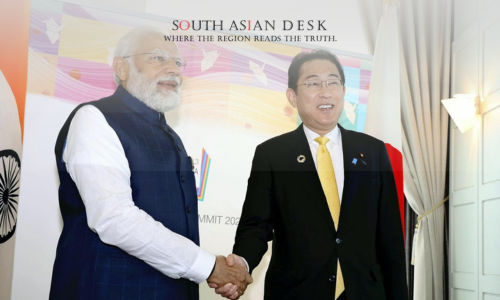
Japan and India will update their 2008 security declaration to boost economic security and cyber cooperation, countering regional challenges. Japanese Prime Minister Shigeru Ishiba and Indian Prime Minister Narendra Modi will sign a revised Joint Declaration on Security Cooperation on Friday, August 29, 2025, in Tokyo, expanding Japan-India cooperation to include economic security, cyber defence, and critical technology to address regional threats.
Why This Matters for South Asia
The revised declaration strengthens Japan-India ties, crucial for South Asia’s stability amid China’s economic and maritime assertiveness. Enhanced cooperation in supply chains and cybersecurity offers India a strategic edge, fostering regional resilience and countering economic coercion, impacting trade and security dynamics across the Indo-Pacific.
Expanding Economic Security Cooperation
The updated declaration, originally signed in 2008, will address new challenges, particularly economic security. It aims to strengthen supply chains for critical minerals and counter economic coercion, implicitly targeting China’s rare earth export restrictions. A Japanese government source stated on Sunday, August 24, 2025, “The revisions reflect the evolving security landscape over the past 17 years.”
The agreement will promote joint development in defence industries, focusing on equipment and technology. This includes collaboration in artificial intelligence, semiconductors, and cybersecurity. India’s Ministry of External Affairs noted on X on Tuesday, August 19, 2025, that the pact will enhance “strategic trade and economic resilience” between the two nations.
Cyber Cooperation to Counter Emerging Threats
Cybersecurity is a key focus, with Japan and India committing to joint research and development. The declaration will support collaboration among government, industry, and academia to tackle cyber threats. The third Japan-India 2+2 Ministerial Meeting on Wednesday, August 20, 2025, in New Delhi confirmed plans to deepen cyber dialogues, building on the 2012 bilateral cyber talks.
The agreement also leverages the 2021 Acquisition and Cross-Servicing Agreement (ACSA), enabling logistical support like fuel and maintenance for military operations. Discussions for Japanese naval ship repairs in India are underway, enhancing operational interoperability, per a Japanese spokesperson on Tuesday, August 20, 2025.
Regional and Global Implications
The declaration aligns with the Quad framework (Japan, India, US, Australia), reinforcing a rules-based Indo-Pacific order. Both nations aim to counter China’s actions in the South China Sea, stressing maritime security and international law. The joint statement from the 2+2 meeting condemned unilateral attempts to alter the status quo, without naming China directly.
India and Japan also plan to enhance defence against chemical and biological weapons and promote women’s roles in peacekeeping, aligning with the Women, Peace, and Security agenda. The establishment of India’s new consulate in Fukuoka, announced on Tuesday, August 20, 2025, underscores deeper people-to-people ties.
Background
The 2008 Joint Declaration established Japan-India security cooperation, focusing on counterterrorism, maritime safety, and regional dialogues. Since then, bilateral ties have grown through agreements like the 2015 Defence Equipment and Technology Cooperation and the 2020 ACSA. The 2020 India-China border clash heightened the need for diversified partnerships, while China’s maritime assertiveness in the Indo-Pacific drives Japan-India alignment.
What’s Next
Modi’s visit to Tokyo on Friday, August 29, 2025, will formalise the revised declaration, setting the stage for joint projects in critical technologies and defence. Continued Japan-India cooperation in economic security and cyber domains will bolster South Asia’s strategic position, potentially influencing Quad dynamics and regional stability.
Published in SouthAsianDesk, August 26th, 2025
Follow SouthAsianDesk on X, Instagram, and Facebook for insights on business and current affairs from across South Asia.
