

Beijing, September 8, 2025 – Can $4 billion in agricultural deals transform Pakistan’s farming and food security?
The Pakistan China MOU agriculture 2025 agreements, worth USD 4 billion, were signed on Wednesday, September 3, 2025, in Beijing to advance mechanisation, seed development, and smart farming, strengthening bilateral ties under CPEC.
The Pakistan China MOU agriculture 2025 is pivotal for South Asia, enhancing Pakistan’s food security, boosting exports to China’s USD 215 billion market, and fostering regional economic stability through modernised farming practices.
Pakistan China MOU Agriculture 2025: Key Agreements
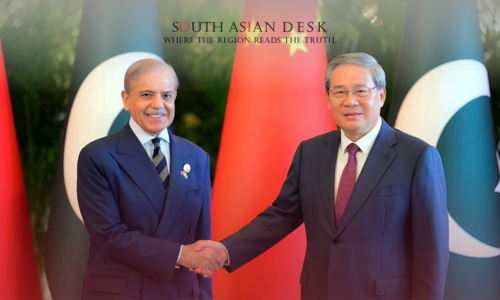
On Wednesday, September 3, 2025, Pakistan and China finalised 24 memorandums of understanding (MoUs) worth USD 4 billion during the Pak-China Business-to-Business (B2B) Investment Conference in Beijing. According to the Ministry of National Food Security, the Pakistan China MOU agriculture 2025 focuses on mechanisation, seed development, smart farming, and precision agriculture to enhance productivity. The signing, witnessed by Federal Minister for National Food Security and Research Rana Tanveer Hussain, occurred alongside Prime Minister Shehbaz Sharif’s visit for the Shanghai Cooperation Organisation summit.
The agreements involve major Chinese firms like GDSP Dayu, GDSP PIESAT, Sanyang Company Xinjiang, and Jinghua Seed Industry, alongside Pakistani entities like Guard Agricultural Research and Services. A notable USD 406.4 million deal with PIESAT aims to build a satellite constellation for real-time communication and remote sensing, including a manufacturing facility and software development. These initiatives align with the CPEC agriculture cooperation 2025, aiming to modernise Pakistan’s agriculture sector, which employs 60% of its population.
“Pakistan can leverage China’s USD 215 billion agricultural import market,” offering tropical fruits, vegetables, and cereals at competitive prices compared to Brazil or Western nations. The minister highlighted Pakistan’s geographical proximity as a strategic advantage.
CPEC Agriculture Cooperation 2025: Sectoral Impacts
Cross-verification from The Nation confirms the MoUs target data-driven farming, with companies like GDSP LOVOL introducing advanced machinery. The CPEC agriculture cooperation 2025 is expected to create: 236,000 jobs and boost export revenues by 10-15%
Mechanisation and Smart Farming
The Pakistan China MOU agriculture 2025 emphasizes mechanisation and smart farming to address Pakistan’s low crop yields, which lag behind global averages (e.g., wheat at 2.8 tonnes/hectare vs. 5 tonnes in China). Technologies like precision agriculture, supported by PIESAT’s satellite systems, will enable data-driven decisions for irrigation and planting. The CPEC agriculture cooperation 2025 includes smart irrigation systems from GDSP Dayu, projected to save: 20% of water in Punjab’s farmlands.
Training programs are integral, with China hosting 1,000 Pakistani agricultural graduates since 2024. According to the Ministry of National Food Security, 300 graduates completed training in Shaanxi by July 2025, focusing on biotechnology and modern irrigation, with another 300 dispatched in August. These efforts aim to enhance local expertise, supporting the Pakistan China MOU agriculture 2025 goals.
Export Potential and Food Security
The CPEC agriculture cooperation 2025 targets China’s USD 215 billion import market, with Pakistan positioned to supply mangoes, citrus, rice, and canola. In 2024, Pakistan exported USD 800 million in agricultural products to China, with chili exports under prior CPEC deals reaching 50,000 tonnes. The MoUs aim to scale this through improved seed varieties from Jinghua Seed Industry, potentially increasing yields by: 15%.
Food security, critical for Pakistan’s 240 million population, is a core focus. The Pakistan China MOU agriculture 2025 supports sustainable practices to mitigate climate risks, like floods that damaged 20% of crops in 2022. The agreements also fund rural development, with initiatives like Tara Group’s canola seed production in Sindh.
Challenges and Risks
Despite optimism, challenges remain. High initial costs for smart farming technologies may strain Pakistan’s fiscal position, with external debt at USD 130 billion in 2025. Implementation delays, seen in earlier CPEC phases, could hinder progress, while: 30% of rural farmers lack access to credit for adopting new systems. Geopolitical tensions, including US-China trade disputes, may also impact funding flows for the CPEC agriculture cooperation 2025.
Background
The China-Pakistan Economic Corridor (CPEC), launched in 2015, has invested USD 62 billion in Pakistan, primarily in energy and infrastructure. The Pakistan China MOU agriculture 2025 marks a shift to CPEC 2.0, focusing on B2B investments and agriculture. Pakistan’s agriculture contributes 24% to GDP, yet faces challenges like outdated machinery and low productivity. Prior CPEC agricultural deals, like chili farming in 2023, boosted exports by USD 100 million, setting a precedent for the 2025 MoUs.
What’s Next for Pakistan China MOU Agriculture 2025
The Pakistan China MOU agriculture 2025 implementation begins in Q1 2026, with pilot projects in Punjab and Sindh. Monitoring by the CPEC Authority will ensure progress, while investors await clarity on tax incentives in Special Economic Zones. The CPEC agriculture cooperation 2025 promises long-term gains, but success depends on overcoming logistical and financial hurdles.
Published in SouthAsianDesk, September 8th, 2025
Follow SouthAsianDesk on X, Instagram, and Facebook for insights on business and current affairs from across South Asia.
