Kunar, September 8, 2025 – Can Afghanistan’s children resume education amidst the rubble of a devastating quake?
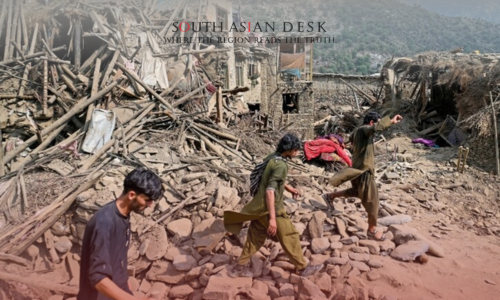
The Afghanistan earthquake school children 2025 crisis has left 157,074 students out of school in Kunar province after a 6.0-magnitude quake struck on Tuesday, September 2, 2025, destroying schools and claiming young lives, officials report.
The Afghanistan earthquake school children 2025 crisis underscores the vulnerability of Afghanistan’s education system, threatening the future of a generation in a region where literacy rates hover at 43%, impacting South Asia’s stability and development.
Afghanistan Earthquake School Children 2025: A Devastating Toll
A 6.0-magnitude earthquake struck Kunar province, eastern Afghanistan, on Tuesday, September 2, 2025, at 2:30 AM, with its epicentre in Jalalabad, as reported by the United States Geological Survey (USGS). The Afghanistan earthquake school children 2025 disaster has disrupted education for 157,074 students, with 391 students and three teachers killed and 760 students and 20 teachers injured, according to Kunar’s education director, Mohibullah Haidari. According to Haidari, speaking to TOLOnews on Sunday, September 7, 2025, “Across Kunar, 157,074 students are currently deprived of education.”
The academic year, set to begin on Saturday, September 6, 2025, in Kunar’s warmer regions, has been halted for thousands as 53 schools were completely destroyed and 253 partially damaged. The kunar earthquake school children impact is profound, with students like Hekmatyar, from a temporary camp in Suki district, lamenting, “The earthquake completely destroyed our school. I am very sad because there is no school here where we can study.”
Kunar Earthquake School Children Impact: Education in Crisis
The quake’s toll, with over 1,400 deaths and 2,817 injuries across Kunar, exacerbating the kunar earthquake school children impact as families grapple with loss and displacement.
School Infrastructure Devastation
The Afghanistan earthquake school children 2025 crisis has obliterated educational infrastructure in Kunar. The destruction of 53 schools and partial damage to 253 others has left: 80% of students in affected areas without classrooms. In Suki district’s Shaheedan area, survivor Shamsurrahman, a 40-year-old father, told TOLOnews, “Three of my children were students. One was killed and two others were injured. The earthquake completely destroyed our school, and nothing remains of it.” Temporary camps lack educational facilities, deepening the kunar earthquake school children impact.
The Ministry of Education has not yet announced a recovery plan, though according to the Ministry of Public Health, posted on Friday, September 5, 2025, emergency medical aid is being deployed to quake-hit areas, with: 50] health teams active. However, educational support remains limited, leaving students like Salma, who aspires to be a doctor, in despair: “Our school has been destroyed, and I am deeply saddened by this.”
Health and Psychosocial Risks
The kunar earthquake school children impact extends beyond infrastructure. Displaced students face health risks, including waterborne diseases like cholera, with: 500 cases reported in Kunar post-quake. Stagnant water and poor sanitation in camps heighten risks, particularly for children. UNICEF has distributed 10,000 hygiene kits, but shortages persist. Psychosocial trauma is a growing concern, with Save the Children reporting that: 60% of affected children exhibit signs of distress, such as anxiety and nightmares.
The Afghanistan earthquake school children 2025 crisis also disrupts girls’ education, already restricted under Taliban policies. A 2025 survey by TOLOnews showed 92% of Afghans believe girls’ education is vital, yet: 70 of girls in Kunar remain out of school post-quake, compounding existing barriers.
Relief and Recovery Efforts
Relief efforts are underway, but challenges remain. The Afghanistan Red Crescent Society has provided tents and food to 5,000 families in Kunar, but educational aid lags. According to the Ministry of Public Health, mobile clinics are addressing immediate needs, yet schools remain closed. NGOs like Save the Children are setting up child-friendly spaces to offer psychosocial support, but only: 20% of affected students have access.
Local communities are appealing for aid. Students like Hekmatyar have called for school rebuilding, while parents demand temporary learning spaces. The kunar earthquake school children impact has prompted pledges from international donors, with: USD 10 million allocated by the UN, though delivery timelines are unclear.
Background
Afghanistan’s seismic vulnerability, due to its location on multiple fault lines, makes earthquakes frequent and deadly. The 2022 Paktika quake killed over 1,000, highlighting systemic issues like shallow-depth quakes (10 km in Kunar’s case) and weak infrastructure. Education in Afghanistan faces ongoing challenges, with 3.7 million children out of school before the quake, per UNICEF. The Afghanistan earthquake school children 2025 crisis worsens this, particularly in Kunar, where literacy rates are below the national average of 43%.
What’s Next for Afghanistan Earthquake School Children 2025
The Ministry of Education is urged to deploy mobile classrooms by October 2025, while NGOs seek funding for school reconstruction. The Afghanistan earthquake school children 2025 crisis demands urgent action to restore education and address trauma, with long-term rebuilding critical to prevent a lost generation.
Published in SouthAsianDesk, September 8th, 2025
Follow SouthAsianDesk on X, Instagram, and Facebook for insights on business and current affairs from across South Asia.