India eyes Qatar trade pact to counter escalating US duties, with Commerce Minister Piyush Goyal set for Doha talks in October.
New Delhi, Monday, September 8, 2025 – India’s government is poised to finalise the terms of reference for a proposed India Qatar FTA framework with Qatar in early October, as New Delhi accelerates diversification of its trade partnerships to mitigate the fallout from heightened US tariffs imposed last month.
Commerce and Industry Minister Piyush Goyal is expected to travel to Doha on October 6 to seal the India Qatar FTA framework, according to a senior government official who spoke on condition of anonymity due to the ongoing sensitivity of negotiations. This move comes in response to US President Donald Trump’s executive order adding a 25 per cent tariff on Indian goods for purchasing Russian oil, effectively doubling duties to 50 per cent and threatening nearly 55 per cent of India’s $87 billion in annual merchandise exports to the United States.
The India Qatar FTA framework aims to bolster bilateral trade, currently valued at around $14 billion annually, with both nations targeting a doubling to $28 billion within five years.
Why It Matters for South Asia
The India Qatar FTA framework holds strategic importance for South Asia, where India dominates as the region’s economic powerhouse with a GDP exceeding $3.5 trillion. Amid Trump’s tariffs, which could shave up to 0.5 per cent off India’s projected 6.5 per cent growth this year according to exporter estimates, forging deeper ties with energy-rich Qatar offers a vital buffer.
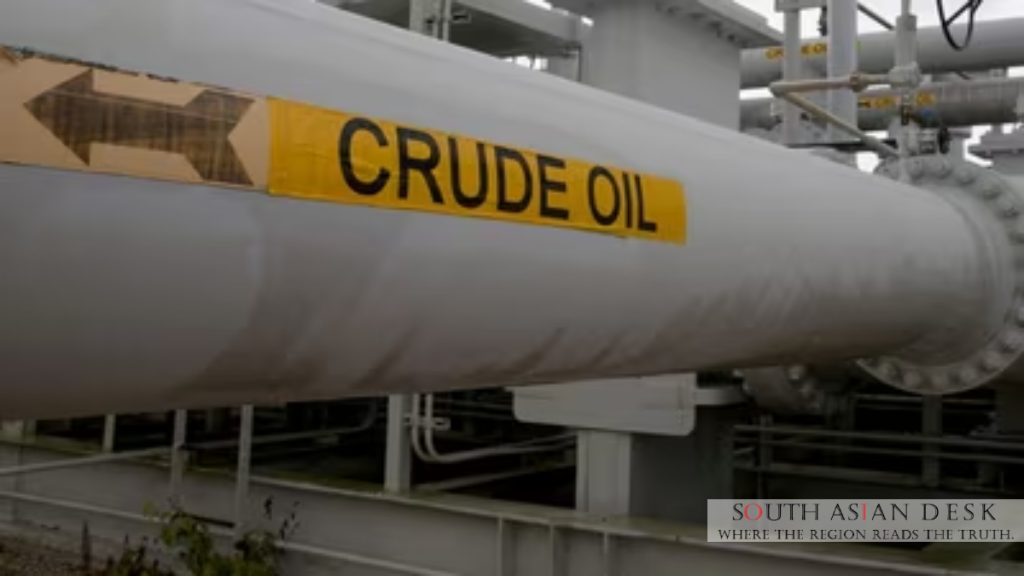
Qatar supplies over 40 per cent of India’s liquefied natural gas (LNG) needs, ensuring energy security for a region grappling with volatile global oil prices and supply disruptions. For South Asian exporters in textiles, gems, and seafood—sectors already reeling from the US duties—this pact could redirect trade flows, preserving jobs for millions and stabilising remittances from the 835,000 Indian expatriates in Qatar.
Broader implications include enhanced food security through Qatari investments in Indian agriculture and logistics, potentially averting inflationary pressures across the subcontinent. As Bangladesh and Pakistan navigate similar US tariff hikes (35 per cent and 31 per cent respectively), India’s proactive India Qatar FTA framework could set a precedent for regional resilience against unilateral Western trade policies.

Background on India-Qatar Trade Ties
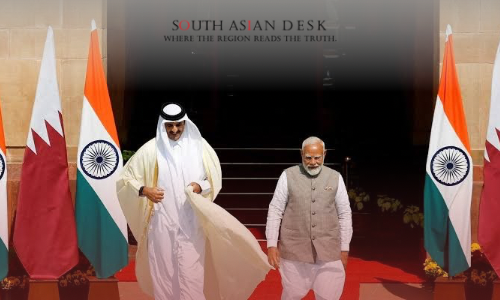
The momentum for the India Qatar FTA framework builds on a foundation of robust energy and investment cooperation. In February, during Qatari Emir Sheikh Tamim bin Hamad Al-Thani’s state visit to New Delhi, both countries elevated their relationship to a strategic partnership. Discussions at Hyderabad House focused on expanding beyond hydrocarbons, with agreements signed to revise the double taxation avoidance pact and foster collaboration in youth affairs, sports, and archives.
Qatar committed $10 billion in investments across infrastructure, technology, manufacturing, food security, logistics, and hospitality—sectors critical for India’s $5 trillion economy ambition by 2027. This pledge follows Qatar Investment Authority’s existing $1.5 billion stake in Indian ventures, including retail and green energy.
Energy remains the cornerstone. Last year, India and Qatar renewed a landmark 20-year LNG supply deal starting in 2028, with Qatar providing 7.5 million metric tonnes annually—vital as India imports 85 per cent of its gas needs.
Bilateral trade in 2023-24 stood at $14.08 billion, skewed towards Qatar with $12.3 billion in exports (primarily LNG and petrochemicals) against India’s $1.7 billion in cereals, iron, steel, textiles, and machinery. The India Qatar FTA framework seeks to address market access barriers, potentially liberalising tariffs on 90 per cent of goods and services, mirroring recent pacts like the India-UAE CEPA implemented in 2022.
Trump Tariffs Bite into Indian Exports
The urgency for the India Qatar FTA framework stems directly from the US tariffs, announced on August 6 and effective from August 27. Trump’s order cited India’s $52 billion in Russian oil imports last year as “fuelling the war machine” in Ukraine, imposing the penalty atop a baseline 25 per cent reciprocal tariff. Exporters warn of a 40-50 per cent drop in US-bound shipments, hitting labour-intensive sectors employing over 50 million.
Textiles alone, valued at $16 billion to the US, could lose competitiveness to rivals like Vietnam (20 per cent tariff) and Bangladesh (35 per cent). Gems and jewellery, a $10 billion trade, face order cancellations, while seafood exporters in Gujarat and Kerala anticipate layoffs. The Federation of Indian Export Organisations estimates a $20 billion annual revenue hit, with ripple effects on South Asian supply chains.
India’s Ministry of External Affairs decried the measures as “unfair, unjustified, and unreasonable,” noting US hypocrisy—America imported $3.5 billion in Russian goods last year. According to the Ministry of External Affairs, imports from Russia were encouraged by the West post-Ukraine invasion to stabilise global energy markets, and India’s actions prioritise the needs of 1.4 billion citizens. No retaliatory tariffs are planned, but New Delhi is exploring export incentives and market diversification.
Broader Trade Diversification Efforts
Parallel to the India Qatar FTA framework, India is pursuing pacts with Oman, Chile, Peru, and the European Union—its largest goods trading partner at $120 billion annually.
Talks with the EU’s 13th round underway in New Delhi, Goyal is slated to meet Trade Commissioner Maroš Šefčovič on Friday, September 12. An EU deal could offset US losses by opening dairy and agriculture markets, though India guards small farmers fiercely. With Oman, negotiations concluded in 2023, a signing is imminent. These initiatives align with India’s post-LDC-like strategy to retain preferential access while boosting exports to $2 trillion by 2030.
Qatar’s role extends beyond trade. As GCC chair last year, it facilitated India-GCC foreign ministers’ meetings, identifying cooperation in non-oil sectors. The emir’s February visit also advanced UPI rollout in Qatar for seamless payments, benefiting the Indian diaspora.
What’s Next for the India Qatar FTA Framework
As the India Qatar FTA framework advances, both sides anticipate formal negotiations post-October, focusing on services liberalisation and investment protection. Goyal’s Doha trip could catalyse $5 billion in immediate Qatari inflows, per government projections.
Yet, challenges persist: balancing energy diversification without alienating Russia, India’s “all-weather friend,” and navigating US pressures. Exporters urge swift ratification to avert a 0.3-0.5 per cent GDP drag from tariffs. In the long term, the India Qatar FTA framework could redefine South Asia’s energy-trade nexus, fostering resilience amid geopolitical flux. With Trump’s tariffs reshaping global flows, India’s pivot to Qatar underscores a pragmatic path forward for the India Qatar FTA framework and beyond.
Published in SouthAsianDesk, September 8th, 2025
Follow SouthAsianDesk on X, Instagram, and Facebook for insights on business and current affairs from across South Asia.