Prime Minister Shehbaz Sharif’s urgent call for accelerated relief amid rising river levels raises questions about the scale of Pakistan’s ongoing monsoon crisis and NDMA flood response.
Islamabad, Monday, September 9, 2025 – Prime Minister Shehbaz Sharif directed the National Disaster Management Authority (NDMA) to expedite relief operations in flood-hit areas and ensure preparedness for worsening flood situations due to rising water levels in major rivers, during a high-level meeting in Islamabad.
NDMA Flood Response 2025: Key Directives Issued
The meeting, chaired by the Prime Minister, focused on reviewing ongoing rescue and relief efforts across the country. The NDMA chairman provided a comprehensive briefing on the current flooding in key rivers, including the status of rising water levels and the distribution of aid to affected populations. Officials emphasised the need for early warnings and timely evacuations in vulnerable riverine and low-lying areas to prevent further casualties.

Prime Minister Sharif instructed authorities to intensify searches for missing individuals in the flood-devastated regions. He stressed the importance of full coordination between the NDMA and provincial governments, as well as their respective disaster management authorities (PDMAs). Continuous convoys of relief goods, including food, medicines, and shelter materials, are being dispatched to the hardest-hit districts.
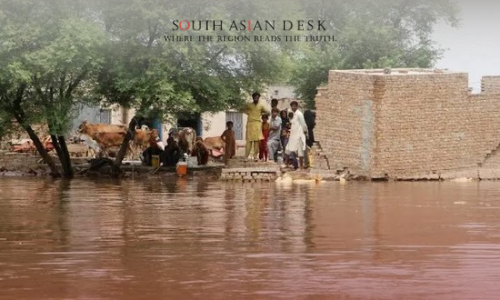
The briefing highlighted severe flooding conditions at critical points such as Trimmu and Panjnad barrages, along with Head Balloki, Head Sidhnai, Ganda Singh Wala, Head Sulemanki, and Head Islam. These sites, primarily in Punjab province, are experiencing high to exceptionally high flood levels in the Chenab, Ravi, and Sutlej rivers – a rare simultaneous occurrence not seen in decades.
Why It Matters
Pakistan’s 2025 floods, triggered by an unusually intense monsoon season since late June, have already claimed over 831 lives and affected more than 1 million people nationwide, according to official NDMA data. This crisis underscores the escalating vulnerability of South Asia to climate-driven disasters, with Pakistan bearing a disproportionate burden due to its geography and limited infrastructure resilience. The NDMA flood response 2025 efforts are crucial not only for immediate humanitarian aid but also for mitigating long-term economic losses in agriculture and displacement in densely populated regions like Punjab and Sindh.
Escalating Flood Situation and Relief Coordination
The NDMA flood response 2025 has been mobilised since the onset of heavy pre-monsoon rains in June, but recent surges have intensified the challenge. As of early September 2025, the National Disaster Management Authority reported that 2,408,299 individuals have been rescued from flood-hit areas since June 26. In Punjab alone, nearly 3.9 million people are affected, with over 1.9 million evacuated due to overflowing rivers.
Provincial authorities, including the Punjab PDMA, have placed multiple districts on high alert. Public warnings are being disseminated through mosques, radio broadcasts, and social media platforms to facilitate voluntary and, where necessary, forced evacuations. The Pakistan Army, Civil Defence, and Rescue 1122 services are deployed alongside NDMA teams, establishing hundreds of relief and medical camps to provide essential services.
In Khyber Pakhtunkhwa, which has suffered the highest casualties with over 400 deaths, flash floods and glacial lake outburst floods (GLOFs) have destroyed thousands of homes and schools. The NDMA has warned of continued risks from a deep depression over northern Gujarat, India, expected to bring heavy rainfall to southern Pakistan, including Sindh, southern Punjab, and Balochistan, from September 6 to 9, 2025. This could lead to urban flooding in coastal districts and further strain the NDMA flood response 2025 operations.
The Prime Minister’s directives align with earlier instructions issued during his official visit to Beijing, where he paused engagements to oversee the crisis remotely. On September 2, 2025, he emphasised prioritising Punjab and Sindh in relief and recovery, directing the NDMA to provide all possible assistance to provincial administrations. Subsequent updates from the NDMA’s Monsoon 2025 Daily Situation Report No 75, covering September 7 to 8, confirm ongoing monitoring of these threats.
Background on Pakistan’s 2025 Monsoon Floods
The 2025 floods mark one of the most severe monsoon seasons in recent history, surpassing the toll from previous years. Torrential rains, exacerbated by upstream dam releases from India into shared rivers like the Sutlej and Ravi, have caused widespread devastation. In Gilgit-Baltistan, GLOFs on August 22, 2025, damaged over 600 houses and killed at least 18 people across two districts.
Official figures from the NDMA indicate 831 fatalities as of September 2025, including 200 children and 117 women, with injuries exceeding 1,000. Over 4,200 houses have been destroyed or damaged, displacing tens of thousands and affecting cash crops critical to the economy. The crisis has prompted international responses, including US$600,000 in emergency funds from the United Nations and aid from the International Federation of Red Cross and Red Crescent Societies.
The NDMA flood response 2025 includes real-time coordination with the Pakistan Meteorological Department for weather forecasts and the establishment of the National Emergency Operations Centre (NEOC) for proactive disaster management. Despite these measures, challenges persist, including damaged infrastructure and the need for enhanced early warning systems in remote areas.
What’s Next for NDMA Flood Response 2025
Looking ahead, the NDMA anticipates active monsoon conditions until at least September 10, 2025, with potential for a “super flood” in the Indus River at Guddu and Sukkur barrages in Sindh. Prime Minister Sharif has ordered the formation of a special committee to facilitate financial assistance for unregistered flood victims via NADRA. Enhanced climate resilience plans, including preparations for the 2026 monsoon, are also under directive to address recurring vulnerabilities.
The government’s commitment to the NDMA flood response 2025 will be tested as relief operations continue, aiming to restore normalcy and prevent further loss in the flood-hit areas.
Published in SouthAsianDesk, September 9th, 2025
Follow SouthAsianDesk on X, Instagram, and Facebook for insights on business and current affairs from across South Asia.