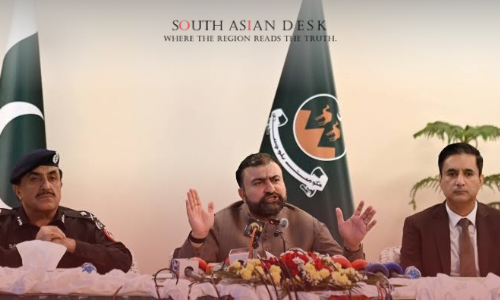
Balochistan’s CM Bugti vows robust measures to eradicate terrorism and enhance governance, but can his plan deliver lasting peace?
QUETTA, Tuesday, September 9, 2025 — Balochistan Chief Minister Mir Sarfraz Bugti has unveiled an ambitious anti-terrorism plan aimed at eliminating the “cancer” of militancy and improving governance across the province, as announced during a public engagement in Dera Bugti. The initiative, addressing escalating violence, seeks to strengthen security and foster development through coordinated efforts.
Balochistan, Pakistan’s largest and resource-rich province, has long grappled with insurgency and underdevelopment, making Chief Minister Bugti’s anti-terrorism plan critical for regional stability and economic progress in South Asia.
Comprehensive Strategy to Combat Terrorism
During an open court (Khuli Kachehri) in Bhekar, Dera Bugti, on Tuesday, September 9, 2025, at 10:00 AM, CM Bugti outlined his administration’s commitment to rooting out terrorism. He described it as a pervasive threat affecting all societal segments, emphasising the need for a unified approach. “Terrorism is a cancer that has deeply affected all segments of society,” Bugti stated, urging political stakeholders to focus on real challenges rather than “non-issues.” The plan includes enhanced coordination among security agencies, integration of modern technology, and stricter monitoring of suspects.
The Chief Minister commended the sacrifices of Dera Bugti’s residents in pursuit of peace, reinforcing that the state’s integrity is non-negotiable. His administration is also investigating around 2,000 to 2,500 government employees for potential links to anti-state activities, with a dedicated counterterrorism cell established to streamline efforts.
Governance Reforms for a Stable Balochistan
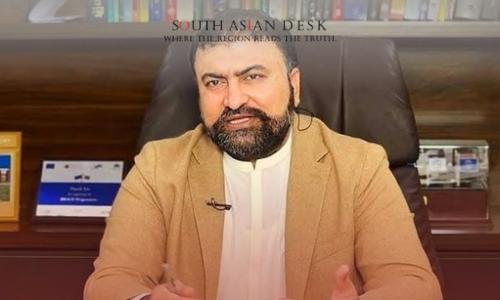
Beyond security, CM Bugti’s anti-terrorism plan intertwines with governance improvements. At the Dera Bugti event, he listened to public grievances and issued immediate directives, showcasing a hands-on approach. He directed local government representatives to adopt proactive measures to enhance service delivery at the grassroots level. Bugti also pledged development funds for local bodies, contingent on transparency and alignment with national values.
The plan builds on earlier initiatives, such as the Balochistan Security of Vulnerable Establishments Act 2024, approved on Monday, November 11, 2024, to bolster security coordination. Additionally, PKR 140 million has been allocated for the Quetta Safe City Project, set for completion by June 2025, to modernise urban security infrastructure.
Addressing Recent Violence
The urgency of CM Bugti’s anti-terrorism plan stems from escalating militant attacks. On Saturday, November 9, 2024, a suicide bombing at Quetta Railway Station claimed 26 lives and injured 54, prompting a provincial cabinet meeting to condemn the attack and vow intensified counterterrorism efforts. Bugti also highlighted the foiling of a major terror plot on Wednesday, August 14, 2025, involving a university professor allegedly linked to the banned Balochistan Liberation Army (BLA).
Balochistan Government Spokesman Shahid Rind noted that mobile data services were suspended until Saturday, August 31, 2025, for security reasons, reflecting the government’s proactive stance. Bugti has consistently rejected claims of deprivation as “propaganda,” arguing that such narratives fuel unrest.
Regional and National Support
The federal government has pledged full support for CM Bugti’s anti-terrorism plan. On Sunday, November 10, 2024, Interior Minister Mohsin Naqvi met Bugti in Quetta, affirming national unity in the fight against terrorism. “The federal government will continue to fully support Balochistan in the war against terrorism,” Naqvi stated, according to the Ministry of Interior. The plan also aligns with the National Action Plan, targeting extremist elements across the spectrum.
Background
Balochistan has faced a low-scale but persistent insurgency, primarily by separatist groups like the BLA, alongside sectarian violence targeting Shia communities. The province’s strategic importance, rich in natural resources, amplifies the need for stability. Recent attacks, including the Quetta Railway Station bombing, underscore the challenges Bugti’s administration faces in implementing the anti-terrorism plan effectively.
What’s Next
CM Bugti’s anti-terrorism plan will face scrutiny as it rolls out, with success hinging on effective coordination, transparency, and public trust. The government plans to enhance the Anti-Terrorism Force (ATF) with modern equipment such as thermal cameras, infrastructure improvements, and name blocks in training academies after martyrs, as announced during the ATF passing-out parade on December 31, 2024. Bugti’s commitment to covering educational expenses for martyrs’ children for 16 years signals a long-term vision for social stability. However, specific timelines for these key initiatives remain unclear, and sustained federal support will be crucial for the plan’s success.
Published in SouthAsianDesk, September 9th, 2025
Follow SouthAsianDesk on X, Instagram, and Facebook for insights on business and current affairs from across South Asia.