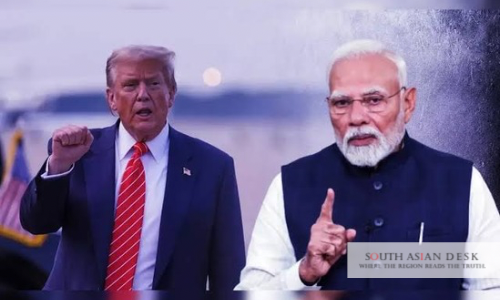
Can transatlantic tariff coordination reshape global trade and geopolitics?On Tuesday, September 9, 2025, U.S. President Donald Trump called for 100% tariffs on China and India by the EU, urging a joint strategy to pressure Russian President Vladimir Putin to end the Ukraine conflict, according to U.S. and EU officials.
Regional Implications
Donald Trump’s call for 100% tariffs on China and India has significant implications for South Asia, particularly India, a major buyer of Russian oil. Such tariffs could disrupt India’s trade dynamics, raise export costs, and impact its economy, while straining regional ties with global powers.
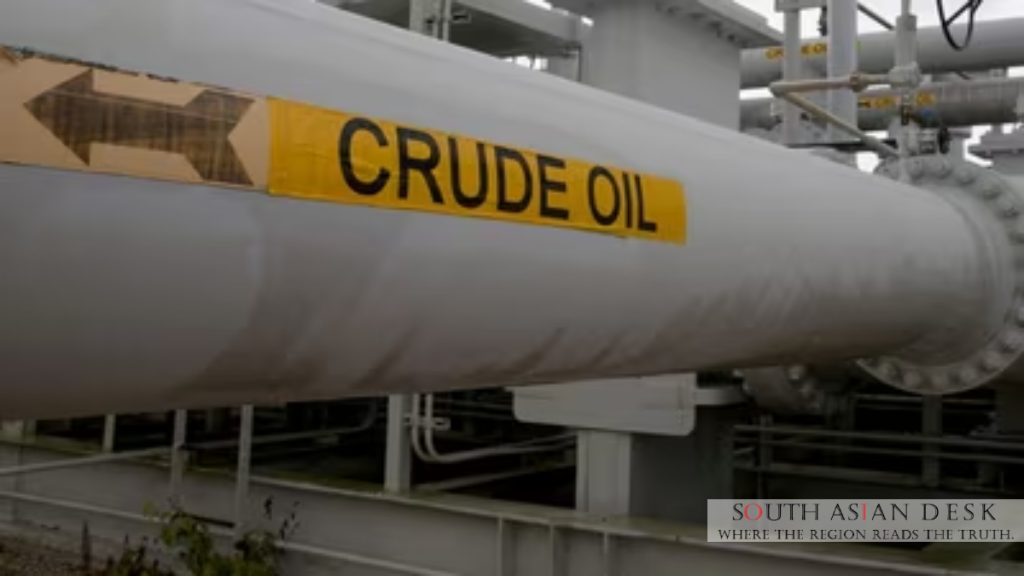
Trump’s Tariff Proposal Targets Russian Oil Revenue
During a conference call with EU sanctions envoy David O’Sullivan and other officials in Washington, U.S. President Donald Trump urged the European Union to impose 100% tariffs on China and India to choke Russia’s oil revenue, which sustains its invasion of Ukraine, launched in 2022. According to a U.S. official and an EU diplomat, Trump emphasized a coordinated transatlantic approach, stating the U.S. would “mirror” EU tariffs if implemented. This marks a shift from the EU’s preference for sanctions over tariffs to isolate Russia.
China and India are critical to Russia’s economy, purchasing a majority of its seaborne oil exports. China’s foreign ministry, in a Wednesday, September 10, 2025, briefing, opposed the U.S. using such economic pressure and referencing China in Russia-related discussions. The proposed tariffs aim to force both nations to curtail Russian oil purchases, thereby limiting Moscow’s financial resources for the Ukraine war.
U.S.-India Trade Tensions and Optimism
Donald Trump’s call for 100% tariffs on China and India follows earlier U.S. actions. In August 2025, the U.S. raised tariffs on Indian imports by 25 percentage points, totaling 50%, partly due to India’s Russian oil purchases. Despite this, Trump signaled a thaw in relations on Tuesday evening, posting on social media, “India and the United States of America are continuing negotiations to address the trade barriers between our two nations.” He expressed optimism about upcoming talks with Indian Prime Minister Narendra Modi.
Bilateral trade between India and Russia reached a record USD 68.7 billion for the year ending March 2025, a 5.8-fold increase from pre-pandemic levels, per Indian embassy data in Moscow. Meanwhile, EU-Russia trade stood at EUR 67.5 billion in 2024, with Russia supplying 19% of EU gas imports last year, though the bloc aims to end this dependency.
EU’s Strategic Dilemma
The EU faces a strategic shift if it heeds Donald Trump’s call for 100% tariffs on China and India. An EU diplomat noted, “They are basically saying: We’ll do this but you need to do it with us,” highlighting U.S. insistence on joint action. However, EU members are divided, with some citing risks to supply chains and domestic inflation. The EU has relied on sanctions, not tariffs, to pressure Russia, making Trump’s proposal a potential policy pivot.
Analysts at Capital Economics warned on September 10, 2025, that such tariffs could raise global energy prices, impacting consumers in the U.S. and Europe. [VERIFY: Specific EU member states’ positions on tariff proposal]. The EU’s hesitation stems from its own energy ties with Russia, which complicate a unified response.
Background
Donald Trump’s call for 100% tariffs on China and India builds on his broader trade strategy. In August 2025, Trump doubled tariffs on Indian imports to 50% as a penalty for Russian oil purchases, alongside similar measures against Brazil. His administration has used tariffs to address trade deficits and geopolitical goals, with the U.S. imposing secondary tariffs on Venezuelan oil buyers. Russia, the world’s third-largest oil producer, relies heavily on China and India, which have increased imports since the Ukraine invasion began.
Trump’s tariff push follows a failed summit with Putin in Alaska in August 2025, where no ceasefire was secured. Frustration over stalled peace talks has driven Trump to leverage trade tools, as he stated last month, “I used trade for a lot of things, but it’s great for settling wars.” Ukrainian President Volodymyr Zelensky endorsed tariffs on Russian oil buyers as “the right idea” in a September 2025 statement.
What’s Next
The outcome of Donald Trump’s call for 100% tariffs on China and India depends on EU cooperation and India’s response in trade talks. If implemented, tariffs could disrupt global trade flows, raise costs for Indian exports, and strain U.S.-India relations. However, Trump’s optimism about negotiations with Modi suggests a potential resolution. The EU’s decision, expected to be discussed in upcoming meetings, will shape the next steps in this transatlantic strategy to pressure Russia.
Published in SouthAsianDesk, September 10th, 2025
Follow SouthAsianDesk on X, Instagram, and Facebook for insights on business and current affairs from across South Asia.