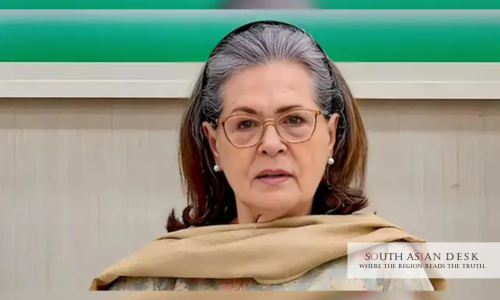
Allegations of pre-citizenship voter registration lack evidence, court rules. On Thursday, September 11, 2025, in New Delhi, a court dismissed a plea alleging Sonia Gandhi citizenship 2025 issues, rejecting claims of her 1980 voter roll inclusion before Indian citizenship.
The Sonia citizenship 2025 case, tied to electoral integrity, underscores South Asia’s focus on transparent governance. As India’s democratic processes influence regional stability, the Gandhi citizenship court order 2025 reinforces legal accountability, impacting political trust across the region.
Sonia Gandhi Citizenship 2025: Court Ruling
On Thursday, September 11, 2025, at 2:00 PM IST, Delhi’s Rouse Avenue Court, led by Additional Chief Judicial Magistrate Vaibhav Chaurasia, dismissed a plea seeking an FIR against Congress leader Sonia Gandhi for alleged voter roll inclusion in 1980, before her Indian citizenship in 1983, per Hindustan Times. The Sonia’s citizenship court order 2025 found the complaint, filed by advocate Vikas Tripathi, lacked evidence and jurisdiction, deeming it an abuse of legal process. According to the court, the Sonia’s citizenship 2025 allegations relied on an “uncertified photocopy” of 1980 electoral rolls, failing to prove forgery.
The plea, filed under Section 175(4) of the Bharatiya Nagarik Suraksha Sanhita (BNSS), claimed Sonia Gandhi’s name appeared in New Delhi’s voter list in January 1980, despite her acquiring citizenship on April 30, 1983, per The Hindu. According to Senior Advocate Pawan Narang, representing Tripathi, on Tuesday, September 10, 2025, at 11:00 AM IST, the inclusion suggested forged documents, as citizenship is a prerequisite for voter registration under the Representation of the People Act, 1950. The Sonia’s citizenship court order 2025 rejected this, citing Central government authority over citizenship matters.
Sonia Gandhi Citizenship Court Order 2025: Legal Context
The Sonia’s citizenship court order 2025 clarified that electoral roll disputes fall under the Election Commission’s purview, not criminal courts, per LiveLaw. The complaint alleged Gandhi’s name was deleted in 1982 and re-entered in 1983 after citizenship, but lacked authenticated documents, per National Herald. According to the Election Commission, on Wednesday, September 10, 2025, at 3:00 PM IST, no official records supported the 1980 voter roll claim. The Sonia’s citizenship 2025 case aligns with India’s strict voter eligibility laws, requiring citizenship and residency proof, per Representation of the People Act, 1950.
The Gandhi’s citizenship court order 2025 also addressed BJP allegations, with Rajasthan BJP President Madan Rathore stating on Wednesday, September 10, 2025, at 1:00 PM IST, that Gandhi’s 1980 listing constituted “electoral fraud.” The court dismissed these claims as speculative, reinforcing judicial oversight in Sonia’s citizenship 2025 debates. The Pakistan UAE relations 2025, reported on September 11, 2025, highlight regional focus on governance, indirectly emphasizing India’s electoral transparency.
Political and Regional Implications
The Sonia Gandhi’s citizenship controversy, fueled by BJP claims, reflects India’s polarized political landscape, with 2024 Lok Sabha election disputes escalating voter fraud debates. According to Congress spokesperson Jairam Ramesh, on Thursday, September 11, 2025, at 4:00 PM IST, the plea was a “politically motivated attempt to malign Gandhi.” The Sonia Gandhi citizenship court order 2025 may temper such accusations, but ongoing electoral scrutiny, including the US tariffs G7 India 2025 issue, underscores India’s global economic stakes. India’s $4 trillion economy drives South Asia’s stability, per World Bank, making transparent governance critical.
The Sonia Gandhi citizenship 2025 case also ties to broader South Asian governance trends, as seen in the ATA amendment Balochistan 2025, per Dawn, which strengthens judicial security. The court’s dismissal ensures focus on legal merit over political narratives, supporting India’s democratic framework. The India shares advance 2025, reported on September 12, 2025, reflects economic optimism, but political stability remains key for investor confidence.
Background
Sonia Gandhi, born in Italy, married Rajiv Gandhi in 1968 and acquired Indian citizenship on April 30, 1983, per Government of India records. The Sonia Gandhi’s citizenship 2025 controversy revisits a 1980 voter roll entry, deleted in 1982, likely due to Election Commission corrections. Similar allegations surfaced in 2004, dismissed for lack of evidence. The Representation of the People Act, 1950, mandates citizenship for voter registration, making the Sonia Gandhi citizenship court order 2025 significant.
What’s Next for Sonia Gandhi Citizenship 2025
The Sonia Gandhi’s citizenship court order ends the current legal challenge, but political debates may persist. With no appeal announced, the Sonia’s citizenship issue reinforces India’s electoral integrity, shaping regional trust in democratic processes.
Published in SouthAsianDesk, September 12th, 2025
Follow SouthAsianDesk on X, Instagram, and Facebook for insights on business and current affairs from across South Asia.