US President Donald Trump Bagram airbase claim resurfaced on 18 September 2025 during a London news conference, citing its strategic value against China. The Taliban rejected the call two days later, invoking the 2020 Doha Agreement. This escalation threatens to unwind fragile post-withdrawal stability. Why now? Experts point to shifting US priorities amid rising tensions with Beijing.
Trump’s insistence on reclaiming Bagram airbase in Afghanistan underscores a pivot in US foreign policy that could destabilise South Asia. For Pakistan, a key neighbour, any US military re-entry risks complicating border security and economic ties strained by past Afghan conflicts. India views the move warily, fearing it bolsters US leverage against China but invites spillover militancy. The episode highlights how superpower rivalries continue to ensnare the region, potentially derailing Taliban governance and humanitarian efforts.
Historical Significance of Bagram Airbase
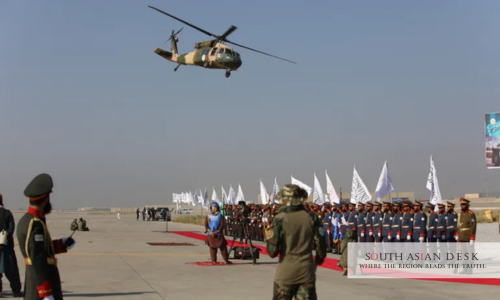
Bagram airbase, located 50km north of Kabul, served as the nerve centre for US operations in Afghanistan for two decades. Built by the Soviet Union in the 1950s, it featured two long runways capable of handling heavy aircraft. During the 1980s Soviet occupation, it housed thousands of troops. Post-2001 NATO invasion, Bagram expanded into a sprawling complex with barracks, a hospital, and even fast-food outlets.
The base peaked in 2009, accommodating 10,000 personnel amid the surge in US forces. It symbolised Western resolve against extremism but also drew criticism for its detention facility, where human rights abuses occurred. By 2021, as US troops withdrew under the Doha deal signed by Trump in 2020, Bagram stood empty. Taliban fighters seized it hours later, looting abandoned equipment worth millions.
This handover marked the end of America’s longest war. Yet Trump’s recent rhetoric revives old grievances. In a February 2025 White House briefing, later deleted, he claimed plans existed to retain a small force at Bagram. Now, with Trump Bagram airbase claim back in headlines, the site’s dual runways and elevated position offer unmatched control over Afghan airspace.
Trump’s Push to Reclaim Bagram
On 18 September 2025, Trump addressed reporters alongside UK Prime Minister Keir Starmer in London. “We gave it to [the Taliban] for nothing. We want that base back,” he stated, linking the demand to national security. Two days later, on 20 September, Trump escalated via Truth Social: “If Afghanistan doesn’t give Bagram Airbase back to those that built it, the United States of America, BAD THINGS ARE GOING TO HAPPEN!!!”
Analysts tie this to Bagram’s proximity to China. Trump noted the base lies just an hour’s flight from a Chinese facility in Xinjiang producing nuclear components. At 800km from the Afghan-Chinese border, Bagram positions the US to monitor Beijing’s military expansion. This aligns with Trump’s broader Asia strategy, where countering China supersedes counter-terrorism.
US officials have not detailed negotiation plans. A Pentagon spokesperson confirmed on 22 September that discussions with Afghan counterparts are underway but emphasised no troop deployments yet. Trump’s comments echo his 2020 Doha negotiations, where he agreed to full withdrawal in exchange for Taliban guarantees against attacks on US soil.
The US reclaim Bagram Taliban dynamic exposes fractures in post-withdrawal relations. While Trump frames it as correcting a “mistake,” critics argue it contradicts commitments to non-interference. Data from the US Department of Defense shows Bagram handled 80 percent of air logistics during the war, underscoring its irreplaceable role.
Taliban Rejects Trump Bagram Demand
The Taliban response came swiftly. On 21 September, deputy spokesperson Hamdullah Fitrat issued a statement: “It should be recalled that, under the Doha Agreement, the US pledged that ‘it will not use or threaten force against the territorial integrity or political independence of Afghanistan, nor interfere in its internal affairs.’ The US needs to remain faithful to its commitments.”
Chief spokesperson Zabihullah Mujahid echoed this on 22 September, urging Washington to embrace “realism and rationality.” He added that Afghanistan “will never” cede sovereignty over Bagram, declaring: “Not even one inch.” Taliban rejects Trump Bagram overtures outright, viewing them as a betrayal of the accord that enabled their 2021 victory.
Inside Afghanistan, the base now trains Taliban air force recruits and stores seized US hardware, including helicopters. Handing it over could fracture Taliban unity, as fighters who endured two decades of resistance see foreign bases as existential threats. A 2024 UN report estimates 20,000 Taliban personnel operate from former US sites, including Bagram.
Regional observers note Pakistan’s quiet concern. Islamabad, which hosted Doha talks, fears US reclaim Bagram Taliban efforts could fuel cross-border incursions, echoing 2011 tensions when US forces raided Pakistani soil from Afghan bases.
Geopolitical Stakes in South Asia
Trump Bagram airbase claim saga ripples across South Asia. For India, the base’s revival signals US commitment to the Quad alliance against China, but it risks emboldening militants along the Line of Control. Pakistan, reliant on US aid totalling USD 33 billion since 2001, walks a tightrope: supporting Taliban stability aids its western flank, yet alienating Trump invites sanctions.
China’s Foreign Ministry weighed in on 23 September. Spokesperson Lin Jian said: “Afghanistan’s future should be decided by its own people. Stirring up tension and creating confrontation in the region won’t be popular.” Beijing, which recognised the Taliban in 2024, invests USD 3 billion in Afghan mining, viewing Bagram as a potential US spoiler.
Experts like Hekmatullah Azamy of the Kabul-based Centre for Afghanistan Peace Studies argue: “As the priorities shifted, and the US started viewing China as the number one threat, this base is seemingly important once again, primarily because of its proximity to China.” Ibraheem Bahiss of the International Crisis Group adds that Bagram’s Soviet origins make it a “symbol of rivalry,” now repurposed in US-China contest.
Humanitarian costs loom large. Afghanistan faces famine affecting 15 million, per World Food Programme data from August 2025. Renewed US-Taliban friction could halt USD 40 million monthly aid flows.
Background: From Soviet Legacy to US Hub
Bagram’s story traces Cold War fault lines. Soviet engineers constructed it in 1955 as a friendship gesture. The 1979 invasion turned it into a fortress, from which MiG fighters bombed mujahideen. Post-1989 withdrawal, civil war ravaged the site until 2001, when US Special Forces landed there to topple the Taliban.
NATO allies contributed: British troops guarded perimeters, French engineers built hangars. By 2014, as combat wound down, Bagram shifted to logistics, processing 1,000 flights weekly.
What’s Next for Trump Bagram Airbase Claim
Diplomatic channels may test resolve. US envoy Thomas West meets Taliban delegates in Doha on 5 October. Failure could prompt sanctions or covert operations, per Reuters analysis. Taliban rejects Trump Bagram stance holds firm, but economic pressures, frozen assets worth USD 7 billion, might force compromise.
Beijing could mediate, leveraging CPEC ties with Pakistan. For South Asia, the outcome shapes 2026 dynamics: a US foothold bolsters deterrence against China but risks proxy wars. Trump Bagram airbase claim remains a flashpoint, where history and ambition collide.
Published in SouthAsianDesk, September 29th, 2025
Follow SouthAsianDesk on X, Instagram, and Facebook for insights on business and current affairs from across South Asia.