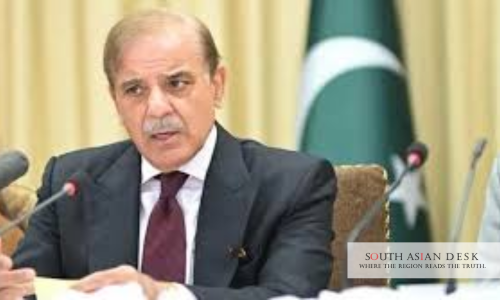
MUZAFFARABAD: Kashmir unrest started as Violent clashes rocked Azad Jammu and Kashmir on Monday, killing nine people and injuring dozens more. Prime Minister Shehbaz Sharif responded with the Shehbaz Sharif AJK violence restraint directive, urging protesters to maintain peace and ordering law enforcement agencies to show maximum restraint. The unrest erupted during a three-day strike called by the Jammu Kashmir Joint Awami Action Committee (JAAC). What triggered the escalation? How will the federal government resolve the deadlock?
The AJK unrest PM actions underscore deep-seated economic frustrations in the region. These grievances, including high wheat flour prices and electricity tariffs, threaten Pakistan’s cohesion. In South Asia, where the Kashmir dispute simmers, such internal turmoil could embolden cross-border tensions with India and disrupt regional trade routes.
Escalation of Kashmir Unrest
Protests began last week when JAAC demanded subsidies on essential commodities. Talks between the AJK government, federal ministers, and JAAC collapsed over issues like elite privileges and reserved seats for refugees. Strikers imposed a lockdown, halting transport and communications across Muzaffarabad and other districts.
On Monday morning, demonstrators clashed with police in Muzaffarabad. Six protesters and three policemen died in the violence. Over 100 people suffered injuries. Authorities imposed a curfew and cut mobile services to contain the spread.
Prime Minister Shehbaz Sharif took notice at 4:35 PM. He issued the Shehbaz Sharif AJK violence restraint directive through the Prime Minister’s Office. “Peaceful protest is the constitutional and democratic right of every citizen,” Sharif stated. “But protesters should refrain from causing harm to public property or lives.”
The directive instructed law enforcement agencies to exercise patience. Officials must respect public sentiments and avoid unnecessary force. Sharif ordered immediate financial aid for affected families. Each bereaved household receives PKR 1 million.
Federal Minister Tariq Fazal Chaudhry echoed the call. He invited JAAC leaders for dialogue later that evening. “Violence solves nothing,” Chaudhry said. “We seek a peaceful resolution.”
Shehbaz Sharif KashmirViolence Restraint Directive in Detail
The Shehbaz Sharif AJK violence restraint directive forms the core of the federal response to the AJK unrest PM. It expands a negotiation committee to include key figures. Senator Rana Sanaullah leads the group. Other members are Federal Ministers Sardar Muhammad Yousaf and Ahsan Iqbal, former AJK President Masood Khan, and Qamar Zaman Kaira.
This committee travelled to Muzaffarabad on Monday night. Their mandate covers all JAAC demands. They must submit recommendations to the Prime Minister’s Office by Tuesday. Sharif pledged personal oversight upon his return from abroad.
The directive also mandates a transparent probe into Monday’s clashes. An independent commission will investigate within 48 hours. Witnesses and footage guide the inquiry. No arrests target peaceful demonstrators.
In a related move, Sharif approved a PKR 23 billion subsidy package. Funds target wheat flour and electricity relief. Distribution starts Wednesday. This echoes a similar grant in 2024 that temporarily quelled unrest.
JAAC spokesperson Khawaja Farooq Ahmed welcomed the overture. “We appreciate the restraint call,” he said. “But demands remain unmet.” The group suspended the strike but warned of resumption if talks fail.
Background
The current AJK unrest PM stems from long-standing issues. Azad Jammu and Kashmir relies on federal funds for 90% of its budget. Inflation hit 25% this year, per government data. Wheat prices doubled to PKR 3,000 per 40kg bag. Electricity tariffs rose 40% in July.
JAAC formed in May to unite trade unions and civil groups. Initial protests focused on subsidies. Federal concessions followed, but implementation lagged. Rival factions sparked Monday’s violence.
AJK Prime Minister Chaudhry Anwarul Haq addressed the assembly. He blamed “external elements” for escalation. Security forces recovered arms from some protesters. No evidence links Indian involvement yet.
Regional analysts note parallels to 2024 protests. Then, four died in Muzaffarabad clashes. A PKR 23 billion package ended the strike. This time, demands include constitutional reforms on reserved seats.
South Asian implications loom large. India monitors the situation closely. New Delhi accused Pakistan of staging unrest to divert from border issues. Islamabad rejected the claim as propaganda.
Impact on Local Communities
Residents in Muzaffarabad face shortages. Shops closed during the blackout. Hospitals treated 50 gunshot wounds. Doctors appealed for medical supplies. A local trader, Muhammad Iqbal, spoke to reporters. “We want relief, not blood,” he said. “The AJK unrest PM must deliver fast.” Schools shut for two days. Businesses lost PKR 500 million in revenue.
Women led some marches. Activist Sara Khan organised aid camps. “Restraint from both sides saves lives,” she urged. Federal data shows AJK’s unemployment at 12%. Youth form 60% of protesters. Many seek jobs in tourism, hit by COVID recovery delays.
What’s Next for Kashmir Unrest PM Resolution
The negotiation committee meets JAAC Tuesday morning. Outcomes could include phased subsidies and seat reforms. Failure risks renewed strikes on October 15, per JAAC warnings. Sharif’s team eyes a 72-hour truce. International observers, including UN envoys, watch proceedings. Pakistan seeks to avoid global scrutiny on human rights. The Shehbaz Sharif AJK violence restraint directive sets a precedent. It prioritises dialogue over force in ethnic regions. Success could stabilise Balochistan talks too.
In conclusion, the AJK unrest PM directive offers hope amid tragedy. Swift action prevents a humanitarian crisis and bolsters regional peace.
Published in SouthAsianDesk, October 2nd, 2025
Follow SouthAsianDesk on X, Instagram, and Facebook for insights on business and current affairs from across South Asia.