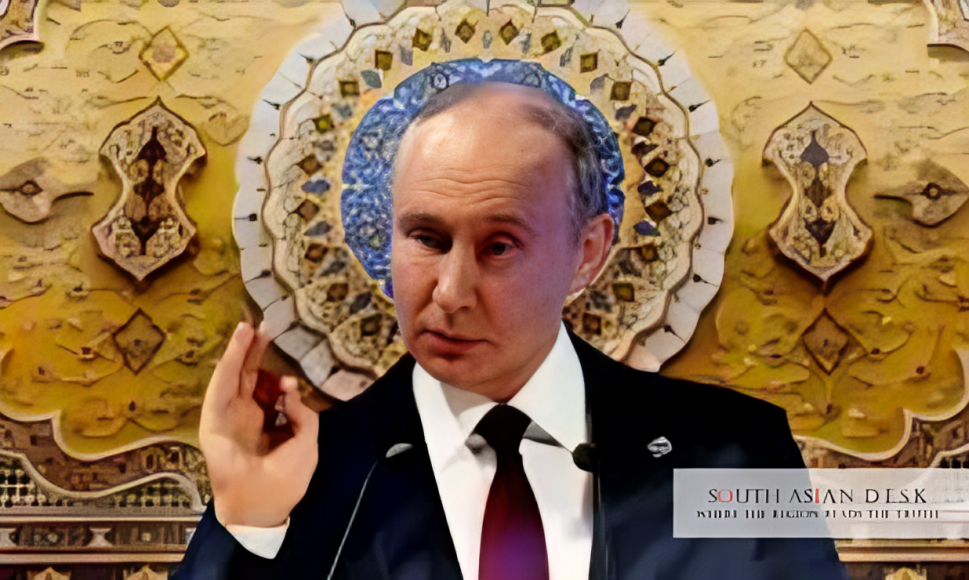
DUSHANBE, Tajikistan – Russian President Vladimir Putin highlighted Afghanistan central role in Central Asia during the Second Russia-Central Asia Summit on Thursday, October 9, 2025. Speaking in Dushanbe, he linked Kabul’s stability to the broader region’s security. The event gathered leaders from Kazakhstan, Kyrgyzstan, Tajikistan, Turkmenistan, and Uzbekistan. Putin stressed cooperation against terrorism and narcotics. This move aims to counter cross-border risks.
The summit matters for South Asia because instability in Afghanistan often spills into Pakistan and India. It disrupts trade routes and fuels militancy. Russia’s push could stabilise corridors vital for energy and goods flow. Enhanced security ties may ease pressures on borders shared with South Asian nations. This fosters economic links from Moscow to Delhi via Central Asia.
Putin Russia Central Asia Summit Spotlights Afghanistan Security
Putin opened the summit with direct remarks on Afghanistan. He noted the current Afghan authorities’ willingness to partner on key fronts. “The current Afghan authorities are open to cooperation in the fight against terrorism and drug trafficking, and Russia supports them,” Putin said. “Of course, we are ready to support these aspirations.”
The gathering focused on bolstering ties in trade, energy, and defence. Particular attention went to regional security. Leaders discussed threats from Afghanistan and the Middle East. Yuri Ushakov, Putin’s foreign policy aide, previewed the talks earlier. He said discussions would cover Afghanistan’s impact on Central Asian stability. Topics included cross-border extremism and narcotics flows.
Russia views Afghanistan’s central role in Central Asia as non-negotiable. Moscow has ramped up engagement since the Taliban’s 2021 takeover. Investments in the region top USD 20 billion. Putin called this figure too low. He urged more funds for transport and energy projects.
Bilateral meetings preceded the plenary. Putin held talks with Tajik President Emomali Rahmon. They signed pacts on strategic alliance. Trade between Russia and Tajikistan rose 17 per cent in early 2025.
Joint Statement Reinforces Anti-Terror Stance
A joint communiqué followed the Putin-Rahmon summit. It reaffirmed backing for an independent Afghanistan. “The two sides reaffirm their support for the creation of an independent, united, and peaceful Afghanistan free from terrorism, war, and drugs,” the statement read.
This document ties into broader Putin Afghanistan central role Central Asia efforts. Tajikistan shares a 1,344 km border with Afghanistan. Dushanbe hosts Russia’s 201st military base. The base bolsters patrols against incursions.
Ushakov emphasised these points pre-summit. He flagged recent Afghan developments as urgent. Extremist groups like ISIL-Khorasan pose risks. Their activities could spill into Central Asia.
The communiqué outlines 2025-2027 priorities. These cover security, migration, and environment. Russia pledges aid for border fortification.
Expanding Cooperation Amid Regional Threats
Analysts see Putin’s words as a green light for Kabul-Moscow links. Fazl Manallah, a political expert, noted Russia’s stake. “Any instability that affects Afghanistan directly impacts the security and economy of Russia,” he said. Moscow now eyes Afghanistan closely to shield its southern flank.
Samiullah Pouya, an international relations professor, added optimism. “We assess Afghanistan’s future relations with regional countries positively,” Pouya stated. He pointed to grounds for joint work on drugs, terror, and economics.
The summit built on prior formats. The Moscow Format on Afghanistan met days earlier, on October 7. Participants called for inclusive governance in Kabul. China, Iran, and Pakistan joined those talks.
Russia’s defence minister, Andrei Belousov, addressed military ties. He met Tajik counterparts on October 8. “Cooperation between our two military institutions is key to regional stability,” Belousov said.
Putin’s agenda extended to logistics. He proposed unified North-South and East-West routes. These pass through Central Asia. Integration could link Eurasian projects. Russia offers tech for digital upgrades. Energy talks featured hydropower and nuclear builds. Russian firms eye new plants. Water management for transboundary rivers topped lists.
Background: Russia’s Long Shadow in Central Asia
Russia has shaped Central Asia since Soviet times. Post-1991, it maintained influence via the Collective Security Treaty Organisation. Afghanistan’s chaos post-2001 withdrawal heightened concerns. Moscow backed anti-Taliban efforts then pivoted post-2021. The first Russia-Central Asia Summit occurred in 2022. It set trade goals at USD 100 billion by 2030. Current volumes hit USD 30 billion. Putin pushes for more.
Tajikistan remains a linchpin. Remittances from Tajik workers in Russia exceed 25 per cent of GDP. Recent Moscow attacks, like the Crocus City Hall incident in March 2024, strained ties. Perpetrators hailed from Tajikistan. Russia now mandates biometric checks on migrants. These events underscore Putin Afghanistan central role Central Asia dynamics. Security trumps economics in Moscow’s calculus.
What’s Next for Putin Russia Central Asia Summit Outcomes
A concluding communiqué from the summit details next steps. It targets counter-terror drills and joint patrols. Russia plans USD 5 billion in fresh loans for infrastructure. The CIS summit followed on October 10. It included Armenia, Azerbaijan, and Belarus. Discussions eyed military pacts to 2030.
For Afghanistan, Russia hints at easing sanctions. This could unlock humanitarian aid. Moscow also seeks UN recognition paths for the Islamic Emirate. Experts predict quarterly reviews. These will track Putin Afghanistan central role Central Asia progress.
Putin’s Dushanbe visit wraps a busy week. He fielded media queries post-summit. On success, he cited aligned views on global issues. “Russia and the Central Asian countries adhere to common or similar approaches,” Putin noted.
As threats evolve, Putin’s emphasis on Afghanistan’s central role in Central Asia sets a firm tone. Regional powers watch closely. Stable Kabul means secure routes and markets. Moscow’s support could reshape alliances from Dushanbe to Delhi.
Published in SouthAsianDesk, October 11th, 2025
Follow SouthAsianDesk on X, Instagram, and Facebook for insights on business and current affairs from across South Asia.